
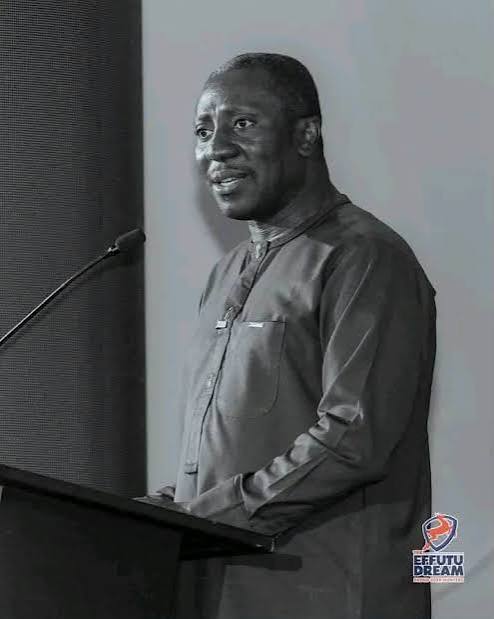

Minority Leader in Parliament Alexander Afenyo Markin has called on the government to strengthen oversight of the Ghana Gold Board and urgently address weaknesses in its operations, warning that failure to close existing gaps could undermine the economic gains achieved through the relative stability of the Ghanaian cedi.
Mr Afenyo Markin acknowledged that the local currency has recorded greater stability but argued that the government must exercise greater financial discipline in managing GoldBod if those gains are to be preserved.

He said the administration should introduce stronger safeguards, improve accountability and eliminate loopholes within the institution’s operations to prevent further financial losses.

Speaking to journalists in Accra on Monday, August 31, 2026, the Minority Leader maintained that his concerns were not driven by personal animosity or partisan considerations but by the potential consequences of GoldBod’s activities for the wider Ghanaian economy. His comments were made during a courtesy visit by the Asafo Company Cultural Group from Winneba, which had visited him to express solidarity following various allegations levelled against him.

Mr Afenyo Markin particularly called for a comprehensive review of the Domestic Gold Purchase Programme, arguing that the government should examine how the programme has been implemented, identify weaknesses and introduce corrective measures where necessary.
He maintained that the financial implications associated with the programme could eventually place a substantial burden on the national economy if the reported losses are not properly investigated and addressed.

The Minority Leader has repeatedly demanded greater accountability over the reported US$1.7 billion loss, equivalent to approximately GH¢22 billion, associated with the Domestic Gold Purchase Programme in 2025. The Minority has attributed the figure to findings contained in an International Monetary Fund report, although GoldBod has disputed the interpretation and maintained that its own financial records show positive operational and overall results.
The disagreement therefore centres not simply on whether GoldBod has generated financial gains, but on how the financial consequences of the gold purchasing arrangements should be calculated and attributed between the institutions involved.

Mr Afenyo Markin argued that Ghanaians deserve a comprehensive explanation of the money used to purchase gold, the prices paid to suppliers, the commissions and bonuses involved, and the eventual prices at which the gold was sold to international buyers.

He also called for greater disclosure concerning any losses arising throughout the purchasing, assaying, financing and eventual sale of the bullion.
According to him, these are among the concerns raised in connection with the IMF’s assessment of the Domestic Gold Purchase Programme, and he said the Parliamentary Minority agrees that the issues deserve further examination.
He further argued that the public should receive clear information about the bullion eventually sold by the Bank of Ghana following the assaying process, insisting that transparency is necessary if confidence in the country’s gold trading arrangements is to be maintained.
Afenyo Markin rejects partisan interpretation
The Minority Leader rejected suggestions that the controversy surrounding GoldBod should be reduced to another confrontation between the New Patriotic Party and the National Democratic Congress.
He argued that the matter has consequences for ordinary Ghanaians because any significant financial losses ultimately affect the government’s ability to finance essential services and development programmes.
Mr Afenyo Markin pointed to the government’s own concerns about limited fiscal space and the difficulties involved in financing additional public sector employment, infrastructure expansion and improvements in health and education.
He therefore questioned why substantial resources could allegedly be lost through the gold purchasing programme while government institutions continue to face financial constraints.
The Minority Leader said economic policies can naturally involve opportunity costs, but he insisted that the reported financial implications surrounding the Domestic Gold Purchase Programme require a more detailed examination rather than being dismissed solely as the cost of pursuing exchange rate stability.
He argued that the stability of the cedi should be recognised as an important achievement while the financial cost associated with achieving that stability should simultaneously be subjected to rigorous scrutiny.
This position is consistent with his earlier criticism that the government should not use the benefits associated with GoldBod to avoid questions about the financial implications of its operations. In August, he maintained that the reported US$1.7 billion loss should be accounted for because the resources involved ultimately relate to public finances.
Call for broader investigation
Mr Afenyo Markin also welcomed a proposal by the new Majority Leader to broaden any parliamentary investigation into GoldBod beyond transactions undertaken during 2025.
He indicated that the Minority would support an examination covering the entire period since the introduction of the Domestic Gold Purchase Programme if such an approach would provide Parliament with a more complete understanding of the policy and its financial consequences.
He said a broader investigation would serve the national interest because it could establish a clearer picture of how the programme has evolved, how public resources have been deployed and whether existing systems require modification.
The Minority Leader also urged political actors to elevate the discussion above partisan confrontation and concentrate instead on establishing the facts surrounding the programme.
His latest intervention comes amid an increasingly intense public dispute between him and GoldBod Chief Executive Officer Sammy Gyamfi over the reported losses and the interpretation of GoldBod’s financial performance. Mr Afenyo Markin has insisted that his scrutiny is directed at the institution and the implementation of the programme rather than any particular individual, while Mr Gyamfi has rejected the Minority’s interpretation of the reported loss figures.
GoldBod has maintained that its audited 2025 accounts demonstrate an operational surplus of approximately GH¢907 million and an overall surplus of about GH¢5.4 billion, thereby challenging the assertion that the institution itself recorded a GH¢22 billion loss.
The disagreement has consequently created a significant debate over the distinction between GoldBod’s own financial performance and the broader financial outcome associated with the Domestic Gold Purchase Programme.
The issue is now expected to receive further parliamentary attention, particularly as calls grow for greater transparency concerning the financing, acquisition, valuation and sale of domestically purchased gold.
For Mr Afenyo Markin, the central question is whether Ghana can preserve the gains achieved in stabilising the cedi while ensuring that the mechanisms used to support that stability remain financially sustainable, transparent and properly controlled.
He has therefore urged the government to take another comprehensive look at the Domestic Gold Purchase Programme, identify any weaknesses in its design or implementation and introduce appropriate safeguards before further financial exposure develops.
The debate surrounding GoldBod is consequently evolving beyond a conventional political disagreement and into a wider discussion about public financial management, foreign exchange stability, accountability and the long term sustainability of Ghana’s gold purchasing strategy.
As Parliament considers possible investigations into the programme, the critical issue will be establishing the precise nature and location of any reported losses, determining which institution ultimately bore those costs and assessing whether the economic benefits generated by the programme justify the financial risks involved.
The image set above is focused specifically on Alexander Afenyo Markin and the GoldBod controversy, with priority given to recent Ghanaian political coverage rather than generic gold mining photographs. The latest reporting confirms that his August 31 intervention centred on tightening GoldBod’s operations and investigating the reported financial losses.

