
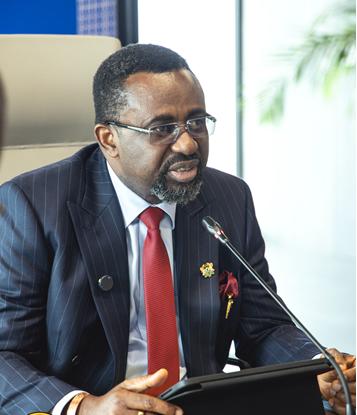

The Governor of the Bank of Ghana, Dr. Johnson Asiama, has disclosed that Ghana’s economic management team is optimistic about securing another improvement in the country’s sovereign credit rating during the second half of 2026, following encouraging engagements with international rating institutions.
Dr. Asiama made the revelation while addressing participants at the Fidelity Bank Debt Capital Market Conference in Accra, where he indicated that Ghana could receive favourable assessments from rating agencies in the months ahead. He disclosed that he had recently engaged Moody’s and expressed confidence that the discussions could culminate in a more positive assessment of the Ghanaian economy.

According to the Governor, the country’s ongoing fiscal consolidation programme has remained central to the economic recovery strategy and has been supported by stronger domestic revenue mobilisation, tighter expenditure controls and renewed efforts to restore long term debt sustainability.

He explained that these measures have already attracted favourable attention from international credit rating agencies, pointing to the upgrades Ghana has received over the past year as evidence of improving confidence in the country’s economic management.

Standard and Poor’s raised Ghana’s sovereign credit rating from CCC+ and C to B and B in November 2025, while Fitch Ratings subsequently upgraded the country from B negative to B in May 2026.
Despite those improvements, Moody’s maintained Ghana’s sovereign rating at Caa1 in April 2026. The American rating agency explained that the assessment continued to reflect Ghana’s constrained access to credit and its considerable vulnerability to exchange rate fluctuations and movements in commodity prices, particularly amid heightened geopolitical uncertainty associated with tensions in the Middle East.

Moody’s nevertheless revised Ghana’s outlook from stable to positive, citing improvements in the country’s fiscal position and the gradual strengthening of its economic fundamentals.
Dr. Asiama’s latest comments suggest that policymakers are now hoping these developments will translate into another ratings improvement before the end of the year, particularly as Ghana continues implementing reforms designed to strengthen its public finances and rebuild investor confidence.

Governor Projects Stronger Economic Growth
Beyond the country’s credit outlook, the Bank of Ghana Governor also expressed confidence in Ghana’s growth prospects for the remainder of 2026.

Dr. Asiama projected that economic growth could reach approximately 6.0 percent during the second half of the year, reflecting expectations of continued expansion across key productive sectors.
His projection comes against the backdrop of improving macroeconomic indicators and renewed efforts by the government and the central bank to consolidate the gains recorded through fiscal and monetary reforms.
On inflation, the Governor maintained that consumer price pressures should generally remain within the Bank of Ghana’s medium term target range of 8 percent plus or minus 2 percent, provided the economy does not experience substantial external or domestic disruptions.
He nevertheless identified several factors that could place pressure on the inflation trajectory. These include periodic adjustments to utility tariffs as well as a possible escalation of geopolitical tensions in the Middle East, which could affect international commodity prices, energy costs and exchange rate conditions.
Despite those potential risks, Dr. Asiama remained confident that inflation would stay within the central bank’s target range throughout 2026, provided prevailing economic conditions remain broadly stable.
Banking Sector Reforms to Continue
The Governor also outlined the central bank’s intention to deepen institutional reforms within Ghana’s financial sector while strengthening the regulatory framework governing financial institutions.
He said the Bank of Ghana would continue pursuing reforms aimed at protecting the institution’s independence and developing the country’s financial markets.
According to him, maintaining a strong and independent central bank remains essential to preserving monetary policy credibility while ensuring that the financial system continues to support sustainable economic development.
The Governor further indicated that efforts were underway to improve Ghana’s foreign exchange market through the implementation of a new Foreign Exchange Operations Framework.
He explained that the framework has improved transparency and predictability in the central bank’s foreign exchange operations, thereby creating greater clarity for market participants and strengthening confidence in the management of the currency market.
Gold Accumulation Programme to Strengthen External Reserves
Dr. Asiama also disclosed that Ghana is rebuilding its external reserve buffers through gold accumulation under the Ghana Accelerated National Reserve Accumulation Programme, known as GANRAP, which is being implemented in collaboration with the Ministry of Finance.
The initiative forms part of broader efforts to strengthen Ghana’s international reserves and create a more resilient external position by leveraging the country’s gold production.
The Governor also disclosed that a regulatory framework is being developed for Virtual Asset Service Providers following the passage of legislation governing the sector.
The framework is expected to provide clearer regulatory oversight for activities involving virtual assets while creating a structured environment within which financial institutions and other market participants can operate.
At the same time, Dr. Asiama said the authorities were seeking measures that would encourage more banks to participate in the equity market. Such participation, he indicated, could help deepen Ghana’s capital markets and improve access to long term financing for productive economic activities.
Cocoa Board Plans US$1 Billion Commercial Paper Programme
The Governor further expressed optimism that corporate entities and quasi governmental institutions would play a larger role in Ghana’s debt capital market as the sector develops.
He cited the Ghana Cocoa Board as a notable example, explaining that the institution has indicated plans to finance its operations for the 2026 and 2027 cocoa season through commercial paper issuances.
The programme is expected to target approximately US$1 billion and will reportedly be implemented in three phases.
The proposed financing programme could provide Cocoa Board with an additional avenue for raising funds while simultaneously expanding the range of instruments available within Ghana’s domestic capital market.
Dr. Asiama’s remarks therefore point to a broader strategy centred on fiscal discipline, stronger reserves, improved financial market regulation and deeper capital market participation as Ghana seeks to consolidate its economic recovery and secure further improvements in international investor confidence.

