
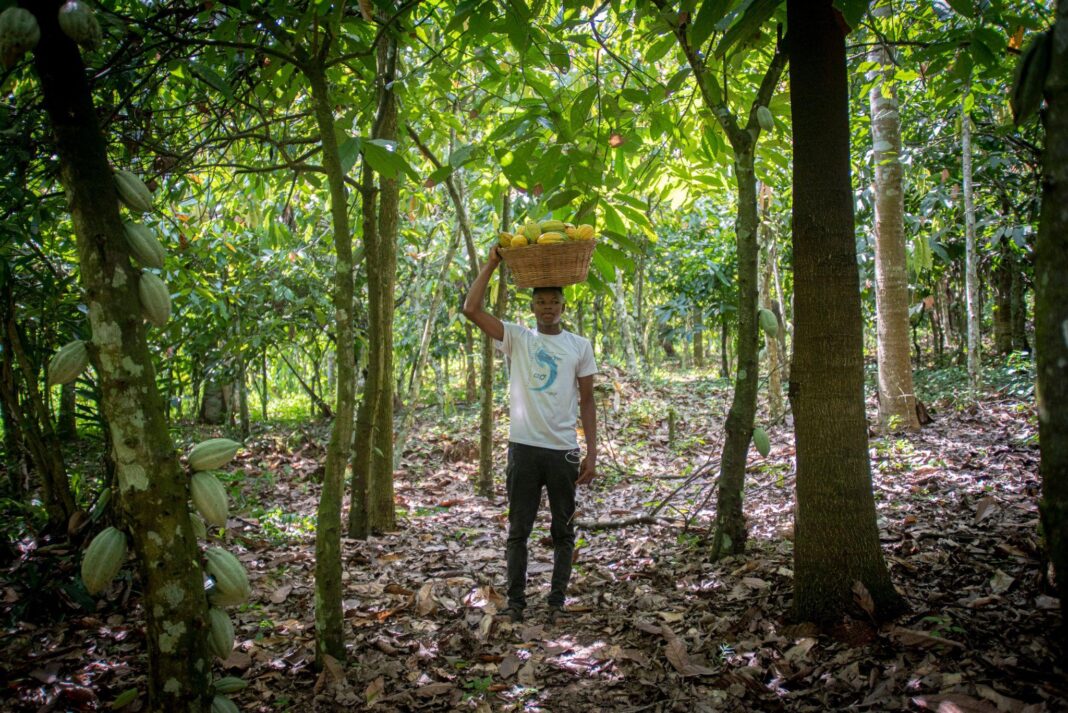

The Young Cocoa Farmers Association has petitioned President John Dramani Mahama for immediate clarification on critical policy and financing issues ahead of the 2026/2027 cocoa purchasing season, warning that persistent uncertainty could further deepen the financial difficulties confronting producers across the country.
In a petition dated Monday, August 17, 2026, the Association said the difficulties encountered during the 2025/2026 cocoa season had left numerous farmers financially strained, discouraged and increasingly apprehensive about the future of cocoa production in Ghana.

The group explained that many young cocoa farmers were unable to attain their expected production volumes and projected earnings during the previous season. Consequently, several farming households struggled to meet basic household expenses, finance their children’s education, obtain healthcare and undertake essential maintenance activities on their farms.

The Association further raised concerns about the difficulties farmers experienced in marketing their cocoa during the minor season. It attributed part of the problem to financial constraints confronting Licensed Buying Companies and purchasing clerks, many of whom, according to the farmers, lacked sufficient capital to purchase available cocoa beans.

The farmers said the financial difficulties facing buyers had also affected the traditional credit arrangements upon which producers depend between harvest periods. They explained that purchasing clerks and buying companies have historically provided advances and other forms of credit that enable farmers to maintain their farms and meet household obligations until the main crop season begins.
However, the Association said many buyers were increasingly unable to provide such financial assistance, thereby placing additional pressure on farmers and raising concerns about the long term sustainability of cocoa production.

The uncertainty surrounding the approaching 2026/2027 purchasing season has, according to the group, compounded the situation. Farmers are reportedly finding it difficult to make informed decisions concerning farm investments, labour arrangements, agricultural inputs and production targets because several important details about the forthcoming season remain unresolved.
The Association is therefore asking the government to establish whether sufficient financing will be available to guarantee the uninterrupted purchase of cocoa beans throughout the entire 2026/2027 season.

It is also demanding assurances that concrete mechanisms have been developed to prevent a repetition of the financial difficulties that disrupted cocoa purchases during the previous season.

Another major issue raised in the petition concerns the producer price of cocoa. The farmers want the government to clarify whether the current producer price will be maintained or whether producers should anticipate a reduction when the new purchasing season begins.
The Association has additionally called for the government to announce the official date on which cocoa purchasing for the 2026/2027 season will commence, arguing that timely disclosure of the information is necessary for farmers to organise their operations and make appropriate production decisions.
The group is also seeking greater transparency concerning the policy under which cocoa farmers are expected to receive 70 percent of the value of cocoa. It wants the government to explain clearly how the policy is expected to operate and how the arrangement will affect the earnings of producers.
Beyond the immediate concerns surrounding the new purchasing season, the Young Cocoa Farmers Association has requested direct engagement with cocoa producers over the proposed 2026 Cocoa Bill.
The Association wants farmers to be given a comprehensive explanation of the proposed legislation, particularly its principal provisions, potential implications and anticipated benefits for cocoa producers. It argued that farmers should not merely be recipients of policy decisions but should be properly consulted on legislation that could significantly affect their livelihoods and the future structure of the cocoa industry.
The farmers stressed that certainty and timely communication from government are essential to restoring confidence within the sector. They maintained that producers require sufficient information to determine how much labour to employ, which inputs to acquire, how much to invest in their farms and what production targets to establish for the coming season.
The Association also reminded the government of the central contribution cocoa farmers make to Ghana’s economy, describing producers as a fundamental pillar of the country’s cocoa industry and an important source of export earnings.
It consequently urged President Mahama and his administration to convene meaningful discussions with relevant stakeholders and provide clear policy direction before the commencement of the new purchasing season.
According to the farmers, decisive engagement from government would not only reduce uncertainty but also enable producers to prepare adequately for the season and restore confidence in the future of cocoa farming.
The Association further insisted that cocoa producers should receive compensation that properly reflects the cost of cultivating and harvesting the crop while allowing farmers to obtain a reasonable return on their investments.
“Farmers deserve prices that reflect the true cost of production and provide a reasonable return on our investment,” the Association stated in its petition.
The petition was signed by Madam Adwoa Mensah, Executive Secretary of the Young Cocoa Farmers Association, and Martin Adu, the group’s Convenor.
Copies of the petition were also addressed to the Chief Executive Officer of the Ghana Cocoa Board, the Speaker of Parliament, the Parliamentary Select Committee on Food, Agriculture and Cocoa Affairs, the Minister for Finance, the Minister for Food and Agriculture, as well as media organisations.
The farmers are now awaiting a response from the government, with the Association maintaining that clear assurances on financing, producer pricing, purchasing arrangements and the proposed Cocoa Bill will be essential to restoring confidence among young producers before the 2026/2027 cocoa purchasing season begins.
SOURCE: Citinewsroom

