
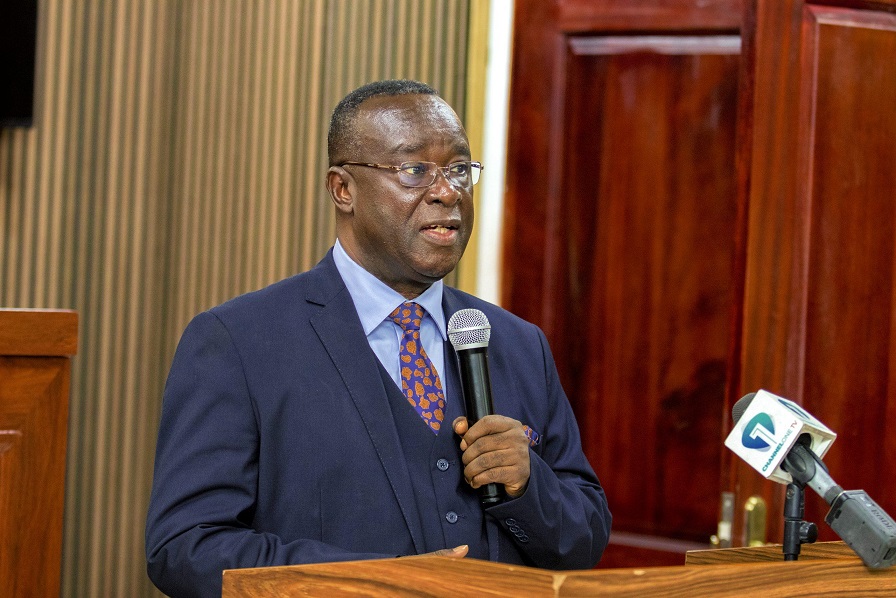

The New Patriotic Party has launched a strong criticism of Chief Justice Paul Baffoe Bonni, accusing him of demonstrating what the party describes as a partisan disposition and facilitating selective justice through the issuance of special warrants allowing two High Court judges to conduct substantive criminal trials during the ongoing legal vacation.
In a statement issued on Tuesday, August 11, 2026 and signed by the party’s General Secretary, Justin Kodua Frimpong, the NPP said it was deeply concerned about the Chief Justice’s justification for granting special authorisation to Justices Francis Achibonga and Audrey Kocuvie Tay to continue hearing substantive criminal matters while the courts are officially on vacation.

The opposition party questioned the rationale for allowing only the two affected courts to conduct full criminal trials when other courts operating during the legal vacation were, according to the NPP, primarily dealing with motions, urgent applications and other interlocutory matters.

The party argued that the Chief Justice had yet to provide what it considered a satisfactory explanation for the selective application of the arrangement.

“The Chief Justice has failed to answer one simple question. Why only these two courts, and why only these cases?” the NPP stated.
According to the party, the criminal proceedings affected by the warrants involve individuals associated with the NPP, including former National Signals Bureau Director General Kwabena Adu Boahene and former National Food Buffer Stock Company Chief Executive Officer Hanan Abdul Wahab.

The two individuals are facing criminal charges relating to allegations that include causing financial loss to the state, although they remain entitled to the presumption of innocence until the cases are determined by the courts.
The NPP contended that allowing the proceedings involving the two accused persons to continue during the legal vacation amounted to unequal treatment, particularly when other criminal proceedings had reportedly been suspended or deferred during the same period.

The party questioned why the legal vacation could interrupt proceedings involving a person accused of murder but could not similarly affect cases involving individuals whom it described as political opponents of the governing administration.

“If the vacation can pause the trial of a murder suspect, why can it not pause the trial of political opponents of the Government?” the party asked.
The NPP further characterised what it called selective urgency in the continuation of the proceedings as evidence of an alleged effort to secure the imprisonment of prominent figures associated with the party.
It also drew comparisons between the current situation and what it described as the excessive haste surrounding the prosecution, trial and conviction of Ashanti Regional Chairman Bernard Antwi Boasiako, popularly known as Chairman Wontumi.
The opposition party maintained that the circumstances surrounding the special warrants had generated legitimate questions about the impartial administration of justice and the manner in which judicial discretion was being exercised during the legal vacation.
According to the NPP, lawyers representing the accused persons in the affected cases, including Zoe, Akyea and Company and Dame and Partners, formally communicated with the Chief Justice on August 5.
The lawyers reportedly informed the Chief Justice that they would be unavailable during the legal vacation and consequently requested that the special warrants permitting the substantive proceedings be withdrawn.
The NPP further stated that the Ghana Bar Association subsequently petitioned the Chief Justice on August 10, drawing attention to what the party described as the established judicial practice that Vacation Courts generally do not conduct substantive trials.
Despite those representations, the party said the special warrants remained operative.
The Chief Justice, however, has defended the arrangement and maintained that decisions concerning adjournments are matters for the respective courts and should not simply be regarded as administrative consequences of the legal vacation.
The NPP has nonetheless questioned the practical implications of that position, particularly where defence lawyers have notified the court authorities of their unavailability before proceedings continue.
The party cited proceedings that took place on Tuesday, August 11, in one of the cases as an illustration of its concerns. According to the NPP, the vacation judge adjourned the matter for less than one week after defence counsel indicated that they were unavailable.
The party alleged that the judge subsequently directed the accused person to secure new legal representation within the short period or personally undertake the cross examination of a prosecution witness.
According to the NPP, the judge further indicated that proceedings would continue until such time as the Chief Justice revoked the warrant authorising the court to sit during the legal vacation.
The opposition party argued that such circumstances raised serious questions about the accused persons’ constitutional right to adequate legal representation and a fair trial.
The NPP therefore invoked Article 19(2)(f) of Ghana’s 1992 Constitution, which guarantees an accused person the right to defend himself before the court in person or through a lawyer of his choice.
The party maintained that the right to legal representation should not be reduced to a theoretical entitlement, particularly in complex criminal proceedings where an accused person may face serious consequences if convicted.
The controversy has consequently expanded beyond the question of whether courts can sit during the legal vacation and into a broader debate about judicial independence, equal treatment before the law and the protection of constitutional rights during criminal proceedings.
For the NPP, the central concern is whether special judicial arrangements are being applied consistently and objectively or whether particular cases involving opposition figures are receiving treatment that differs from other proceedings before the courts.
The party has therefore called for greater clarity regarding the basis upon which the special warrants were issued and why the affected cases have been permitted to proceed while other matters remain subject to the normal limitations associated with the legal vacation.
The dispute also places renewed attention on the delicate relationship between judicial discretion, administrative directions and the constitutional guarantees available to accused persons.
While the Chief Justice maintains that decisions regarding adjournments fall within the authority of the courts handling the individual matters, the NPP insists that the circumstances surrounding the warrants warrant closer scrutiny.
The party has consequently reiterated its allegation that the current arrangement represents selective justice and has warned that continued proceedings under the disputed warrants could deepen concerns about the impartiality of the judicial process.
The controversy is expected to remain under close public and legal scrutiny as the affected criminal cases continue and the courts determine how to proceed amid objections from defence lawyers and criticism from the opposition party.

