

The planned burial and final funeral rites of the late Apostle Professor Emeritus Kwadwo Safo, one of Ghana’s most celebrated inventors, industrial pioneers, and religious leaders, have been plunged into uncertainty after a major disagreement within the Kantanka Family intensified into a legal dispute. The emerging conflict threatens to delay the final farewell for the revered founder of the Kristo Asafo Mission and has opened a significant legal contest over the interpretation and implementation of his last Will and testament, a development that could shape not only the immediate funeral arrangements but also the long term administration of his legacy.
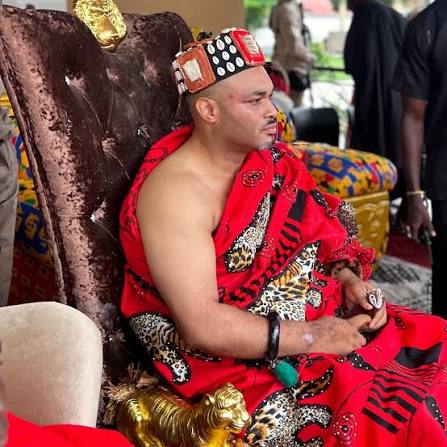
The latest development follows an announcement by Nana Kwadwo Safo Akofena I, who identifies himself as the Head of the Kantanka Family and Leader of Kristo Asafo Mission of Ghana. In a statement released on Monday, he disclosed that the family has instructed lawyers to commence legal proceedings after repeated efforts to achieve an amicable settlement regarding the execution of the late Apostle Safo’s final wishes failed to produce a consensus among relatives and other stakeholders.

According to Nana Kwadwo Safo Akofena I, he had anticipated that every directive contained in the late industrialist’s Will would be implemented faithfully following its formal reading, which was conducted by former Member of Parliament Sarah Adwoa Safo. He explained that the reading of the testament created the expectation that the carefully documented intentions of the late Apostle would serve as the definitive guide for every decision concerning his burial, funeral ceremonies, and related family matters.

However, he contended that subsequent events have not reflected what he believes the testament explicitly required. Central to his concerns is the assertion that the Kantanka Family has not been granted custody of the mortal remains of the late Apostle despite what he maintains are clear provisions contained in the Will. He argued that this disagreement, together with other issues surrounding the execution of the testament, has significantly complicated efforts to establish unity within the family and reach a collective agreement on the arrangements for the burial and final funeral rites.

The statement revealed that considerable efforts were undertaken in the weeks following Apostle Kwadwo Safo’s passing to bridge differences and foster reconciliation among family members. These initiatives reportedly brought together representatives of the Aduana Kotoko Royal Family, senior elders of the Kristo Asafo Mission, traditional authorities, chiefs, queen mothers, and respected community leaders in an effort to preserve harmony while honouring the wishes of the late founder.
Nana Kwadwo Safo Akofena I further disclosed that he personally reached out to his siblings, including Sarah Adwoa Safo, in an attempt to rebuild consensus and promote reconciliation within the family. Despite those engagements, he expressed disappointment that the discussions failed to produce the unity necessary for a mutually accepted funeral arrangement, leaving the family deeply divided over matters he believes should have been settled through dialogue.

Having exhausted what he described as every reasonable avenue for peaceful resolution, he announced that the family has formally instructed the law firm Kwame Gyan and Associates, headed by Professor Kwame Gyan, to initiate legal proceedings. The objective of the court action, according to the statement, is to obtain appropriate judicial relief and secure full legal enforcement of every provision contained in the late Apostle Kwadwo Safo’s last Will and testament.
He emphasized that the decision to seek judicial intervention was made with considerable reluctance and only after repeated attempts at mediation, consultation, and reconciliation proved unsuccessful. In his view, the courts now represent the appropriate constitutional forum to determine the proper interpretation and execution of the testament while safeguarding the expressed intentions of the deceased.

As legal proceedings begin, Nana Kwadwo Safo Akofena I appealed to members of the Kristo Asafo Mission, the extended Kantanka Family, and the wider Ghanaian public to remain calm and exercise restraint. He urged all parties to refrain from taking unilateral actions or circulating unverified information capable of prejudicing the legal process or further widening divisions within the family at a particularly sensitive moment.

He also expressed confidence that Ghana’s judicial system would provide a fair and impartial determination that respects the final wishes of the late Apostle Kwadwo Safo while ensuring that justice is administered in accordance with the law. He called on every stakeholder to place the preservation of the renowned inventor’s legacy above personal disagreements and remain committed to protecting the values he championed throughout his remarkable life.
The unfolding dispute extends beyond an ordinary family disagreement because it concerns the legacy of one of Ghana’s most influential national figures. Apostle Professor Emeritus Kwadwo Safo transformed the country’s industrial landscape through the establishment of the Kantanka Group and became internationally recognized for promoting indigenous technological innovation, engineering, automobile manufacturing, agricultural mechanization, and scientific research. Through the Kristo Asafo Mission, he also built one of Ghana’s most distinctive religious movements, combining spiritual leadership with a vision of self reliance, technological advancement, and national development.
His contributions inspired generations of entrepreneurs, engineers, inventors, and industrialists who viewed his achievements as evidence that advanced manufacturing and technological innovation could flourish within Africa. His advocacy for local production and industrial self sufficiency aligned closely with Ghana’s broader aspirations to strengthen domestic manufacturing, reduce dependence on imported products, and accelerate economic transformation through innovation driven development.
Consequently, the legal contest surrounding the implementation of his Will carries significance beyond the immediate family because it raises broader questions regarding succession planning, testamentary freedom, estate administration, and the preservation of the institutional legacy of nationally important figures. The eventual determination by the courts could establish important legal guidance concerning the enforcement of testamentary instructions where disputes arise among beneficiaries and stakeholders.
As the case moves toward judicial determination, the planned burial and final funeral rites of Apostle Professor Emeritus Kwadwo Safo remain uncertain. Nevertheless, all parties have been urged to uphold peace, respect the rule of law, and allow the courts to determine the proper implementation of the late industrialist’s final wishes. The outcome will not only influence the farewell accorded to one of Ghana’s greatest inventors and religious leaders but may also shape the enduring stewardship of a legacy built upon faith, innovation, industrialization, and an unwavering commitment to national progress.

