
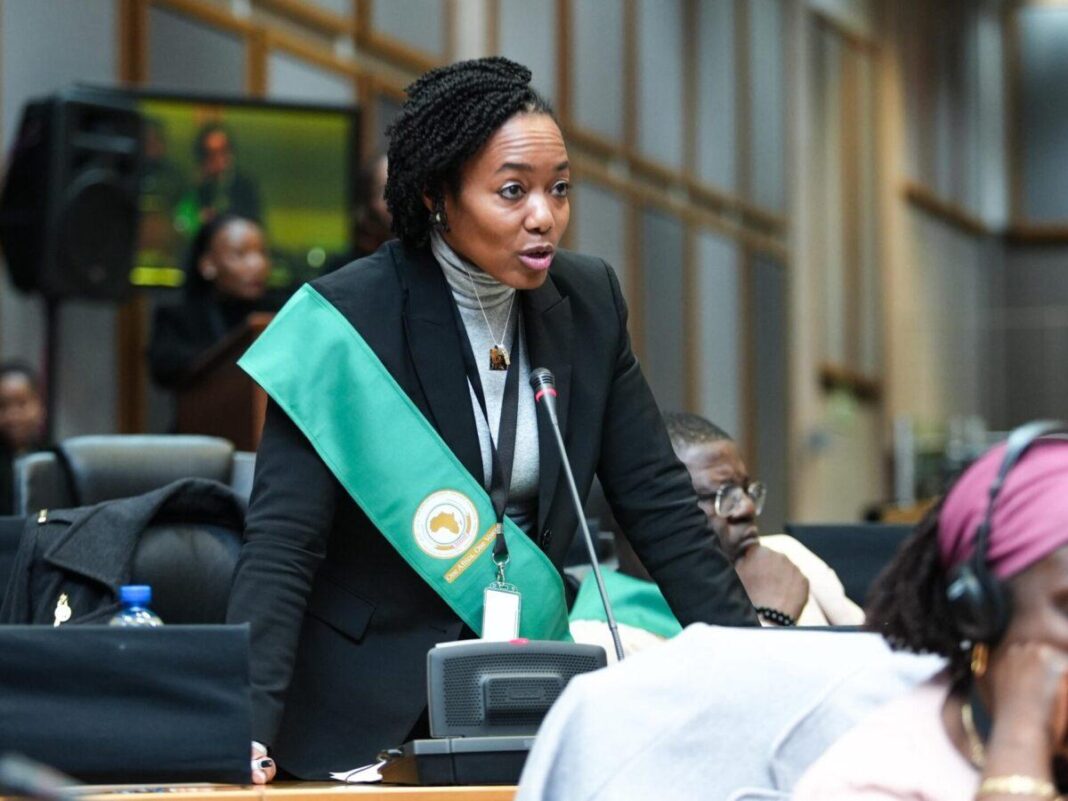

The Second Vice President of the Pan African Parliament, Dr Zanetor Agyeman Rawlings, has issued a strong call for accelerated continental action to confront violence against women and girls, warning that persistent abuse, exploitation and discrimination against females pose a major threat to Africa’s ambitions for peace, stability and sustainable development.
Dr Agyeman Rawlings argued that the continent’s long term development vision cannot be fully realised while millions of women and girls continue to experience violence and unequal treatment, stressing that protecting their rights must remain central to Africa’s transformation agenda.

She made the call while delivering the keynote address at a high level continental dialogue on the ratification, domestication and accountability of the African Union Convention on Ending Violence Against Women and Girls held in Johannesburg, South Africa.

The former President Jerry John Rawlings’ daughter and Member of Parliament for Klottey Korle constituency urged African governments, legislative institutions, communities and civil society organisations to treat the convention as a critical instrument for creating safer societies where women and girls can participate fully in economic, political and social life without fear of violence.

According to Dr Agyeman Rawlings, the fight against violence directed at women and girls requires more than declarations and commitments. She emphasised the need for practical policies, effective enforcement mechanisms and sustained political leadership to address the root causes of gender based violence across African societies.
She stressed that women’s rights are inseparable from human rights and appealed to African Heads of State and government leaders to demonstrate stronger political commitment by ensuring that the convention receives widespread ratification, domestication and implementation at national levels.

Dr Agyeman Rawlings noted that the success of the African Union Convention on Ending Violence Against Women and Girls would depend largely on how effectively member states translate its provisions into national laws, policies and institutional practices.
She further called for improvements in the way governments collect economic and social data, particularly regarding the unpaid contributions of women within households and communities.

The legislator proposed a review of household census instruments to properly capture women’s unpaid labour, explaining that accurate data would allow governments to design more responsive budgets and policies that reflect the realities faced by women across the continent.

According to her, recognising unpaid work performed largely by women would provide a clearer understanding of women’s economic contributions and support the creation of policies aimed at achieving greater gender equality.
“It requires us to invest deliberately in girls’ education, women’s health, economic empowerment, protection services for gender based violence survivors, access to justice and programmes that strengthen women’s participation in peace building, governance and leadership,” Dr Agyeman Rawlings stated.
She also highlighted the importance of technology in advancing development and inclusion, while cautioning that innovation must operate within strong ethical boundaries to protect human dignity and prevent the creation of new forms of inequality.
Dr Agyeman Rawlings called for comprehensive legal frameworks, responsible technology policies and effective oversight systems to ensure that digital transformation contributes positively to gender equality rather than exposing women and girls to additional risks.
She assured participants that the Pan African Parliament would continue to use parliamentary diplomacy, legislative advocacy and policy engagement to encourage African Union member states to speed up the process of signing, ratifying, domesticating and implementing the convention.
The high level dialogue, organised by the Women’s Caucus of the Pan African Parliament, brought together lawmakers, African Union officials, representatives of regional organisations, civil society groups and development partners to explore practical approaches for ending violence against women and girls throughout Africa.
The discussions focused on strengthening accountability systems, improving national responses to gender based violence and ensuring that governments develop sustainable strategies to protect vulnerable groups.
The African Union Convention on Ending Violence Against Women and Girls represents one of the continent’s most significant legal efforts to establish a unified framework for preventing and eliminating violence against women and girls.
The convention was adopted during the 38th Ordinary Session of the Assembly of Heads of State and Government of the African Union in February 2025, creating a continental legal mechanism designed to guide member states in combating all forms of violence against women and girls.
Its adoption marked a major milestone in Africa’s gender equality efforts, providing a shared legal foundation for addressing issues including domestic violence, sexual violence, harmful practices, exploitation and other forms of abuse affecting women and girls.
The renewed call by Dr Agyeman Rawlings places renewed attention on the responsibility of African governments to move beyond policy commitments and take concrete steps towards protecting women and girls.
Her intervention also reinforces the growing recognition that achieving Africa’s development goals, including the objectives outlined under Agenda 2063, requires the full participation, safety and empowerment of women and girls.
As African nations continue discussions on implementing the convention, the focus will now shift towards ensuring that political commitments are matched with effective legislation, adequate funding and accountable institutions capable of delivering meaningful change across the continent.

