
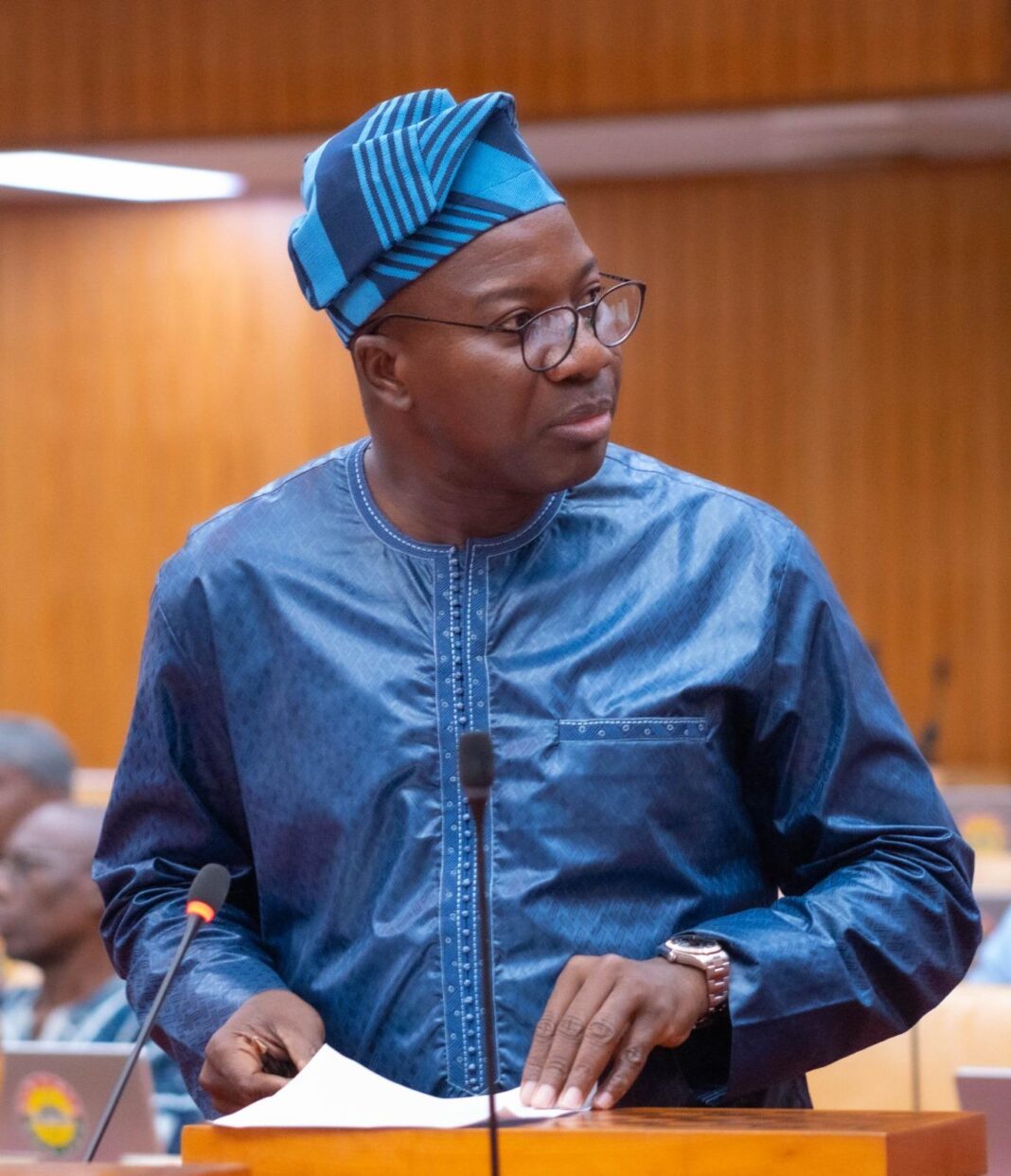

The debate over Ghana’s 2026 Mid Year Fiscal Policy Review took an even more political turn after Majority Leader Mahama Ayariga mounted a vigorous defence of the government’s economic record while calling on the Minority in Parliament to support efforts to bring former Finance Minister Ken Ofori Atta back to Ghana to account for what he described as the country’s unprecedented debt burden. His intervention underscored the deep divisions between the governing National Democratic Congress and the opposition New Patriotic Party over responsibility for Ghana’s recent economic challenges and the path toward long term fiscal recovery.
Participating in the parliamentary debate following the presentation of the Mid Year Fiscal Policy Review by Finance Minister Dr Cassiel Ato Forson on Thursday, July 23, the Bawku Central Member of Parliament argued that Ghana’s current economic reforms cannot be fully appreciated without acknowledging the severe financial difficulties inherited from the previous administration. He maintained that the enormous debt accumulated during the tenure of the former government continues to impose significant costs on the state and ordinary citizens, making fiscal discipline and economic restructuring unavoidable.

Ayariga questioned the continued absence of former Finance Minister Ken Ofori Atta from Ghana and insisted that the former economic manager should return to explain the decisions that contributed to the country’s debt crisis. According to him, Ghanaians deserve a comprehensive account of the borrowing strategy pursued under the previous administration and the financial consequences that followed.

He argued that while citizens continue to endure the sacrifices associated with restoring macroeconomic stability through fiscal reforms, debt restructuring and economic adjustment measures, those who presided over the period of extensive borrowing should also be held publicly accountable. In his assessment, transparency and accountability are indispensable pillars of democratic governance and responsible public financial management.

The Majority Leader used the opportunity to draw a sharp contrast between the economic philosophy of the previous administration and that of the current government. He argued that former economic managers consistently maintained that sustaining government operations required the introduction of numerous taxes, including the controversial Electronic Transfer Levy imposed on mobile money transactions. According to Ayariga, the current administration has demonstrated that the economy can be managed without relying on what he described as excessive taxation while simultaneously maintaining fiscal stability and strengthening public confidence.
He praised Finance Minister Dr Cassiel Ato Forson for abolishing several taxes introduced under the previous administration while pursuing what he characterised as prudent fiscal management. According to the Majority Leader, the government’s approach has combined expenditure discipline, stronger domestic revenue administration, improved debt management and targeted public investment to restore confidence in Ghana’s economy while reducing the financial burden on households and businesses.

His remarks reflect one of the central policy narratives advanced by the current administration since assuming office. Government officials have consistently argued that their economic strategy has prioritised macroeconomic stability through disciplined public spending, improved revenue mobilisation, debt restructuring and structural reforms supported under Ghana’s programme with the International Monetary Fund. They further contend that these measures have contributed to lower inflation, improved fiscal balances, renewed investor confidence and stronger economic growth despite challenging global economic conditions.
Ayariga also criticised the spending priorities of the previous New Patriotic Party administration, arguing that scarce public resources were frequently directed toward projects that did not adequately address Ghana’s most pressing developmental needs. In contrast, he asserted that the current government is concentrating public investment on expanding educational infrastructure, rehabilitating existing schools, constructing roads and bridges and improving essential public services that directly benefit communities across the country.

According to him, the 2026 Mid Year Fiscal Policy Review demonstrates a deliberate commitment to productive capital investment intended to stimulate economic activity, improve connectivity, enhance access to education and strengthen long term national development. He maintained that infrastructure expansion remains a fundamental driver of inclusive economic growth and social transformation.

The political significance of Ayariga’s intervention extends beyond the immediate parliamentary debate. Since Ghana entered an International Monetary Fund supported economic reform programme, responsibility for the country’s debt accumulation has remained one of the most fiercely contested issues in national politics. The previous administration has defended its borrowing decisions by pointing to extraordinary global shocks, including the Coronavirus pandemic and the international economic disruptions triggered by the Russia Ukraine conflict, which required significant fiscal interventions to protect lives, livelihoods and businesses. Conversely, the current administration argues that unsustainable borrowing practices and weak fiscal discipline substantially worsened Ghana’s financial vulnerabilities before those global crises intensified.
Historically, debates over national budgets and Mid Year Fiscal Policy Reviews have served as defining moments in Ghana’s democratic governance, providing Parliament with an opportunity to scrutinise government policy, assess fiscal performance and hold economic managers accountable before the presentation of subsequent national budgets. Such debates often influence investor confidence, shape public discourse and define the competing economic visions presented to the electorate.
Concluding his contribution, Ayariga expressed unwavering confidence in Dr Cassiel Ato Forson’s stewardship of Ghana’s economy, declaring that the Finance Minister had demonstrated competent and disciplined leadership during a critical period of economic recovery. He maintained that the government’s policies are steadily rebuilding economic stability while reducing the financial pressures imposed on citizens and restoring confidence in Ghana’s fiscal outlook. His remarks further intensified the highly charged parliamentary exchanges over the Mid Year Fiscal Policy Review, setting the stage for continued political debate over economic accountability, fiscal responsibility and the legacy of successive administrations in shaping Ghana’s economic future.

