
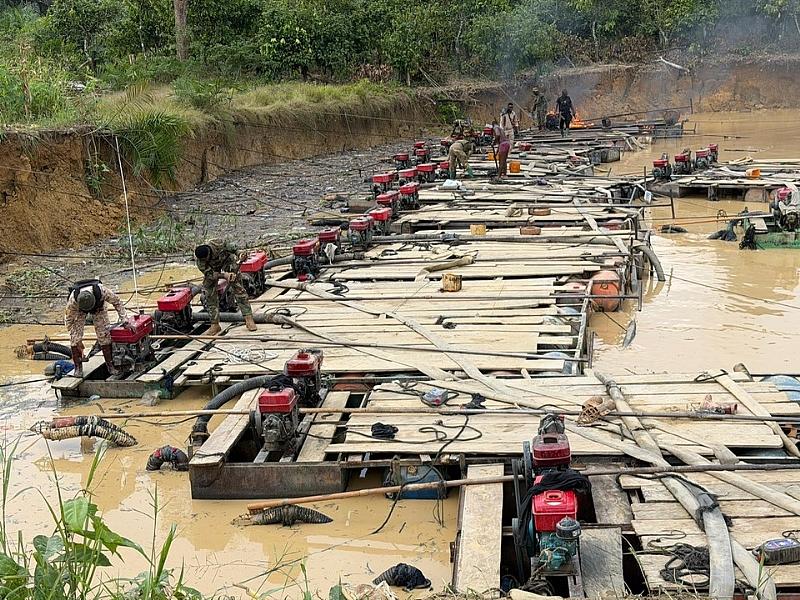

The credibility of Ghana’s fight against illegal mining has come under renewed public scrutiny after the Ghana Coalition Against Galamsey (CAGG) raised concerns over the operations of the National Anti Illegal Mining Operations Secretariat, demanding greater transparency and accountability from the agency responsible for coordinating major enforcement activities against illegal mining.
While acknowledging the efforts and achievements of NAIMOS since its establishment, including more than 200 reported field operations aimed at disrupting illegal mining activities across the country, CAGG said the effectiveness of the institution must not be measured only by the number of operations conducted but also by the fairness, consistency, and impartiality of its enforcement actions.

The coalition argued that public confidence in the national anti galamsey campaign depends heavily on whether state agencies apply the law equally to all individuals and mining operators without political influence, favouritism, or selective treatment.

In a statement issued on Monday, the Ghana Coalition Against Galamsey recognised NAIMOS as an important institution in government’s broader strategy to protect Ghana’s forests, rivers, and natural resources from the destructive effects of illegal mining. However, the group insisted that questions surrounding the agency’s operational methods must be addressed to preserve trust in the campaign.

“NAIMOS has been active on the ground, and its record of over 200 operations is not in dispute,” the coalition stated.
“The question that must be asked, however, is whether that record reflects enforcement carried out without fear or favour.”

CAGG said it had received complaints and reports from some mining communities suggesting that NAIMOS’ enforcement activities may not always have been conducted equally, with allegations that some operators were treated differently from others during interventions.
The coalition stressed that such claims, whether proven or not, require immediate attention because perceptions of unequal enforcement could undermine public support for the fight against illegal mining.

Among the most serious concerns raised by CAGG were allegations that some confiscated mining equipment may have been returned to operators after financial payments were allegedly made. The coalition described the claim as deeply troubling and demanded urgent clarification from NAIMOS.

“Far more troubling is the allegation that confiscated equipment is being returned to miners upon payment of a fee, with motorbike owners reportedly paying GH¢15,000 to reclaim seized bikes,” the group stated.
“If this is true, this is shameful, and it is an affront to the integrity of NAIMOS and to the very mandate it was set up to fulfil.”
The coalition emphasised that allegations of this nature cannot be ignored because they directly affect the credibility of a national institution established to protect Ghana’s environment and enforce mining regulations.
CAGG therefore called on NAIMOS leadership to publicly respond to the accusations and provide clarity on how seized equipment is handled, stored, released, or disposed of after enforcement operations.
“We call on NAIMOS to come clean on this allegation without delay,” the coalition demanded.
Beyond concerns about seized equipment, the group also questioned the strength of NAIMOS’ public accountability systems and whether ordinary citizens affected by illegal mining operations have accessible channels to submit complaints and receive responses.
The coalition asked the agency to explain where its official complaints mechanisms are published, how community grievances are recorded, and what action has been taken on reports received from mining areas.
“Where is NAIMOS’s toll free complaints line published, and what is the public record of community complaints received, logged and acted upon?” CAGG questioned.
“Accountability requires that these questions be answered, not assumed.”
The concerns raised by CAGG come against the backdrop of Ghana’s prolonged struggle with illegal mining, an activity that has caused extensive environmental damage through the destruction of forests, pollution of rivers, degradation of farmland, and threats to the country’s water security.
Successive governments have introduced several initiatives aimed at combating galamsey, including military operations, task forces, regulatory reforms, and specialised enforcement institutions. However, the fight has remained politically sensitive, with critics frequently questioning whether enforcement actions are applied consistently across political and social groups.
NAIMOS has emerged as one of the key institutions involved in recent government efforts to disrupt illegal mining networks. Authorities have credited the agency with carrying out operations that have led to the seizure of mining equipment, arrests of suspected illegal miners, and interventions in affected communities.
The government has maintained that NAIMOS is playing a vital role in protecting Ghana’s natural resources and strengthening the country’s response to illegal mining.
However, CAGG argues that the long term success of the campaign will not depend solely on the number of raids conducted or equipment seized, but on whether enforcement institutions operate with openness, independence, and accountability.
The coalition has previously criticised other state institutions, including sections of the Ghana Police Service and local authorities, over what it describes as weaknesses in enforcing mining laws. It maintains that illegal mining will continue to thrive if institutions responsible for enforcement fail to demonstrate fairness and consistency.
The latest concerns therefore place NAIMOS under increased public attention as calls grow for stronger oversight of agencies involved in the fight against galamsey.
As Ghana intensifies efforts to protect its environment and natural resources, the debate surrounding NAIMOS highlights a broader national question: whether the country’s anti illegal mining campaign can achieve lasting success without absolute transparency, equal enforcement, and public trust.
The coming response from NAIMOS will be closely watched, as stakeholders seek assurances that the fight against galamsey remains driven by law, accountability, and the national interest rather than selective enforcement.

