
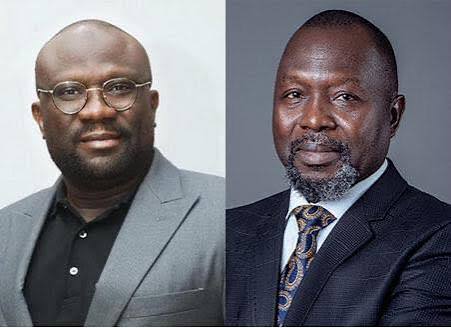

Hanan Abdul Wahab challenges alleged unlawful detention, repeated arrests and seizure of personal belongings as he calls for protection of constitutional rights
Former Chief Executive Officer of the National Food Buffer Stock Company, Hanan Abdul Wahab, has formally petitioned the Attorney General and Minister for Justice, Dr Dominic Akuritinga Ayine, accusing state investigative bodies of subjecting him to persistent harassment, unlawful detention and violations of his constitutional rights since the beginning of his criminal prosecution.

In a strongly worded petition dated July 17, 2026, Abdul Wahab alleged that actions taken by the Attorney General’s Office, the Economic and Organised Crime Office (EOCO) and the Bureau of National Investigations (BNI) have undermined his right to due process and fair treatment under Ghana’s constitutional framework.

The petition was submitted after Abdul Wahab said a previous complaint letter from his legal representatives dated July 9, 2026, which raised concerns about alleged rights violations and the continued retention of his property by EOCO, received no response.

The former Buffer Stock Chief Executive maintained his innocence throughout the petition, insisting that he has committed no wrongdoing and remains prepared to defend himself through lawful judicial procedures. He stated that although he continues to have confidence in Ghana’s justice system, he believes certain actions by state institutions have denied him the protections guaranteed under the law.
Abdul Wahab accused the Attorney General’s Office, EOCO and the BNI of engaging in what he described as a systematic pattern of actions designed to frustrate his access to justice and weaken his ability to properly defend himself.

According to his account, his legal troubles began on June 25, 2025, when he was arrested and detained by EOCO for more than two weeks. He argued that the initial bail condition imposed on him, reportedly set at GH¢60 million, was excessive and unjustifiable.
He further alleged that the Attorney General held a public press briefing concerning the matter before formal charges had been presented before the court, an action he said violated his constitutional right to be presumed innocent until proven guilty.

Following his arrest, Abdul Wahab was charged before the High Court Criminal Court 4, presided over by Justice Kocuvie Tay, where he pleaded not guilty to the allegations against him. The court granted him bail of GH¢100 million with six sureties, four of whom were required to provide landed property as security.

Abdul Wahab described the bail conditions as unreasonable and oppressive, arguing that they placed an unnecessary burden on him despite his willingness to cooperate with the judicial process.
The former government appointee stated that after approximately seven months of proceedings, all charges against him were withdrawn on May 5, 2026, following legal challenges surrounding alleged procedural defects in the prosecution’s case.
However, he claimed that shortly after being discharged by the court, EOCO officials, accompanied by armed security personnel wearing balaclavas, entered the court premises and arrested him again despite his record of cooperating with investigators.
He alleged that following the rearrest, his lawyers were prevented from accessing him at EOCO’s offices. He further claimed that he was taken to a medical facility for treatment without his family members or legal representatives being informed, even though they were present and awaiting updates.
According to Abdul Wahab, he was eventually released at approximately 9:00 p.m. on May 6, 2026, without undergoing questioning and only appeared before EOCO investigators the following day.
He said he was later brought before the Specialised Court approximately 11 days after the incident, where the matter was heard by Justice Francis A. Achibonga.
The former Buffer Stock CEO also highlighted an incident involving his attempted medical travel to the United Kingdom. He said that on June 29, 2026, the High Court granted him permission to travel for a scheduled medical appointment after being satisfied that there was no indication he would evade the judicial process.
The court reportedly directed him to leave Ghana by July 4 and return by July 12, 2026.
However, Abdul Wahab alleged that while preparing to board his flight at the Accra International Airport after completing immigration and security procedures, he was intercepted and detained by armed BNI operatives.
He described the action as a direct violation of the existing court order permitting him to travel, arguing that the arrest disregarded judicial authority.
According to his petition, he was held for four days without being formally charged, initially under BNI custody before being transferred to EOCO. During this period, he alleged that he was denied meaningful access to his lawyers for most of the detention period.
Abdul Wahab also questioned public comments allegedly made by Deputy Attorney General Dr Justice Srem Sai, who reportedly claimed on social media that he had attempted to withdraw funds from a frozen bank account.
The former CEO rejected the allegation, insisting that authorities have not provided evidence identifying the account involved, the amount allegedly targeted or the method through which the supposed transaction was attempted.
He further alleged that after his transfer to EOCO, investigators imposed another bail requirement of GH¢5 million with two sureties, describing the condition as excessive and intended to prevent his immediate release.
The petition also raises concerns over personal property Abdul Wahab claims remains in EOCO custody, including £6,700 belonging to borrowed funds intended for medical and travel expenses, two mobile phones and his passport, which he said is required for submission to the court registrar.
He alleged that his mobile devices were accessed while in state custody without judicial authorisation on July 6 and July 7, 2026.
Describing his experience as a repeated cycle of arrest and release, Abdul Wahab characterised the situation as a “catch and release” approach, claiming he has been arrested and released four times since the commencement of the case.
He questioned whether the continued actions against him were driven by legitimate prosecutorial objectives or influenced by personal hostility.
In his formal requests to the Attorney General, Abdul Wahab called for an immediate end to what he described as prejudicial public commentary by state officials, insisting that all future proceedings must comply with constitutional protections and the rule of law.
He also requested that EOCO and BNI be directed to discontinue what he alleges is a pattern of harassment against him and members of his family.
Additionally, he demanded the immediate return of his passport, mobile phones, travel funds and other personal items allegedly being held by EOCO.
The petition was copied to the Chief Justice of Ghana at the Judicial Service headquarters in Accra, signalling Abdul Wahab’s intention to seek institutional attention regarding his allegations.
The claims contained in the petition remain allegations and have not yet been determined by the court. The case continues to generate significant public interest because it raises broader questions about the balance between anti corruption investigations, state security powers and the constitutional rights of individuals facing prosecution.
The next stages of the legal process are expected to determine the validity of the allegations, the conduct of investigative agencies and whether the actions complained of were consistent with Ghana’s constitutional guarantees of liberty, fair hearing and protection from unlawful treatment.

