
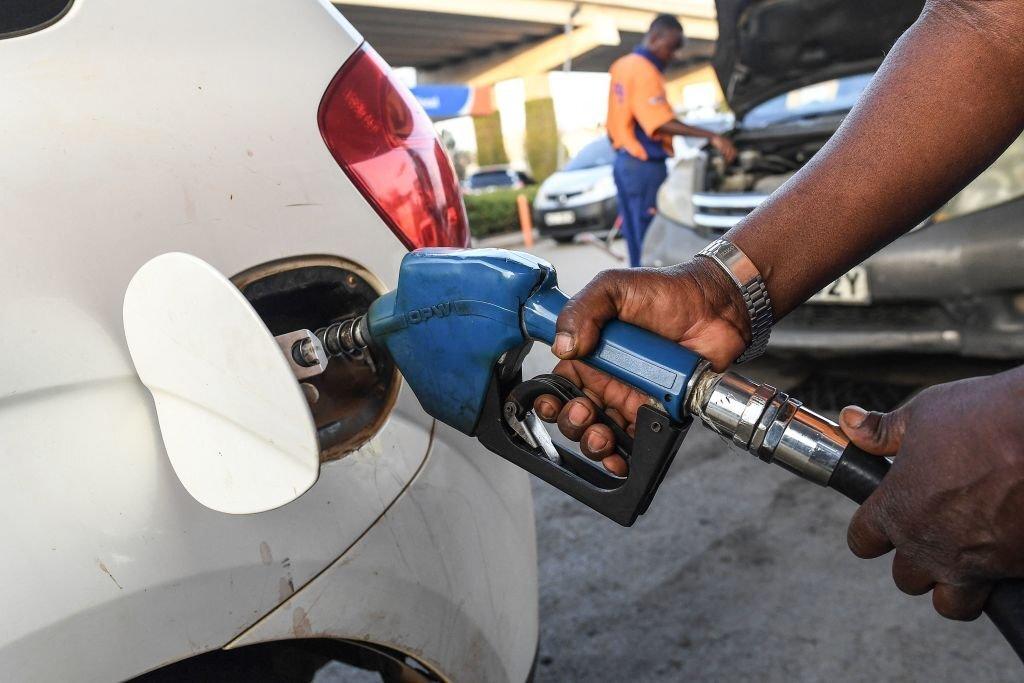

Ghana’s petroleum market has entered another period of upward price adjustments as leading Oil Marketing Companies begin implementing higher pump prices in response to escalating global crude oil costs, renewed geopolitical instability in the Middle East, and a modest depreciation of the Ghana cedi. The latest increases underscore the continued vulnerability of Ghana’s downstream petroleum industry to international developments, reinforcing the country’s long standing exposure to external shocks despite recent improvements in macroeconomic stability.
Several major fuel retailers have already revised their pump prices upward, signalling the beginning of what industry analysts expect to become a market wide adjustment during the latest pricing window. The development is expected to influence transportation costs, production expenses, inflationary trends, and the overall cost of living, placing renewed pressure on households and businesses while presenting another policy challenge for economic managers seeking to preserve Ghana’s recent gains in price stability.

Star Oil has become one of the first major companies to implement the revised prices, increasing the cost of a litre of petrol to GH¢13.67 from GH¢12.79. Diesel has experienced an even sharper adjustment, climbing from GH¢14.95 at the beginning of July 2026 to GH¢16.27 per litre.

GOIL, the country’s largest indigenous oil marketing company, has also revised its prices upward. A litre of petrol is now selling for GH¢13.88 after previously retailing at GH¢12.79, while diesel has risen to GH¢16.30 per litre from GH¢15.35.

The latest pricing data indicate that both companies have positioned their petrol prices above the minimum benchmark established by the National Petroleum Authority for the current pricing cycle. Star Oil’s revised prices also exceed the regulator’s indicative floor for both petrol and diesel, illustrating how market competition and commercial considerations continue to shape retail pricing within Ghana’s petroleum sector.
Industry sources indicate that additional Oil Marketing Companies are expected to introduce similar adjustments as the pricing window progresses, creating a more uniform upward movement across the national market.

Under the latest pricing guidance issued by the National Petroleum Authority, the minimum indicative pump price stands at GH¢13.38 per litre for petrol and GH¢14.35 per litre for diesel. Retailers, however, retain the flexibility to price above these reference levels depending on operational costs, supply arrangements, and commercial strategy.
The latest increases closely reflect projections released by the Chamber of Oil Marketing Companies, which anticipated another upward adjustment driven largely by developments beyond Ghana’s borders. According to the Chamber’s latest market assessment, petrol prices are expected to increase by between 3.79 percent and 5.31 percent, potentially pushing average pump prices to approximately GH¢14.52 per litre. Diesel prices are projected to remain around GH¢16.00 per litre following an expected increase of about seven pesewas per litre. Liquefied Petroleum Gas is also forecast to record a modest increase of between 1.10 percent and 1.30 percent per kilogramme.

The principal driver behind the latest price increases remains the resurgence of geopolitical instability across the Middle East. Renewed tensions have intensified fears over possible disruptions to global energy supplies, particularly along the strategically important Strait of Hormuz, through which roughly one fifth of the world’s petroleum exports pass. Any threat to shipping through this critical maritime corridor immediately influences international oil markets because traders anticipate potential supply shortages and increased transportation risks.

These concerns intensified after reports emerged of renewed hostilities despite earlier ceasefire efforts. International crude oil prices, which had initially retreated significantly from an average of US$78.12 per barrel to US$71.90 per barrel, reversed course sharply after reports of ceasefire violations on July 7 and July 8. Market sentiment deteriorated further following reports of Iranian missile attacks involving two tankers linked to the United Arab Emirates, prompting Brent crude prices to climb above US$84 per barrel amid renewed fears over maritime security and uninterrupted energy supplies.
This renewed volatility has restored what financial markets describe as a geopolitical risk premium, meaning traders are once again paying higher prices because of uncertainty surrounding future oil supplies rather than immediate shortages. Historically, similar geopolitical crises have generated rapid increases in petroleum prices worldwide, particularly during conflicts affecting the Persian Gulf, one of the world’s most strategically important energy producing regions.
Domestic exchange rate movements have also contributed to the latest upward adjustment. During the current pricing window, the Ghana cedi weakened modestly against the United States dollar, with the exchange rate moving from GH¢11.4333 to GH¢11.4970 per dollar, representing a depreciation of approximately 0.55 percent. Although relatively small, this movement increases the local currency cost of importing refined petroleum products because international fuel purchases are denominated primarily in United States dollars.
International refined petroleum markets have reflected similar trends. Diesel recorded the largest increase among refined products, advancing by 8.14 percent, while petrol gained 4.96 percent. Liquefied Petroleum Gas moved in the opposite direction, declining marginally by 0.92 percent on international markets, although domestic pricing dynamics are expected to result in a modest increase for consumers in Ghana.
The latest adjustments once again demonstrate the close relationship between international energy markets and Ghana’s domestic economy. Since the country imports a substantial proportion of its refined petroleum requirements, fluctuations in global crude prices, shipping costs, exchange rate movements, and geopolitical developments are transmitted relatively quickly into local pump prices. This structural dependence has remained one of the defining characteristics of Ghana’s downstream petroleum industry since the sector was liberalised.
The broader economic implications extend well beyond filling stations. Higher fuel prices traditionally increase transportation fares, elevate production and distribution costs for businesses, and contribute to upward pressure on consumer prices across multiple sectors of the economy. These developments could complicate efforts by monetary authorities to sustain recent progress in containing inflation while simultaneously supporting economic growth.
As international tensions remain unresolved and uncertainty persists within global energy markets, petroleum prices are likely to remain highly sensitive to further geopolitical developments, making the current pricing cycle another reminder that Ghana’s fuel market continues to be shaped as much by events thousands of kilometres away as by domestic economic conditions.

