

Ghana’s mining sector is set for a major regulatory transformation after government announced plans to reduce the maximum duration of mining leases from 30 years to 20 years and introduce stronger obligations requiring mining companies to negotiate development agreements directly with communities affected by mining activities.
The proposed reforms, which have already received approval from Cabinet, form part of amendments to the Minerals and Mining Act, 2006, Act 703, and are expected to be presented to Parliament for consideration. The changes represent one of the most significant attempts in recent years to reshape the governance framework of Ghana’s mineral resources and ensure that the economic benefits of mining are more widely distributed.

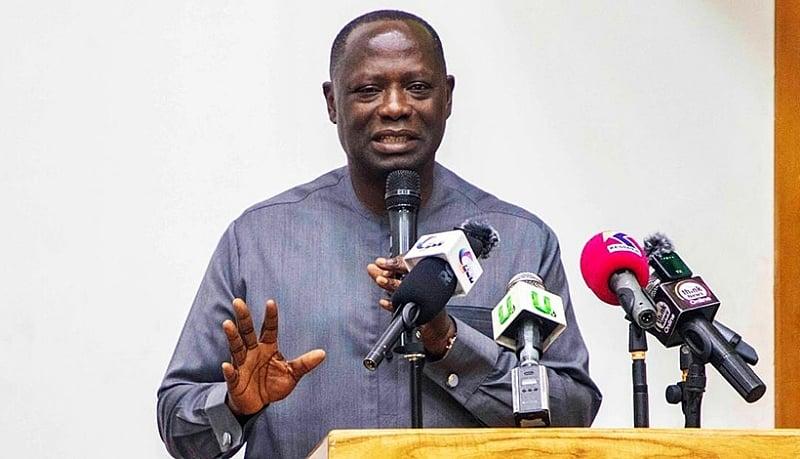
The Minister for Lands and Natural Resources, Emmanuel Armah Kofi Buah, announced the planned amendments during the Government Accountability Series held in Accra on Wednesday, July 15, 2026. He explained that the review of the mining law is aimed at strengthening Ghana’s control over its mineral wealth while ensuring that communities hosting mining operations receive more meaningful and sustainable benefits.

Under the existing legal framework, mining companies can receive an initial mining lease period of up to 30 years, with the possibility of renewal for another 30 years. This arrangement has historically provided companies with long term security for investment while enabling them to plan large scale extraction projects.

However, the proposed amendment seeks to reduce the maximum lease period to 20 years, creating a shorter regulatory cycle that would allow government to reassess mining agreements more frequently and ensure that national interests remain protected as economic, environmental and social conditions change.
According to Mr Armah Kofi Buah, the reduction of lease periods forms part of a broader effort to modernise Ghana’s mining governance system and ensure that the country obtains greater value from its natural resources.

Beyond changing the duration of mining agreements, the proposed legislation introduces mandatory Community Development Agreements, a requirement that will compel mining companies to formally negotiate development priorities with communities located within mining areas.
The Minister explained that the new arrangement is designed to address long standing concerns from mining communities that they often experience environmental and social challenges from mining activities without receiving adequate development support in return.

He stated that every mining lease issued under the proposed framework would require an accompanying agreement between the mining company and the host community, outlining specific development commitments that reflect the actual needs and priorities of residents.

The introduction of Community Development Agreements represents a major shift from the previous approach, where mining companies largely determined the type and scale of assistance provided to communities. Under the new system, communities will have a stronger voice in identifying critical projects and negotiating commitments directly with mining operators.
Mr Armah Kofi Buah explained that mining companies would no longer independently decide the nature of community interventions, such as constructing boreholes or providing limited social amenities, without considering the broader development priorities of the affected communities.
Instead, communities would participate directly in determining projects considered most necessary for improving livelihoods, including education facilities, healthcare infrastructure, roads, water systems, economic empowerment programmes and other development initiatives.
The Minister emphasised that these agreements would be reached through consultation and mutual commitment between mining companies and communities, creating a more structured relationship between resource extraction and local development.
The proposed reforms come amid decades of debate over whether Ghana, despite being one of Africa’s largest gold producers, has achieved sufficient economic and social benefits from its mineral resources. Many mining communities have repeatedly raised concerns about environmental degradation, limited employment opportunities, inadequate infrastructure and the unequal distribution of mining revenues.
By requiring mining companies to enter legally recognised community agreements, government hopes to strengthen accountability and ensure that mining activities contribute more directly to improving the quality of life in affected areas.
The changes also form part of wider efforts to improve transparency, sustainability and local participation in Ghana’s mining industry. The government has indicated that the revised legislation will introduce additional measures aimed at strengthening sector governance and ensuring that mineral resources serve as a foundation for national development.
The reduction of mining lease periods could also alter the relationship between the state and mining investors. While shorter leases may encourage more frequent reviews of mining operations and agreements, they may also require careful implementation to maintain investor confidence and preserve Ghana’s attractiveness as a destination for responsible mining investment.
Ghana’s mining sector remains a critical pillar of the economy, contributing significantly through export earnings, government revenue, foreign exchange generation and employment. However, policymakers have increasingly argued that the country must move beyond relying on mineral extraction alone and focus on ensuring that mining creates lasting economic transformation.
The proposed amendments therefore represent a significant policy shift aimed at balancing investment certainty with stronger national oversight and community participation.
If approved by Parliament, the reforms could redefine the future of mining in Ghana by introducing a framework where companies operate under shorter regulatory cycles and where communities have a legally recognised role in determining how mining benefits are shared.
The government’s proposed changes mark a new chapter in Ghana’s mineral resource management, placing greater emphasis on accountability, sustainability and the principle that the wealth generated from the country’s natural resources must translate into tangible development for the people and communities that host mining activities.

