

Ghana has moved a significant step closer to what could become the most extensive constitutional reform exercise in the history of the Fourth Republic as Cabinet begins its final deliberations on the government’s official response to proposals aimed at reviewing the 1992 Constitution.
Government Spokesperson Felix Kwakye Ofosu has announced that Cabinet is currently holding its third and final meeting to consider the government’s position paper on the recommendations submitted by the Constitutional Review Committee, marking a critical stage in a process that could reshape several aspects of Ghana’s governance architecture, electoral system and public administration framework.

In a statement shared on social media on Tuesday, July 14, 2026, Mr Kwakye Ofosu confirmed that the meeting was underway and would conclude Cabinet’s examination of the proposed reforms before government takes the next steps towards implementation.

The final Cabinet session follows two earlier meetings during which ministers reviewed the recommendations presented by the Constitutional Review Committee, chaired by Professor Henry Kwasi Prempeh. The committee was established to examine previous constitutional reform proposals, undertake consultations with citizens and identify areas where Ghana’s constitutional system could be strengthened to better respond to contemporary governance challenges.

The committee submitted its final report to President John Dramani Mahama on December 22, 2025, after conducting nationwide engagements that gathered views from citizens, institutions, civil society groups, traditional authorities and stakeholders across the country.
The review process represents one of the most important constitutional conversations since Ghana adopted the 1992 Constitution, which ushered in the Fourth Republic and has provided the foundation for more than three decades of uninterrupted democratic governance.

Among the most notable recommendations presented by the committee is a proposal to extend the presidential tenure from the current four years to five years. Supporters of the proposal argue that a longer term could provide governments with additional time to implement major development programmes, while critics have raised questions about possible implications for political accountability and democratic checks.
Another major recommendation seeks to end the practice where ministers of state simultaneously serve as Members of Parliament. The proposed reform is intended to strengthen the separation of executive and legislative responsibilities by ensuring that ministers focus exclusively on their executive duties while Parliament maintains stronger independence in carrying out its oversight mandate.

The committee also proposed the creation of an independent Emoluments Commission to oversee remuneration arrangements for Article 71 office holders and other public officials. The proposal is aimed at improving transparency, reducing public controversy surrounding political office holders’ benefits and establishing a more structured framework for determining public sector compensation.

Further recommendations include reforms to the appointment process for Metropolitan, Municipal and District Chief Executives, commonly known as MMDCEs, with the objective of improving local government accountability, strengthening decentralisation and increasing citizen participation in governance at the district level.
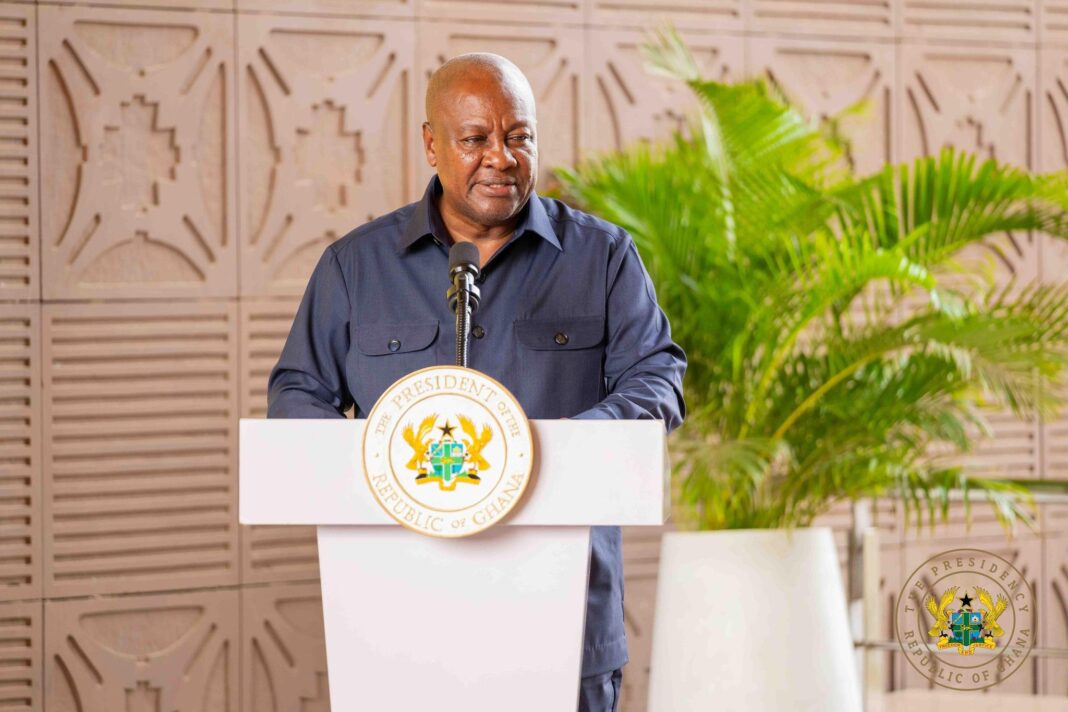
President John Dramani Mahama has consistently maintained that the proposed reforms are not intended to weaken the foundations of the 1992 Constitution but rather to strengthen and modernise the document to meet the needs of future generations.
Speaking on the reform agenda, the President described the Constitution as one of Ghana’s most successful democratic instruments, emphasising that its durability has been central to the stability of the Fourth Republic.
He argued that carefully considered amendments would enhance the effectiveness of the constitutional framework and ensure that it remains responsive to changing national circumstances.
According to the President, the objective is to improve the Constitution while preserving the democratic values and institutional safeguards that have supported Ghana’s political stability since 1992.
Unlike a government white paper issued after a commission of inquiry, the constitutional review process requires the preparation of a government position paper outlining which recommendations will be accepted, modified or rejected based on legal, political and practical considerations.
Felix Kwakye Ofosu has explained that government’s response will not automatically approve every proposal submitted by the Constitutional Review Committee. Instead, each recommendation will undergo careful assessment before Cabinet determines the appropriate course of action.
Following Cabinet approval, the position paper is expected to be published publicly, allowing citizens, political parties, civil society organisations and other stakeholders to examine government’s position on the proposed constitutional changes.
The publication of the document will mark an important transparency milestone because it will provide clarity on which reforms government intends to pursue and the legislative pathway required to bring those changes into effect.
The next phase will involve establishing implementation arrangements, including the formation of an implementation committee responsible for coordinating the reform process and ensuring that approved recommendations move from policy discussions into practical action.
The Attorney General and government’s legal team are also expected to align the final position paper with the recommendations contained in the Constitutional Review Committee’s report before the document is transmitted to the Constitutional Review Implementation Committee.
Majority Leader in Parliament, Mahama Ayariga, has indicated that government has already completed significant aspects of the position paper, with specific amendment proposals expected to be presented before Parliament during the current parliamentary session.
He has cautioned lawmakers to prepare for an intensive legislative process, noting that both entrenched and non entrenched constitutional provisions could become subjects of parliamentary consideration.
Under Ghana’s constitutional amendment procedures, changes to entrenched provisions require consultation with the Council of State and approval through a national referendum before they can become law. These provisions cover fundamental aspects of the constitutional order and therefore require a higher threshold of public consent.
Non entrenched provisions follow a different procedure, requiring consideration by the Council of State and approval by Parliament through the constitutionally required legislative majority.
The reform process has attracted attention from civil society organisations, several of which have called on government to publish a detailed implementation timetable to ensure that the momentum generated by the review exercise is not lost.
A coalition advocating constitutional reforms has warned that delays could undermine the opportunity to complete the process before future election cycles, arguing that timely action is necessary to prevent political considerations from interfering with long term institutional reforms.
The group stressed that the current period presents a crucial opportunity for Ghana to address longstanding governance challenges and strengthen democratic institutions.
President Mahama has assured citizens that the reform process will be conducted transparently, inclusively and in a manner that prioritises the national interest above partisan considerations.
He has pledged that government will ensure broad participation and public engagement throughout the implementation process, emphasising that constitutional reform must reflect the aspirations and collective interests of Ghanaians.
The outcome of Cabinet’s final deliberations is therefore expected to determine the direction of Ghana’s constitutional future. If successfully implemented, the reforms could represent the most significant restructuring of the country’s governance framework since the adoption of the 1992 Constitution and could redefine the relationship between the executive, legislature, local government institutions and citizens for decades to come.
The process now enters a decisive stage, with the government’s position paper expected to serve as the foundation for what could become Ghana’s most consequential constitutional transformation in the Fourth Republic.

