

Ghana Mobilises State Leadership for Post Flood Recovery as Parliament Joins Nationwide Sanitation Campaign
The Speaker of Parliament, Alban Sumana Kingsford Bagbin, has directed Members of Parliament whose constituencies were affected by the devastating June 29 floods to return to their communities and take active leadership roles in the government’s National General Cleaning Days scheduled for Friday, July 10, and Saturday, July 11, 2026.

The directive represents Parliament’s direct involvement in the country’s post flood recovery efforts after President John Dramani Mahama declared the two days as nationwide sanitation and restoration periods across seven regions severely impacted by the floods.

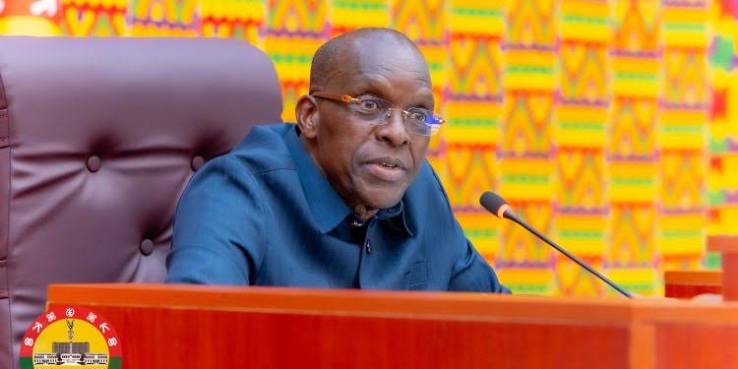
Addressing lawmakers in Parliament, Speaker Bagbin announced that the House would suspend its scheduled sitting on Friday, July 10, to allow affected Members of Parliament to travel to their constituencies and work alongside residents in restoring damaged communities.

The decision, according to the Speaker, reflects Parliament’s commitment to supporting national emergency response efforts and ensuring that elected representatives provide visible leadership at the community level during the recovery process.
“In further demonstration of Parliament’s commitment to this national undertaking, I am inviting the leadership of the House, and I did that this morning, to an urgent consultation on the most appropriate institutional response by Parliament,” Speaker Bagbin stated while addressing the House.

He explained that discussions among parliamentary leaders focused on whether lawmakers from flood affected areas should be given the opportunity to return to their constituencies rather than remain in Parliament during the cleanup exercise.
“Among the matters we considered was whether it would be appropriate for the House not to sit on Friday, 10th July 2026, to enable honourable members from the affected regions to return to their constituencies and provide direct leadership in the clean up exercise alongside their people,” he said.

Speaker Bagbin added that the proposal received unanimous approval from parliamentary leadership, resulting in his directive that Parliament would not sit on the scheduled date.

“Definitely, it was a unanimous yes. And so, I direct that this House will not sit on Friday, 10th July 2026,” he announced.
The National General Cleaning Days form part of a wider government intervention being implemented through the Post Flood Mitigation Committee, which was established to coordinate recovery measures, restore sanitation standards and reduce the likelihood of future flooding disasters.
The initiative follows the destruction caused by the June 29 floods, which affected several communities across seven regions, leaving behind damaged infrastructure, displaced residents, contaminated surroundings and urgent sanitation challenges.
Government officials have described the cleanup campaign as a crucial national response aimed at protecting public health, improving environmental conditions and strengthening long term flood prevention strategies.
President Mahama has instructed government officials at all levels to participate personally in the exercise, directing Ministers of State, Chief Executive Officers of public institutions, Members of Parliament, Metropolitan, Municipal and District Chief Executives, as well as heads of government agencies, to leave their offices and lead cleanup operations within their respective areas of responsibility.
The directive signals a shift from conventional administrative responses toward direct community mobilisation, with political leaders expected to participate physically in the restoration of affected areas.
The government has also appealed to citizens across the country, particularly residents of affected communities, to participate actively in the exercise as part of efforts to rebuild damaged neighbourhoods and strengthen public preparedness against future flooding incidents.
The decision by Parliament to suspend its sitting for the cleanup programme highlights the increasing role of state institutions in disaster response and demonstrates the importance of coordinated action between national authorities, local representatives and communities.
For flood affected residents, the exercise is expected to provide immediate relief through improved sanitation while also creating a platform for government agencies and local authorities to assess damage, identify urgent needs and implement preventive measures.
The June 29 floods have renewed national discussions about urban planning, drainage management, waste disposal practices and the need for stronger climate resilience measures as Ghana continues to experience the growing impact of extreme weather events.
With Parliament joining the nationwide mobilisation effort, the National General Cleaning Days are expected to become a significant test of government coordination, public participation and Ghana’s broader commitment to building safer and more resilient communities after natural disasters.

