

The Ghana Revenue Authority has interdicted four of its officers following allegations of involvement in an attempted diversion of transit cargo into Ghana’s domestic market, a development that has intensified scrutiny over customs enforcement, border monitoring and efforts to protect the country’s revenue base.
The action follows investigations into the interception of 18 trucks in February 2026 after authorities suspected that cargo declared as transit goods destined for Niger had been unlawfully redirected for sale within Ghana, potentially depriving the state of millions of cedis in import duties, taxes and other statutory charges.

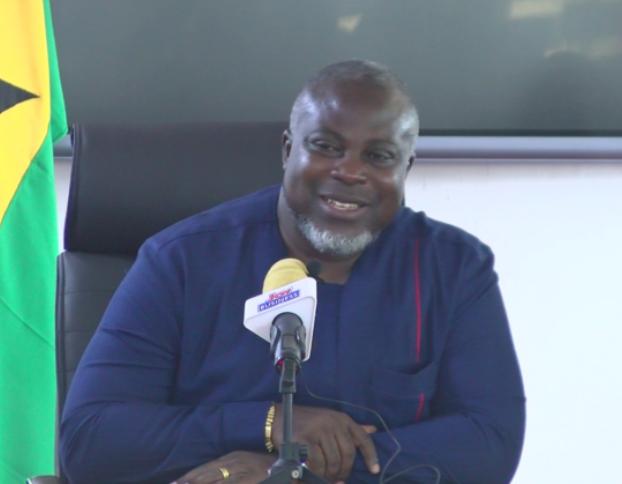
The Commissioner General of the Ghana Revenue Authority, Anthony Sarpong, disclosed the development during a media briefing on Tuesday, July 7, 2026, where he confirmed that the affected officers had been removed from active duty pending the conclusion of internal disciplinary proceedings.

Mr Sarpong explained that the interdiction forms part of the Authority’s commitment to maintaining accountability within the Customs Division and ensuring that any officer found to have breached professional standards faces appropriate sanctions.

“We have interdicted four officers who worked on the consignment, and we are going through our internal disciplinary processes to ensure that all officers found culpable are dealt with in accordance with our internal policies and the law,” he stated.
The intercepted trucks were reportedly registered as transit cargo moving from Togo through Ghana’s Akanu border post and onward to Niger. However, intelligence and subsequent investigations raised suspicions that the goods were being diverted into the Ghanaian market instead of continuing to their declared destination.

Such diversion schemes are considered a major threat to national revenue mobilisation because imported goods entering the domestic market without the payment of required duties and taxes create unfair competition for compliant businesses while reducing government income.
The development comes at a time when Ghana continues to intensify efforts to improve domestic revenue collection and strengthen controls across its borders, particularly as government seeks additional resources to finance public programmes and maintain fiscal stability.

According to the Commissioner General, the investigation into the intercepted consignment remains part of broader measures by the Ghana Revenue Authority to identify weaknesses within customs operations and ensure that both officers and traders comply with national regulations.

He stressed that the Customs Division remains committed to preventing illicit trade activities and improving enforcement mechanisms at Ghana’s entry points.
Mr Sarpong further disclosed that, following a directive from the Ministry of Finance, the seized consignment was allocated to the National School Feeding Programme, ensuring that the intercepted goods were redirected towards a national development initiative rather than remaining idle during the investigation process.
The move reflects government’s attempt to maximise public benefit from confiscated goods while investigations into possible violations continue.
The interdiction of the four officers also highlights the increasing pressure on customs authorities to strengthen internal oversight and prevent misconduct among officials responsible for monitoring international trade activities.
Customs officers play a crucial role in safeguarding Ghana’s economic interests because they are responsible for verifying declarations, collecting import duties and preventing illegal movement of goods across the country’s borders.
However, allegations of collusion between traders and enforcement personnel remain a persistent challenge in many countries, as revenue authorities seek to balance trade facilitation with strict compliance enforcement.
The Ghana Revenue Authority has therefore assured businesses and the general public that it is strengthening surveillance systems and improving border controls to reduce revenue leakages and protect legitimate trade.
Mr Sarpong emphasised that the Authority remains vigilant and has increased compliance monitoring, particularly at border stations where transit fraud and illicit trade activities are more likely to occur.
The investigation into the diverted cargo case is expected to determine the full extent of any wrongdoing, identify all persons involved and establish whether additional disciplinary or legal action will be required.
The case represents another major test of Ghana’s commitment to public sector accountability and revenue protection, as authorities seek to close loopholes that allow state resources to be lost through fraudulent trade practices.
As Ghana continues its drive towards stronger economic management and improved domestic revenue mobilisation, the actions taken in this case signal a renewed effort to ensure that customs operations remain transparent, disciplined and focused on protecting national interests.

