
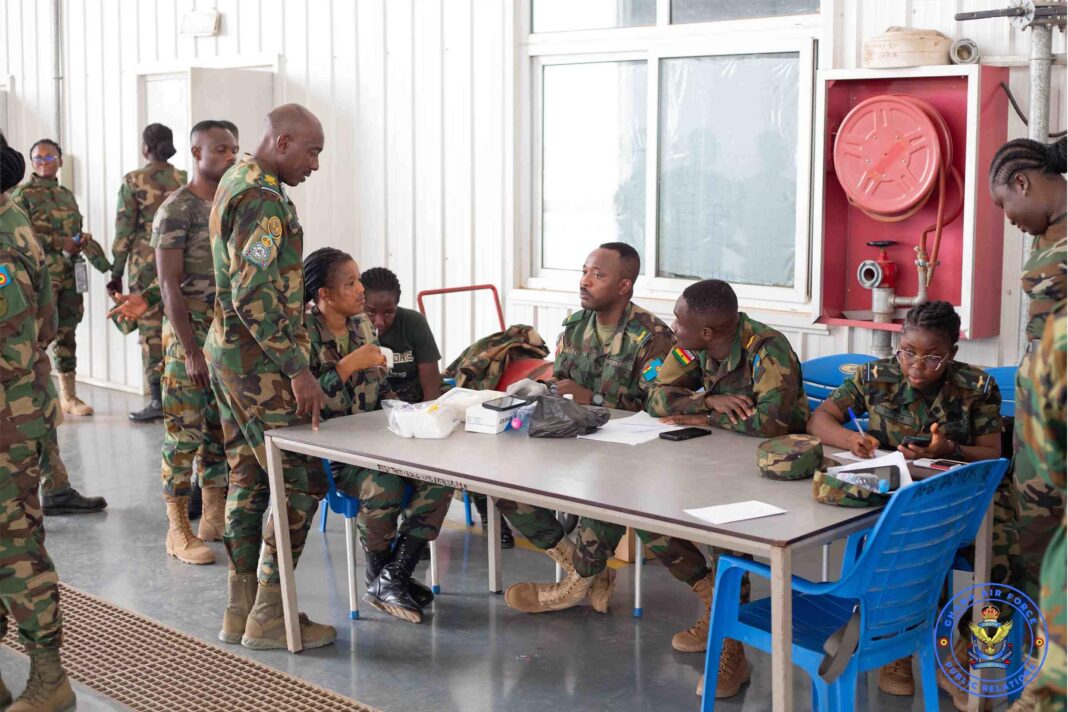

The Minister for the Interior, Muntaka Mohammed Mohammed Mubarak, has revealed that approximately 1,300 applicants who participated in Ghana’s recent security services recruitment exercise tested positive for HIV during the mandatory medical examination stage, prompting renewed attention on health screening, confidentiality and responsible disclosure of sensitive medical information.
The revelation was made when the Interior Minister appeared before Parliament’s Public Assurances Committee on Tuesday, July 7, 2026, where he explained that the medical screening process uncovered several health conditions among applicants seeking to join Ghana’s security institutions.

According to the Minister, the HIV cases were identified as part of the comprehensive medical assessment conducted during the recruitment exercise. He stressed that authorities deliberately avoided directly releasing medical results to applicants without proper counselling because of the sensitive nature of such information and the potential psychological impact of an unexpected diagnosis.

Mr Muntaka explained that informing individuals about a serious health condition such as HIV requires careful guidance, education and professional support rather than a simple notification.

“In the recent recruitment, we had, I think, about 1,300 or so that were on HIV. And then they said, can you imagine sending somebody a result without telling the person that you have HIV? I mean, that’s not the procedure. The person has to go through some orientation,” he stated.
The Minister said the government adopted a system that allowed applicants who were unsuccessful in the recruitment process to seek further clarification about their medical outcomes through designated contact channels.

He explained that rather than disclosing medical information publicly or through inappropriate channels, individuals who were disqualified were provided with avenues through which they could privately request details about the reasons behind their disqualification.
“So one of the things that we did was simply to say that when you get disqualified, you are given a contact to reach out if you want to know why you were disqualified,” Mr Muntaka said.

The disclosure highlights the broader challenge faced by institutions conducting large scale recruitment exercises, particularly when medical assessments reveal conditions that require careful handling to protect privacy, dignity and public health.

The Interior Minister further indicated that some of the medical conditions detected during the recruitment process are manageable or treatable, making early awareness crucial for affected applicants.
He encouraged individuals who were unsuccessful in the recruitment process to obtain their medical information because understanding their health status could allow them to seek appropriate treatment and improve their chances in future recruitment exercises.
“Some of the things that we realised are treatable. People need to know and then also get treatment so that subsequent recruitment they could join,” he explained.
Beyond HIV cases, the medical screening exercise identified several other health conditions among applicants, including hepatitis B infections, cardiac related issues, mental health conditions, histories of major surgical procedures and drug related concerns.
The Minister emphasised that knowledge of one’s medical condition is important because some health challenges may remain undetected without proper screening but can be effectively managed when identified early.
“It may be something minor, it may be something major. Whichever it is, if you get to know, it will be of great interest to you,” he added.
The revelation has renewed discussions about the role of medical examinations in public sector recruitment, particularly within security institutions where applicants are required to meet specific physical and health standards due to the demanding nature of the work.
Medical screening remains a standard requirement in many security recruitment processes worldwide because officers are expected to perform duties that require physical readiness, psychological stability and the ability to operate under challenging conditions.
However, the handling of medical information has become an important part of the conversation, with health experts and human rights advocates often emphasising the need to balance institutional requirements with respect for confidentiality and protection against discrimination.
The government’s decision to provide counselling and private access to medical information reflects efforts to ensure that applicants are treated with sensitivity while maintaining the integrity of the recruitment process.
The development also highlights the importance of public awareness about health conditions such as HIV, hepatitis B and other medical issues that can be managed effectively through early detection, treatment and continuous care.
The Interior Minister’s disclosure therefore extends beyond the immediate recruitment exercise, drawing attention to the importance of responsible health communication, reducing stigma and ensuring that individuals have access to information necessary to protect their well being.
As Ghana continues to strengthen its security institutions, the handling of medical assessments during recruitment will remain a critical issue, requiring a careful balance between operational standards, public safety and the fundamental rights of applicants.

