

The Minority in Parliament has called for the immediate dissolution of the seven member presidential task force established to address perennial flooding in Accra, arguing that the devastating floods that struck the capital on Monday expose what they describe as the committee’s failure to deliver any meaningful or measurable impact despite more than a year in operation.
The opposition caucus is also demanding a full parliamentary investigation into the activities of the task force, which is chaired by Deputy Chief of Staff Stan Dogbe, alongside an urgent public health intervention to prevent potential disease outbreaks following the disaster that has so far claimed at least 12 lives and displaced thousands of residents.

The task force was set up in March 2025 by President John Dramani Mahama with a mandate to assess flood prone communities, coordinate government interventions, and develop long term solutions to Accra’s recurring flooding challenge. However, concerns have now been raised over its visibility, output, and effectiveness in preventing the scale of destruction witnessed in the latest floods.

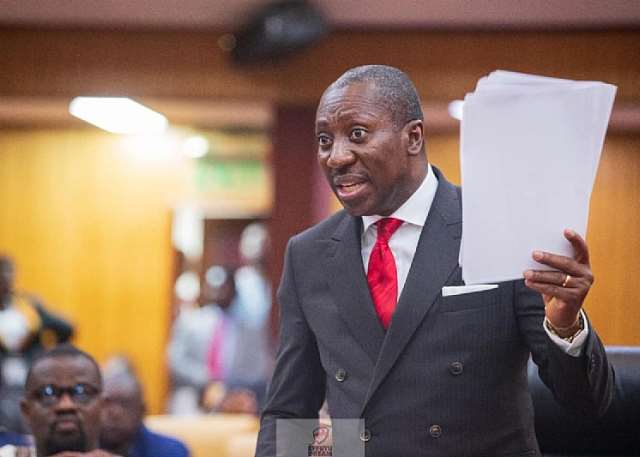
Addressing a press conference in Parliament on Tuesday, June 30, Minority Leader Alexander Afenyo-Markin questioned the operational record of the committee, stating that 15 months after its establishment, there is limited evidence of substantial work undertaken or policy recommendations implemented.

He argued that the severity of Monday’s flooding demonstrates a clear disconnect between government assurances and actual preparedness on the ground, insisting that effective drainage and flood mitigation measures, if implemented, would have significantly reduced the impact of the rainfall.
“Yesterday’s flooding is the clearest evidence that this task force produced no meaningful intervention on the ground. If serious drainage works, desilting or flood mitigation infrastructure had been undertaken, the impact of the rains, however heavy, would have been measurably reduced,” he said.

He further criticised what he described as a gap between policy statements and practical execution, noting that entire communities were submerged, infrastructure collapsed, and key transport routes became impassable within hours of rainfall.
Calls for Parliamentary Inquiry

The Minority Leader has urged Parliament to establish a special investigative committee to examine the conduct of the flood preparedness task force, as well as the performance of all ministries, departments, and agencies responsible for flood control and disaster management.

According to him, the proposed inquiry should focus on accountability, transparency, and the use of public funds allocated to flood mitigation efforts since the task force was inaugurated.
“The Minority is calling on this House to establish a parliamentary committee specifically mandated to investigate the conduct of the flood preparedness task force and the relevant government ministries and agencies in the lead up to this disaster,” he stated.
He outlined key areas the investigation should cover, including the actual work undertaken by the task force, financial allocations and expenditure, implemented mitigation measures, and reasons why such measures failed to prevent or reduce the impact of what he described as foreseeable seasonal flooding.
Mr. Afenyo-Markin maintained that any officials found to have neglected their responsibilities should face appropriate sanctions, stressing that accountability must be enforced without exception.
Pending the outcome of any investigation, he further demanded that members of the task force step aside from their roles to ensure an impartial process.
“This is not a presumption of guilt. It is a basic standard of accountability that any institution facing serious questions over its conduct should observe so that the investigation can proceed without interference,” he explained.
Public Health Concerns Intensify
Beyond governance and accountability concerns, the Minority also raised alarm over possible public health risks arising from stagnant floodwaters and widespread environmental contamination following the disaster.
The caucus called on the Minister of Health to urgently outline emergency response measures to prevent outbreaks of cholera, typhoid, diarrhoeal diseases, and other infections commonly associated with flooding conditions.
Health professionals, including the Pharmaceutical Society of Ghana, have previously warned that contaminated water sources and poor sanitation conditions after floods significantly increase the risk of disease outbreaks if swift interventions are not implemented.
Nationwide Impact of Flooding
Monday’s torrential rainfall triggered widespread flooding across Greater Accra, affecting communities including Alajo, Adabraka, Circle, Kaneshie, Weija, Tse Addo, and parts of Tema. Homes, businesses, and major roads were submerged, leaving thousands of residents displaced and transport systems severely disrupted.
Government has confirmed at least 12 deaths, with several persons still reported missing. The Interior Ministry has also indicated that thousands of households were affected, while emergency agencies continue rescue, relief, and recovery operations across the hardest hit areas.
The disaster has reignited national debate over Ghana’s long standing flood management challenges, with renewed calls for stronger drainage infrastructure, stricter urban planning enforcement, and improved coordination among institutions responsible for disaster prevention and response.

