

Tema Oil Refinery Restarts Crude Processing After Major Maintenance as Government Pushes Downstream Energy Reform Agenda
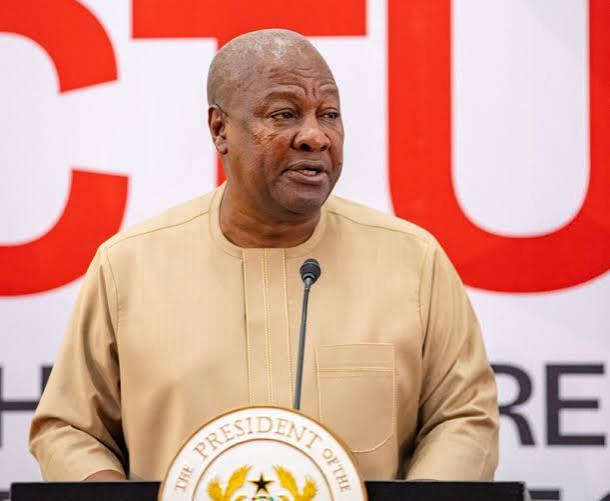
President John Dramani Mahama has announced the resumption of crude oil processing at the Tema Oil Refinery following the completion of its first major turnaround maintenance exercise in four years, marking a significant milestone in Ghana’s efforts to revitalise its downstream petroleum sector.

The announcement was made during the commissioning ceremony of Phase II of the Sentuo Oil Refinery on Thursday, June 25, where the President outlined ongoing structural reforms aimed at strengthening efficiency, expanding local refining capacity, and reducing dependence on imported refined petroleum products.

According to President Mahama, the resumption of operations at the Tema Oil Refinery, widely known as TOR, forms part of a broader national strategy to reposition Ghana’s energy infrastructure for greater resilience and productivity.

He explained that the Petroleum Downstream Sector Reform Committee has completed its mandate and submitted comprehensive recommendations that are now being implemented to improve governance, operational efficiency and long term sustainability within the sector.
The President further disclosed that additional plans are underway to upgrade TOR’s operational systems and increase its refining capacity, with expectations that the facility will soon operate at improved levels once full capacity adjustments are completed.

He added that once the refinery reaches full operational capacity in July, it is expected to receive a consignment of crude oil sourced directly from Ghana, a development he described as a step toward strengthening domestic value addition in the petroleum value chain.
This move signals a strategic shift in Ghana’s energy policy, where emphasis is increasingly being placed on local refining as a means of enhancing energy security, conserving foreign exchange, and building a more self sufficient petroleum economy.

President Mahama noted that despite ongoing global geopolitical tensions and volatility in international energy markets, Ghana has managed to maintain stability in the supply of petroleum products across the country.

He attributed this stability to coordinated efforts between key state institutions, including the Ministry of Energy and Green Transition, the National Petroleum Authority, and various industry stakeholders who have worked to ensure continuous fuel availability and the maintenance of strategic reserves.
According to him, these interventions have helped prevent disruptions in supply and ensured that consumers and industries continue to access petroleum products without significant shortages, even in periods of external market uncertainty.
The revival of operations at TOR is widely viewed as a critical development for Ghana’s energy sector, given the refinery’s historical role as the country’s primary processing facility and its potential contribution to reducing import dependence if fully modernised and efficiently managed.
The commissioning of the Sentuo Oil Refinery Phase II alongside the restart of TOR also highlights a broader policy direction aimed at expanding private sector participation in refining while strengthening state owned infrastructure.
Energy sector analysts have long argued that improving domestic refining capacity is essential for stabilising fuel prices, reducing import exposure, and enhancing Ghana’s long term energy independence.
The government’s renewed focus on downstream reforms is therefore expected to play a central role in shaping the future of Ghana’s petroleum industry, particularly as global energy markets continue to experience uncertainty and price fluctuations.
With the Tema Oil Refinery now back in operation, attention will turn to its ability to sustain continuous production, achieve efficiency targets, and integrate successfully into the broader national energy strategy being pursued by the administration.

