
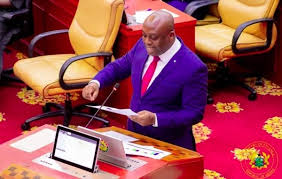

The Deputy Minister of Finance Thomas Ampem Nyarko has acknowledged that the mounting debt owed by the Ghana Cocoa Board Ghana Cocoa Board to suppliers of fertilizers and agrochemicals between 2021 and 2024 reflects a broader structural and financial imbalance within the country’s cocoa sector rather than an isolated administrative failure.
Speaking on the floor of Parliament, the Deputy Minister explained that the cocoa industry is currently grappling with significant fiscal pressure resulting from procurement commitments that consistently exceeded approved budgetary allocations over several crop seasons. He stressed that the financial strain did not emerge suddenly but built up gradually through successive years of overspending and unpaid obligations.

He disclosed that during the 2021 to 2022 crop year, agrochemical procurement reached approximately 455.7 million United States dollars, while only 312.8 million dollars had been budgeted for that same period. This mismatch, he indicated, created an immediate funding gap that was never fully resolved.

According to him, rather than being corrected, the situation worsened in subsequent years as procurement activities continued despite outstanding arrears owed to suppliers. He noted that this pattern contributed to a growing accumulation of debt across the supply chain.

The Deputy Minister stated that agrochemicals procured for the 2021 to 2022 season were not fully paid for, yet additional quantities were still ordered in 2022, 2023, and 2024, each time exceeding the approved budget ceilings for those respective periods.
He further revealed that in the 2023 to 2024 season alone, while only 76.5 million dollars had been budgeted, COCOBOD contracted agrochemical supplies valued at approximately 668.6 million dollars, a disparity he described as a serious concern for fiscal discipline and procurement planning within the sector.

These revelations have intensified scrutiny over financial management practices within the cocoa industry, especially at a time when Ghana’s cocoa output performance has shown signs of decline despite rising expenditure on inputs such as fertilizers and agrochemicals.
The Deputy Minister noted that stakeholders have raised questions about the apparent contradiction between increasing input procurement and declining cocoa production, suggesting that the effectiveness and utilization of the inputs require closer examination.

He emphasized, however, that the current indebtedness should be understood within the context of inherited structural challenges affecting the cocoa sector, arguing that the issue predates the current administration and is embedded in long standing systemic inefficiencies.

According to him, government is now implementing reforms aimed at restoring financial stability to the cocoa value chain and ensuring that obligations to suppliers are met in a more disciplined and predictable manner going forward.
He explained that the broader reform strategy seeks to rebuild COCOBOD’s financial capacity so that it can sustainably honour commitments to creditors, including agrochemical dealers, without recurring arrears or emergency interventions.
The Deputy Minister assured Parliament that the ultimate objective is to stabilize the system in a way that guarantees timely payments, improved transparency, and stronger financial governance within the cocoa sector.
He reiterated that government intervention is focused on correcting inefficiencies, strengthening procurement oversight, and ensuring that the cocoa industry remains viable and competitive over the long term.
The issue has triggered renewed public and parliamentary debate about financial accountability within one of Ghana’s most critical export sectors, with stakeholders calling for deeper reforms to prevent future accumulation of unsustainable debt and to safeguard the country’s cocoa industry from systemic fiscal strain.

