

The Minority in Parliament has mounted strong criticism against the Bank of Ghana following the central bank’s decision to suspend a proposed 0.75 percent charge on direct wallet to bank transfers, questioning the explanation that the measure was halted to allow for additional consultation.
The proposed levy, which had been scheduled to take effect from June 1, was expected to apply to transactions involving transfers from mobile money wallets directly into bank accounts. However, mounting public backlash and growing stakeholder concerns compelled the central bank to announce a suspension of the policy shortly after its introduction.

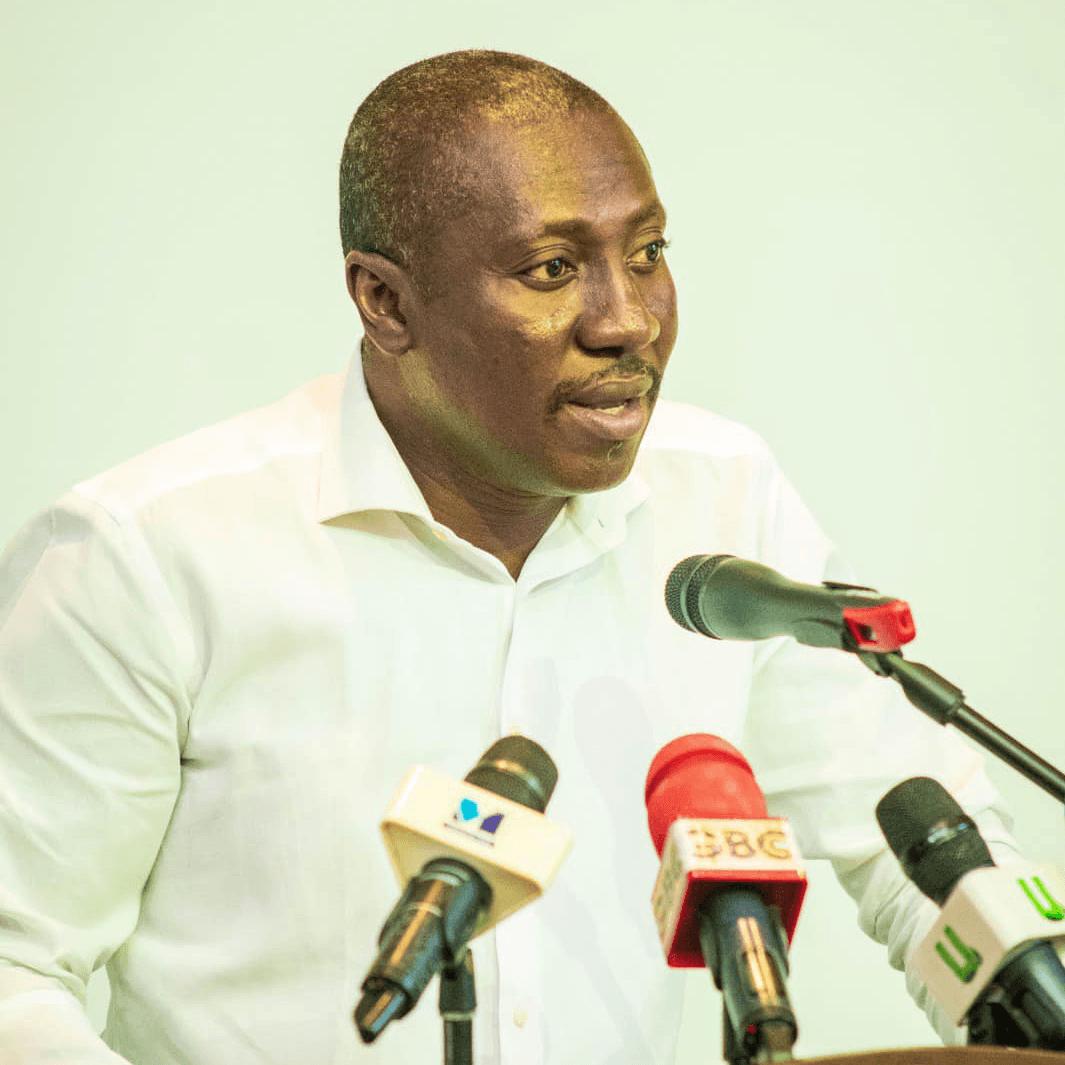
Speaking during a press briefing on Tuesday, Minority Leader Alexander Afenyo-Markin challenged both the reasoning behind the suspension and the circumstances surrounding the original announcement of the controversial charge.

According to Mr. Afenyo Markin, the explanation that authorities required “further consultation” appeared inconsistent with earlier public assurances from government officials and financial regulators that major economic policies would undergo extensive stakeholder engagement before implementation.

The Minority Leader questioned why consultations were only being considered after the policy had already been publicly communicated to Ghanaians, arguing that authorities had previously campaigned on promises of transparency, dialogue, and broad participation in policy formulation.
He further maintained that fiscal measures with direct consequences for citizens’ financial transactions and household incomes should ordinarily pass through comprehensive parliamentary scrutiny rather than being introduced administratively and suspended only after widespread public dissatisfaction.

Mr. Afenyo Markin also raised concerns regarding the procedure through which the proposed charge was being operationalised, insisting that Parliament must play a central role in examining and approving policies capable of affecting millions of mobile money users and banking customers across the country.
The Minority caucus is therefore demanding that Finance Minister Cassiel Ato Forson appear before Parliament to provide a detailed explanation regarding how the proposed levy was conceived, communicated to the public, and eventually suspended following criticism.

According to the Minority Leader, the central issue extends beyond the suspension itself, stressing that Parliament and the Ghanaian public deserve clarity concerning the processes, consultations, and decision making mechanisms that informed the attempted implementation of the charge.

The controversy surrounding the proposed transfer fee has reignited public debate over financial sector levies, digital transaction costs, and the extent of parliamentary oversight in the formulation of policies affecting electronic payments and mobile money operations in Ghana.

