

Ghana has unveiled a fully digital visa application platform as part of a renewed national drive to position the country as a leading destination for commerce, tourism and international investment across Africa and beyond.
The newly introduced electronic visa portal, which officially became operational on Africa Day, enables travellers across the globe to apply for Ghanaian entry visas entirely online without the need to physically visit embassies or consular offices.

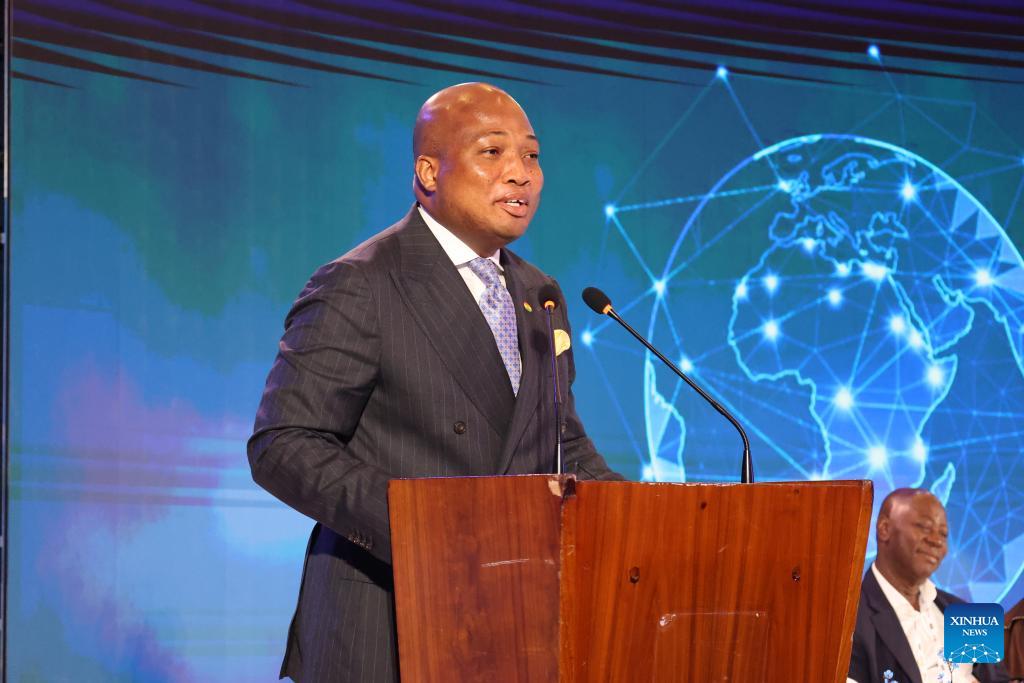
Speaking during the official inauguration ceremony at the Kempinski Hotel Gold Coast City on Monday, Foreign Affairs Minister Samuel Okudzeto Ablakwa stated that the initiative forms part of President John Dramani Mahama’s broader agenda to reposition Ghana as an accessible and investor friendly destination.

According to the minister, the government’s commitment to reopening Ghana to international business opportunities required a modern immigration and visa administration framework capable of matching the country’s renewed economic ambitions.

Mr Ablakwa explained that the former visa acquisition process had generated persistent dissatisfaction among international travellers and diplomatic partners because of lengthy waiting periods, administrative bottlenecks and accessibility challenges that often complicated travel arrangements.
He indicated that Cabinet subsequently approved the implementation of the electronic visa policy as part of wider efforts aimed at modernising Ghana’s migration systems while simultaneously strengthening investor confidence in the country’s governance and service delivery structures.

The Foreign Affairs Minister noted that the electronic visa initiative represents the culmination of the government’s decision to overhaul the country’s visa processing architecture under the broader Ghana Open for Business programme.
In a major policy announcement during the launch, Mr Ablakwa further disclosed that visa charges for all African citizens travelling into Ghana had been completely abolished with immediate effect.

According to him, the decision marks a historic milestone in Ghana’s continental relations strategy and demonstrates the government’s commitment to promoting African integration, cross border mobility and stronger diplomatic cooperation throughout the continent.

He described the abolition of visa charges for Africans as an unprecedented development in Ghana’s history, adding that the policy reflects the country’s determination to deepen continental unity while encouraging easier movement of people, entrepreneurs and investors across Africa.
The minister also responded to concerns circulating on social media regarding suggestions that an existing electronic visa agreement had already been awarded prior to the launch of the platform.
Mr Ablakwa firmly dismissed those assertions and clarified that no pre existing electronic visa contract was in force. He explained that government sought legal interpretation from the Attorney General after reviewing documents associated with a separate machine readable passport arrangement.
According to him, the Attorney General concluded that the passport contract bore no legal or operational connection to an electronic visa system because both arrangements serve entirely distinct functions.
He further revealed that the digital visa initiative is being executed through a public private partnership structure, ensuring that Ghanaian taxpayers would not shoulder the financial burden associated with establishing the infrastructure.
Under the arrangement, he said, the private sector partner is responsible for deploying the platform under the supervision of the Ministry of Communications together with the National Information Technology Agency and the Cyber Security Authority.
Meanwhile, Interior Minister Mohammed Muntaka Mubarak assured the public that the simplified visa process would not weaken Ghana’s national security framework or compromise border protection measures.
Addressing participants at the ceremony, Mr Muntaka stated that modern states increasingly compete through efficient systems capable of facilitating travel, investment and international cooperation rather than relying solely on natural resources.
He explained that the electronic visa platform is specifically designed to eliminate delays, uncertainty and administrative inconvenience for prospective visitors entering Ghana.
According to the Interior Minister, the initiative communicates a strong international message that Ghana is fully prepared to expand tourism, attract investment and strengthen global partnerships in a rapidly evolving international environment.
Despite the liberalisation measures, Mr Muntaka stressed that national security remains a central priority for government and insisted that openness should never be mistaken for vulnerability.
He disclosed that the digital system would significantly enhance Ghana’s border management capacity because security authorities would be able to assess travellers electronically before their arrival in the country.
According to him, the platform enables early risk analysis, advanced threat identification and proactive intervention measures long before passengers board flights destined for Ghana, describing the system as a modern and responsible approach to border administration that balances security with international accessibility.

