
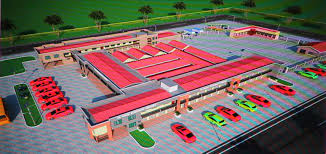

All over the nation, there are reports of markets being torn down to be replaced by edifices dubbed ’24-Hour Economy Markets’.
These edifices are apparently in manifestation of the 24-Hour Economy policy promised by then Candidate John Dramani Mahama, who is now Ghana’s President.

When Mr. Mahama first announced that he would implement a ’24-Hour Economy’ when elected, many Ghanaians wondered what he meant by the idea.

At the time, he was very slow in coming out with a detailed anatomy of the policy. His party supporters, predictably, however, drummed out and shouted down all criticisms.

Then, based on the unexplained policy, Mr. Mahama was elected into office as President. He was quick to form a committee to put flesh to the policy and bring it to life. So far, however, it seems that the only manifestation of the policy is the construction of market stalls. Note, though, that every government since Kwame Nkrumah has built markets. Not even one of those thousands and thousands of markets spread across the nation, however, operates around the clock.
Ghana is used to going home at six pm and into bed at 10.00 pm. And no amount of sloganeering would change that.

It is therefore doubtful, that the new edifices, would somehow convince Ghanaians to shop around the clock, or keep businesses open for the period.
The economy of every country is at two levels; that managed by the state, and that in the hands of the private sector. Instead of putting up buildings, the President can ensure that governmental systems that provide services operate around the clock. Some of these services are hospitals, policing, judiciary, ports, finance and others. When these operate around the clock, they would also engender private industries that can operate around the clock to service the governmental systems. Then we would be approaching an economy that operates for 24 hours.

As it is, the decision to put up market stalls and label them ’24-Hour Economy Markets’ shows clearly that Mr. Mahama did not think through his policy before he announced it, and once in power, is not prepared to put in the hard work necessary to make the policy meaningful.

Once again, Ghana is about to pay out billions of cedis on a whim.
This is truly sad.
(Editorial of the Daily Searchlight of 25th May, 2026).

