

There has long been a familiar mannerism associated with central bank governors from developing economies whenever they address influential international forums. Their presentations often revolve around cautious reassurance, detailed explanations of domestic reforms, and deliberate demonstrations that internationally established standards are being diligently respected within their jurisdictions. It is usually the rhetoric of nations still seeking validation within the global financial structure.
That convention, however, was noticeably absent from the remarks delivered by Johnson Asiama on Thursday.

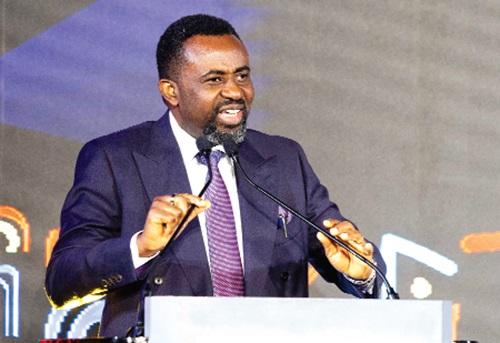
While addressing delegates at the ACI Financial Markets Association World Congress in Accra, the Governor of the Bank of Ghana departed from the traditional posture of explanation and instead advanced a broader intellectual argument. His central assertion was that international financial systems are undergoing a profound reconstruction and that emerging economies are no longer passive observers within that transformation.

According to Dr Asiama, the restructuring of financial markets is no longer an abstract future proposition confined to policy papers and academic debate. The transition is unfolding immediately across multiple jurisdictions, technological systems, and institutional environments. Increasingly, many of the economies previously regarded merely as recipients of externally designed financial frameworks are now becoming active architects of those same structures.

The significance of his remarks becomes even more striking when viewed against Ghana’s recent economic trajectory. Barely five years ago, the country was grappling with one of the gravest macroeconomic crises experienced since independence. Inflation accelerated dramatically and reached 54.1 percent in December 2022. Sovereign debt restructuring negotiations dominated economic discourse while investor confidence weakened considerably. The difficult policy interventions undertaken jointly by the Bank of Ghana and the Ministry of Finance during that turbulent period demanded politically uncomfortable but economically necessary decisions. Dr Asiama himself characterised those interventions as measures that were “not comfortable” yet fundamentally appropriate.
By April 2026, however, Ghana’s macroeconomic outlook had experienced a substantial turnaround. Inflation had declined sharply to 3.4 percent while international reserves exceeded 13.9 billion United States dollars, providing more than five months of import protection. The benchmark policy rate had fallen by 1,400 basis points since the beginning of 2025, the banking industry had undergone recapitalisation and credit expansion had resumed alongside improving fiscal discipline.

Yet the Governor’s address was not fundamentally centred upon numerical achievements. Those statistics merely served as supporting evidence for a much broader proposition regarding the future direction of emerging market finance.
Dr Asiama’s first major conceptual shift involved redefining the purpose of macroeconomic stability itself. In his formulation, stability should not merely be regarded as a desirable policy outcome for financial market growth. Instead, he argued that stability constitutes the very infrastructure upon which sophisticated financial markets can ultimately emerge and operate effectively.

That distinction carries substantial implications. Under conventional economic orthodoxy, stability is often treated as the final destination of prudent policymaking. Once inflation is contained and fiscal order restored, governments are expected primarily to preserve those gains. Dr Asiama instead suggested that stability should be understood as the starting platform for deeper institutional innovation. The more consequential question, in his view, is not whether an economy has attained stability, but rather what that economy intends to construct after achieving it.

The remainder of the speech unfolded around three principal arguments concerning the evolving nature of financial systems within emerging markets.
On digital payments, the Governor contended that payment systems have evolved far beyond their historical administrative role. They have become the primary gateway into formal financial participation for millions throughout the developing world. Payment infrastructure now simultaneously functions as the informational foundation supporting credit assessment and as an increasingly important mechanism through which monetary policy is transmitted across economies. Ghana’s digital currency initiative, the e Cedi, has already progressed beyond its pilot stage while authorities continue designing both wholesale and cross border applications.
On regulatory policy, Dr Asiama advanced a particularly unconventional position. Contrary to the common assumption that regulation restricts innovation, he argued that credible regulatory systems are actually indispensable for sustainable technological expansion within digital finance. In his assessment, financial ecosystems lacking trusted supervisory frameworks do not innovate more rapidly. Rather, they become fragmented, unstable, and ultimately destructive to the confidence necessary for future innovation cycles. Ghana’s Virtual Asset Service Providers Act, enacted in 2025, is presently being implemented while the Bank of Ghana intensifies collaborative oversight initiatives with the Securities and Exchange Commission together with the Ghana Stock Exchange.
Regarding regional integration, the Governor’s position was even more direct. He asserted unequivocally that disconnected markets would struggle to remain competitive in the contemporary global economy. Consequently, the Bank of Ghana has intensified cooperation with regional counterparts to advance fintech licence passporting arrangements, harmonised payment infrastructure, and broader frameworks aimed at establishing an interconnected African financial ecosystem.
Equally revealing were the themes intentionally absent from the Governor’s address.
First, there was a notable absence of triumphalism. Dr Asiama deliberately clarified that the macroeconomic improvements he cited were not presented as grounds for celebration. He acknowledged the continued presence of geopolitical uncertainty and recognised the enduring fragility of market confidence even within recovering economies.
Secondly, and perhaps more significantly, there was no undertone of dependence or solicitation directed toward the international audience. Ghana was not positioned as a state seeking rescue, endorsement, or validation from external powers. Instead, the posture conveyed throughout the address reflected the confidence of a participant actively contributing to the redesign of international financial systems.
In Dr Asiama’s framing, countries such as Ghana are no longer jurisdictions where financial policy is simply imposed or replicated from elsewhere. Increasingly, they are becoming environments where financial frameworks are being designed according to domestic realities while simultaneously informing broader international conversations. In several instances, the models emerging from these economies are now being observed, adapted, and occasionally replicated by other jurisdictions confronting similar developmental circumstances.
Whether the wider global financial establishment is fully prepared to embrace that recalibration remains uncertain. Nevertheless, what became unmistakably evident in Accra on Thursday was that Ghana no longer appears willing to wait for external approval before asserting its place within the evolving architecture of international finance.

