

SOURCE: BBC
US Secretary of State Marco Rubio says “significant progress” has been made on Iran talks, but there is still “work to do”

Rubio hints at an announcement from US President Donald Trump later today, as more details from Tehran and Washington emerge

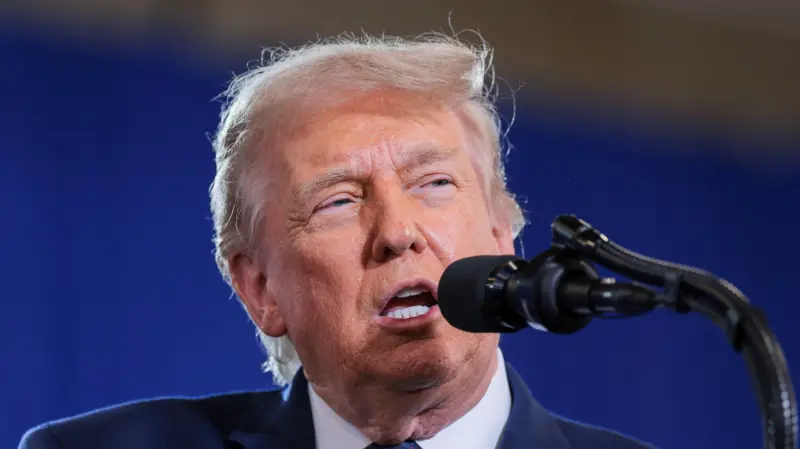
Trump said on Saturday an agreement with Iran has been “largely negotiated”

Iranian foreign ministry spokesperson Esmail Baghaei says the US and Iran’s apparent convergence in the last week does not mean agreements would be reached on key issues
Key questions: How did we get here? Who’s said what?

Meanwhile, there are reports that a potential deal could involve a 60-day ceasefire extension and the reopening of the Strait of Hormuz – here’s why the shipping lane is important
Iran and the US had originally agreed to a two-week ceasefire which was later extended to facilitate peace talks

Iranian President Masoud Pezeshkian says his country is “ready to assure the world” that it is not seeking nuclear weapons, according to state media.

The Islamic Republic News Agency (IRNA) quotes the president in a post on Telegram as saying: “Prior to the martyrdom of Ayatollah Khamenei, Iran’s late Leader, we declared – and we reiterate now – that we are ready to assure the world we do not seek nuclear weapons.”
According to the agency, the president adds that Iran “does not desire regional instability” and that it is “the Israeli regime… that seeks to destabilise the region”. But he says Iranian negotiators will not “compromise on the dignity and honour of the country”.
It comes as US Secretary of State Marco Rubio has hinted that President Donald Trump may make an announcement later today on negotiations.
On Saturday, Iranian foreign ministry spokesman Esmail Baghaei told state television that US and Iranian positions had been converging in the last week, but also accused the US of “contradictory statements”.
Baghaei said Iran was in the process of finalising a “memorandum of understanding” which would allow additional talks so that “ultimately a final agreement can be reached”.
Late on Saturday, US President Donald Trump said a deal with Iran had been “largely negotiated” and said details would soon be announced.
Ishaq Dar, deputy prime minister of Pakistan, who has been mediating talks, has said that recent negotiations are “grounds for optimism” that a positive outcome is “within reach”.
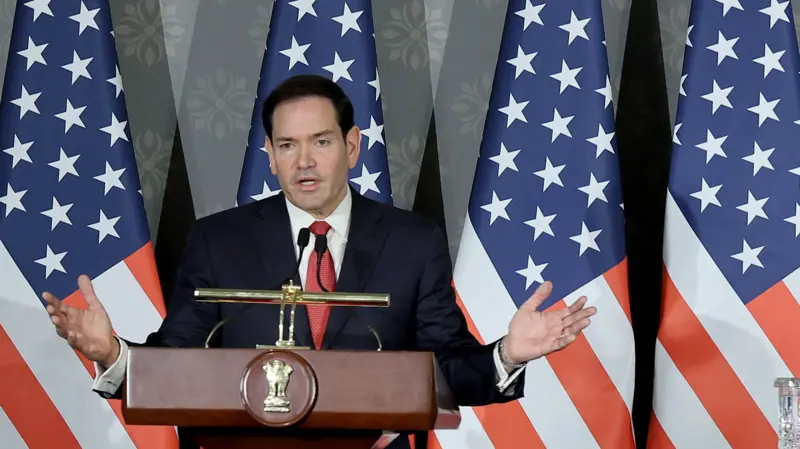
US Secretary of State Marco Rubio, speaking to reporters in New Delhi earlier, said “significant progress” had been made on a potential deal, but not “final progress”.
He hinted at news on the Strait of Hormuz, said Iran can “never posses a nuclear weapon” and added that there is still “work to do”.
Meanwhile, UK Prime Minister Keir Starmer and EU Commission President Ursula von der Leyen have both released statements welcoming reports of progress, with both stating Iran must not be allowed to posses a nuclear weapon.
Details of US-Iran deal emerging, as Rubio suggests further announcements to be madepublished at 11:28
A 60-day ceasefire extension and the reopening of the Strait of Hormuz are among those believed to be included, according to US outlet Axios.
No official agreement has yet been confirmed.
Iranian media reports there are still “one or two” points of disagreement in the potential deal.
US Secretary of State Marco Rubio, speaking at a news conference in New Delhi earlier, said “significant” but “not final” progress had been made.
Rubio also suggested we might hear another announcement from US President Donald Trump later today.
It comes after Trump last night stated that a deal with Iran had been “largely negotiated”.
The US president said the Strait of Hormuz would be included in a potential deal, but did not provide more details – here’s why the shipping lane is important.
Iran’s semi-official Tasnim news agency says that under draft terms of the US-Iran negotiations, the Strait of Hormuz “will not return” to pre-war status, but adds that ship traffic will return to previous levels
We’ve not heard directly from US President Donald Trump or Iranian leadership yet today.
We’ll keep bringing you the key developments right here on this page, stay with us.
Iran’s President Masoud Pezeshkian has been accused of accepting a ceasefire “without the permission” of Iran’s Supreme Leader Mojtaba Khamenei
Iran’s President Masoud Pezeshkian has said today that “no decision” will be made without the “permission” of Iran’s third Supreme Leader Mojtaba Khamenei.
It comes after a hardline Iranian MP, Kamran Ghazanfari, criticised Pezeshkian earlier this week and accused him of accepting the ceasefire “without the permission” of Khamenei.
Khamenei, 56, has not appeared publicly since becoming supreme leader on 8 March. Instead, according to Iranian outlets, he has issued several written statements.
Though, several senior Iranian officials, including Pezeshkian, have reportedly met him in recent weeks.
While Khamenei has maintained Iran’s position of criticising the US and Israel in the written messages attributed to him, he has not specifically commented on the current talks.
There have been speculations about the supreme leader’s state of health, following reports on injuries in the attack that killed his father, Ali Khamenei, on 28 February.
US Defence Secretary Pete Hegseth previously said that Khamenei had been “likely disfigured”, which has been denied by Iran’s health ministry.
They targeted Iran’s missile infrastructure, military sites and leadership in the capital, Tehran, and across the country.
Iran’s Supreme Leader, Ayatollah Ali Khamenei, who had led the country since 1989, was killed during the first wave of strikes. Israel’s military say dozens more senior figures in the powerful Islamic Revolutionary Guard Corps (IRGC) were also killed.
Khamenei’s son, Mojtaba Khamenei, was named as his successor on 8 March.
Other high-ranking Iranian officials killed include security chief Ali Larijani, intelligence minister Esmail Khatib and the head of the paramilitary Basij force, Gholamreza Soleimani. Israel says it targeted them in air strikes.
The US and Israel have also targeted key sites linked to Iran’s nuclear programme – which Iran insists is entirely peaceful – and Iranian oil and gas sites – including Kharg Island, home to a major oil terminal that is considered Iran’s economic lifeline.18
News site Axios reports that the US-Iran deal involves a 60-day ceasefire extension, the Strait of Hormuz reopening and negotiations being held on curbing Iran’s nuclear programme.
Citing a US official, it says the deal includes:
The reopening of the Strait of Hormuz during this period, with no tolls and Iran agreeing to clear any mines
The US lifting its blockade on Iranian ports and issuing some sanction waivers on Iranian oil
Draft commitments from Iran to never pursue nuclear weapons, and to negotiate over its nuclear enrichment programme
The US to negotiate on lifting sanctions and unfreezing Iranian funds
US forces to stay in the region during the 60-day period, only withdrawing once a final deal is reached
The deal could be extended beyond 60 days by mutual consent, Axios says. The BBC has not been able to independently verify these reports.
The New York Times also reports that the proposal includes an apparent commitment by Tehran to give up its stockpile of highly enriched uranium, citing two US officials.
Ursula von der Leyen, president of the European Commission, says she welcomes “progress” in US-Iran talks, adding that “Iran must not be allowed to develop a nuclear weapon”.
She says in a statement on X that a deal must “truly de-escalate” the conflict and guarantee “toll-free full freedom of navigation” for the Strait of Hormuz.
Von der Leyen adds that Iran must “end its destabilising actions in the region”, both directly and through its proxies, and also stop its “repeated attacks” on neighbouring Gulf states.
“Europe will continue working with international partners to seize this moment for a lasting diplomatic solution,” she adds.
More now from Tasnim, Iran’s semi-official news agency, that is reporting details of an alleged agreement between with US and Iran.
It says Iran has made no commitments in the draft resolution to hand over any of its nuclear material, despite what is claims are western media reports to the contrary.
The Islamic Revolutionary Guard Corps (IRGC)-related news agency reports that the negotiations on the nuclear issue have been postponed until “after the possible end of the war”.
It says the current draft is limited solely to the issue of ending the war, and does not include any details relating to Iran’s nuclear programme.
As Marco Rubio says “significant progress” has been made on a possible Iran deal, here’s a reminder of how negotiations have played out in recent weeks.
8 April: Pakistan, acting as mediator, announces a two-week ceasefire between the US and Iran, initially due to end on 22 April.
Trump says the deal is agreed on the condition that the Strait of Hormuz reopens. Pakistan says Lebanon is included. Iran agrees, but the US and Israel dispute this.
11 April: Senior US and Iranian officials, including Vice-President JD Vance and Iran’s Foreign Minister Abbas Araghchi, meet in Pakistan. After 21 hours of back and forth, Washington and Tehran remain far apart on key sticking points.
12 April: Trump announces a blockade of Iranian shipping as Iran continues its own blockade of the Strait of Hormuz after the failure of the Islamabad talks.
21 April: Trump agrees to extend the ceasefire for an unspecified time so negotiations can continue.
5 May: Secretary of State Marco Rubio says that “Operation Epic Fury” – the name given to the initial US-Israeli offensive against Iran – is finished.
8 May: Trump says the US-Iran ceasefire is still in place despite a clash between Iran and US naval destroyers in the Strait of Hormuz for which both sides blamed the other.
10 May: Iran is reported to have sent a counter peace proposal to the US, including an immediate end to the war on all fronts and an end to the US naval blockade of Iranian ports. The US dismisses the plan as “totally unacceptable”
15 May: The US president says he would accept a 20-year suspension by Iran to its nuclear programme.
18 May: Trump announces on Truth Social he has called off a new attack on Iran at the request of Gulf states, adding that the US was ready to “go forward with a full, large scale assault of Iran, on a moment’s notice” if there was no acceptable deal.
23 May: Trump says an Iran deal has been “largely negotiated” and will include reopening the Strait of Hormuz.
Iran’s foreign ministry spokesman says the US and Iranian positions have been converging over the past week, but warns it does not mean key issues will be resolved.
24 May: Speaking from a press conference in New Delhi, Rubio says “significant progress” but not “final progress” has been made on a deal, hinting at further announcements later in the day.

