
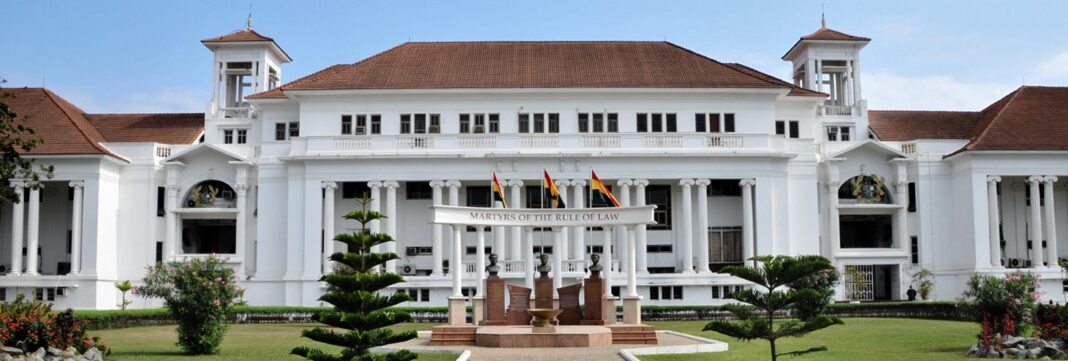

The Supreme Court of Ghana has permitted a coalition of civil society organisations to join an ongoing constitutional case that is challenging the prosecutorial authority of the Office of the Special Prosecutor, in a decision the court says will help it reach a more enduring and comprehensive determination of the issues before it.
The case is being heard by a seven member panel of the Supreme Court presided over by the Acting Chief Justice, Justice Paul Baffoe-Bonnie, and includes Justices Avril Lovelace-Johnson, Gabriel Scott Pwamang, Emmanuel Yonny Kulendi, Ernest Yao Gaewu, Gbiel Simon Suurbaareh, and Senyo Dzamefe.

The application for joinder was moved by counsel for the organisations, lawyer Kizito Beyuo, who argued that the matter raises far reaching constitutional interpretation questions with significant public interest implications. He maintained that the participating groups possess institutional expertise and long standing involvement in governance and anti corruption advocacy, making their input valuable to the court’s determination.

The civil society organisations admitted into the proceedings include Transparency International, the Ghana Anti-Corruption Coalition, STAR-Ghana Foundation, PenPlusBytes, Africa Centre for Energy Policy, IMANI Africa, One Ghana Movement, and Africa Education Watch, among others engaged in governance reform and accountability advocacy.

The substantive case was filed by private citizen Noah Adamptey against the Attorney-General of Ghana, raising a constitutional question on whether the Office of the Special Prosecutor can independently initiate criminal prosecutions without prior approval or authorisation from the Attorney-General.
At Tuesday’s sitting, Deputy Attorney-General Dr Justice Srem-Sai informed the court that the state was not opposing the motion for joinder, indicating that the government would proceed without objection to the inclusion of the civil society groups.

Counsel for the applicants further argued that Article 2 constitutional actions are uniquely designed to allow citizens to approach the Supreme Court in the public interest, especially where issues of constitutional interpretation affect governance structures and institutional accountability. He emphasised that the participating organisations have been deeply involved in anti corruption reforms and policy advocacy that contributed to the establishment and operational debates surrounding the Office of the Special Prosecutor.
In delivering the ruling, the Acting Chief Justice held that the applicants had demonstrated sufficient interest and capacity to assist the court in resolving the constitutional questions. He stated that their participation would help the court arrive at a decision that is not only legally sound but also durable and informed by broader public interest perspectives.


