
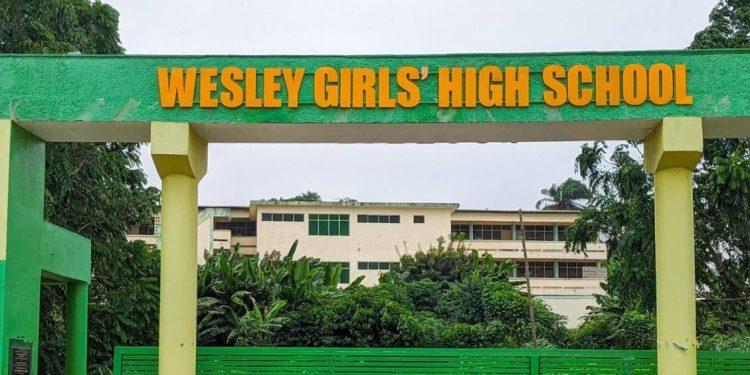

The Supreme Court of Ghana has granted an application by the Trustees of the Methodist Church Ghana to join the ongoing legal proceedings challenging religious regulations at Wesley Girls’ High School, a decision expected to deepen national discussions surrounding religious freedoms, constitutional rights, and the governance of mission founded schools within Ghana’s public education system.
The ruling, delivered on Tuesday by a seven member panel presided over by Chief Justice Justice Paul Baffoe Bonnie, represents a significant development in a case that has attracted widespread national attention and sparked intense public debate over the balance between institutional traditions and constitutionally protected religious liberties.

The constitutional action was initiated by private legal practitioner Shaffic Osman, who is seeking judicial interpretation and constitutional enforcement concerning certain religious policies allegedly implemented at the prestigious Methodist institution in Cape Coast.

According to the suit, the policies under challenge reportedly prevent Muslim students from wearing the hijab, observing fasting during Ramadan, and conducting Islamic prayers on campus while simultaneously requiring all students to participate in Christian religious worship activities organised by the school.

Legal representatives for the Trustees of the Methodist Church Ghana argued before the apex court that although the church is not directly involved in the daily administration of the school, any ruling against Wesley Girls’ High School would inevitably affect the Methodist Church as the founding body and historical authority behind the institution.
The Trustees therefore maintained that their participation in the proceedings was necessary to ensure that every constitutional and institutional issue arising from the dispute would be comprehensively examined and conclusively resolved by the court.

Counsel for the plaintiff, Abdul Aziz Gomda, opposed the application and argued that the Board of Governors of the school was already a party to the suit and adequately positioned to represent the interests of the institution throughout the proceedings. He contended that adding the Methodist Church Trustees as parties to the case would serve no substantial legal purpose and would not materially advance the determination of the dispute.
However, Deputy Attorney General and Minister for Justice Justice Srem Sai, appearing on behalf of the Attorney General’s Department, did not oppose the application. He informed the court that the request by the Trustees was understandable considering the Methodist Church’s ownership and longstanding historical association with the school, despite the institution operating under public funding and state supervision through the Ghana Education Service.

In its ruling, the Supreme Court held that including the Trustees of the Methodist Church in the proceedings would assist in bringing finality to the dispute and ensuring that all affected parties are adequately represented before the court.

Following the decision, the parties to the suit now include the Board of Governors of Wesley Girls’ High School as the first defendant, the Ghana Education Service as the second defendant, the Attorney General’s Department as the third defendant, and the Trustees of the Methodist Church Ghana as the fourth defendant.
The court subsequently adjourned proceedings sine die.
The lawsuit marks the latest chapter in a longstanding national controversy over religious accommodation within mission schools across Ghana. The issue first gained nationwide prominence in 2021 after reports emerged alleging that a Muslim student at Wesley Girls’ High School had been prevented from observing Ramadan fasting due to concerns relating to institutional regulations and health considerations.
That controversy ignited extensive public debate involving religious leaders, education experts, civil society organisations, legal analysts, and policymakers concerning the extent to which mission founded schools may enforce institutional religious traditions while operating under Ghana’s publicly funded educational framework.
At the peak of the national discussions, the Ghana Education Service directed schools to respect the religious rights of students, including the right of Muslim students to observe fasting during Ramadan.
Despite those directives, the matter has continued to raise profound constitutional and legal questions regarding the relationship between religious freedom protections guaranteed under Ghana’s Constitution and the preservation of the historical identity and ethos of mission established educational institutions.

