
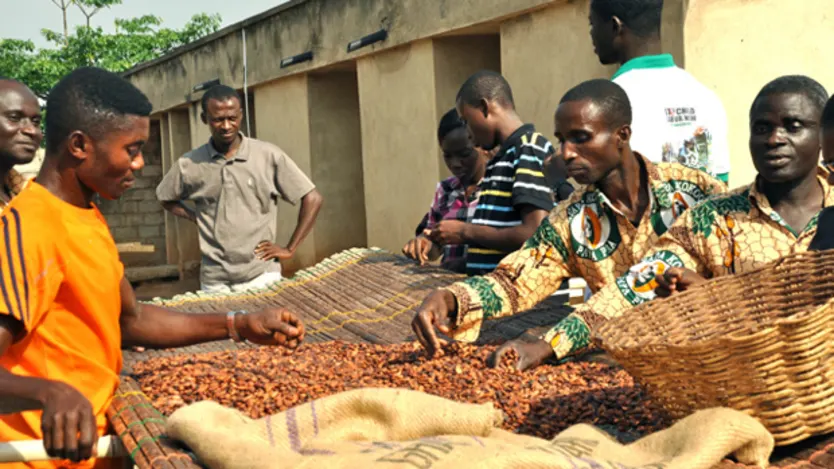

Isaac Yaw Opoku, the Ranking Member of Parliament’s Food, Agriculture, and Cocoa Affairs Committee, has called on the government and the Ghana Cocoa Board (COCOBOD) to urgently settle outstanding payments owed to cocoa farmers for deliveries made since November 2025, warning that continued delays are pushing both farmers and the cocoa industry toward a potential crisis.
Speaking to journalists in Accra on Thursday, February 5, Mr. Opoku expressed concern over the deteriorating situation facing cocoa producers, many of whom have reportedly gone unpaid for over three months. He emphasised that the delays have created severe financial strain in cocoa-growing communities, affecting livelihoods and local economies.

The MP attributed the payment backlog to COCOBOD’s failure to reimburse Licensed Buying Companies (LBCs) for cocoa already collected. He revealed that the board currently owes these companies more than GH¢10 billion, leaving them without the necessary liquidity to pay farmers promptly.

As a result, he explained, farmers are often forced to sell cocoa on credit, accept substantial discounts, or return home with unsold beans, developments that, he warned, could destabilise the entire cocoa value chain and have wider repercussions for the national economy.

Mr. Opoku criticised both the government and COCOBOD for neglecting their responsibilities toward the LBCs, noting that many companies had relied on bank loans and pre-financing arrangements to facilitate cocoa purchases. He dismissed claims by COCOBOD that sufficient funds had been released, insisting that the reality on the ground reflects a different picture.
He painted a stark human impact of the delays, citing cases of farmers unable to pay for healthcare, cover school fees, or support ill family members. Some cocoa producers, he added, were reportedly unable to celebrate Christmas for the first time due to the lack of payments.

The Ranking Member also condemned the government for failing to honour pre-election promises made ahead of the December 7 polls, recalling assurances that cocoa producers would receive bag prices between GH¢6,000 and GH¢7,000. He noted that the current farmgate price of GH¢3,625 per 64-kilogram bag falls far below those commitments.
Mr. Opoku expressed further concern over suggestions that producer prices could be reduced as a strategy to settle outstanding debts, describing such a move as a breach of trust between the state and farmers. He also accused the government of mismanaging COCOBOD through wasteful administrative spending and frequent staff reshuffles, while cocoa farmers remain unpaid.

Highlighting the wider economic threat, he warned that the crisis endangers the survival of indigenous buying companies and transport operators whose capital is tied up in unpaid cocoa deliveries. The Minority is demanding immediate payments to cocoa farmers, full reimbursement of Licensed Buying Companies, and timely settlement of future cocoa purchases. They have also called for an apology from both the government and COCOBOD.

“Cocoa farmers are not beggars,” Mr. Opoku emphasised. “Paying them promptly is an obligation, not a favour.”

