

Ghana’s cocoa economy, the country’s most dependable export engine has been thrown a critical financial rope after Access Bank Ghana PLC sealed a $134 million risk-participation arrangement with the International Finance Corporation (IFC), an arm of the World Bank Group. The agreement, executed in Accra on Friday, January 23, 2026, is aimed squarely at relieving the acute liquidity pressures confronting Licensed Buying Companies (LBCs) as the 2025/2026 crop season unfolds.
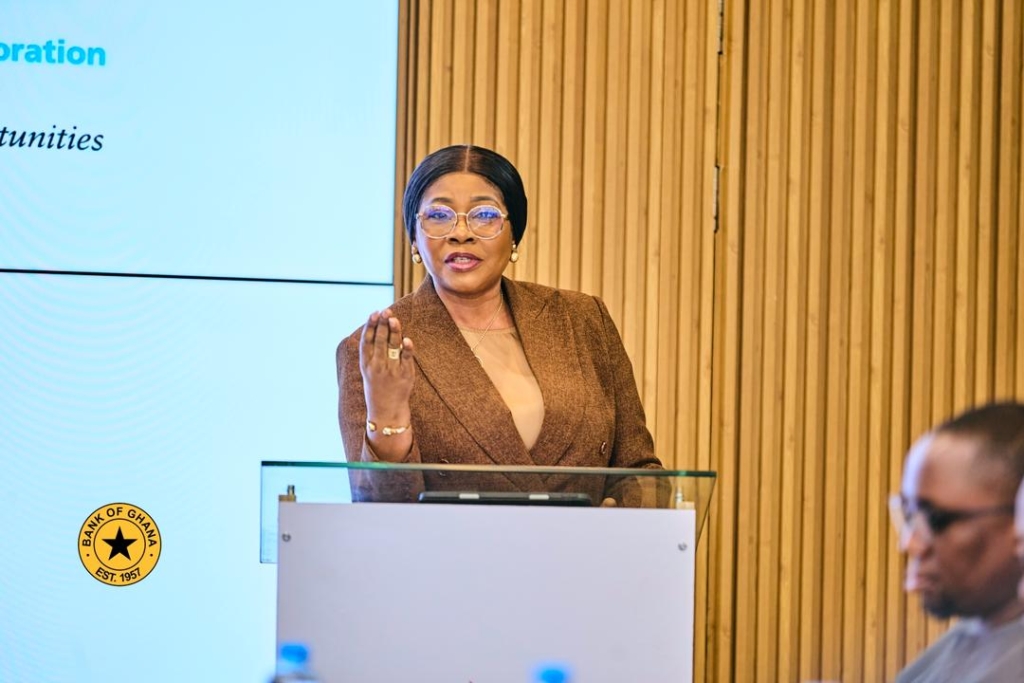
At its core, the deal seeks to keep cocoa moving from farm gate to export terminal at a moment when traditional funding channels have faltered. Persistent delays in COCOBOD’s customary syndicated loan programme have tightened cash flows across the sector, leaving LBCs, who finance purchases directly from farmers scrambling for working capital. Without timely credit, bean purchases stall, farmer payments lag, and confidence along the value chain frays. Central Bank Signals Strategic Backing.The importance of the intervention was underscored by the presence and endorsement of the Bank of Ghana (BoG). Addressing stakeholders at the signing ceremony, the Second Deputy Governor, Mrs. Matilda Asante-Asiedu, framed the facility not as a routine banking transaction, but as a safeguard for a national economic pillar.

She described LBCs as more than mere intermediaries, portraying them as the connective tissue between rural livelihoods and Ghana’s foreign-exchange earnings. In her assessment, ensuring their financial health is inseparable from protecting the broader economy.

According to the Deputy Governor, the uninterrupted functioning of the cocoa purchasing system underpins income stability in farming communities, sustains export receipts, and ultimately contributes to exchange-rate steadiness. In that sense, liquidity support for LBCs doubles as a macroeconomic stabiliser.

A Deal Timed to a Fragile Recovery
The announcement comes against the backdrop of what the central bank characterises as a hard-won economic rebound. After several years marked by inflationary spikes and fiscal stress, BoG officials point to renewed signs of stability. Mrs. Asante-Asiedu cited January 2026 inflation of 5.4%, the lowest reading since 2022 as evidence that tighter monetary controls and improved fiscal discipline are bearing fruit.

In her words, prudent policy choices have helped rebuild confidence, support output growth, and return inflation to single-digit territory. The cocoa intervention, she suggested, complements this broader stabilisation effort by protecting one of Ghana’s most critical sources of foreign exchange at a delicate moment.
Inside the Risk-Sharing Structure

Technically, the facility operates through an unfunded guarantee provided by the IFC to Access Bank. Under this arrangement, the IFC agrees to shoulder up to half of the credit risk on loans advanced to qualifying LBCs. By absorbing a significant portion of potential losses, the guarantee lowers the bank’s exposure and frees it to extend larger volumes of credit on more favourable terms than conventional lending would allow.

This risk-mitigation framework is designed to unlock financing precisely where market caution has been highest. Rather than replacing private capital, it mobilises it, using multilateral backing to crowd in domestic bank lending.
The programme initially focuses on six leading LBCs, among them AgroECOM, Nyonkopa (Barry Callebaut), and FedCo. By targeting established buyers with deep reach into cocoa-growing areas, the facility aims to ensure that funds translate quickly into prompt payments to smallholder farmers, preserving trust at the farm gate.
A Shift Toward Market-Led Financing
Beyond the immediate liquidity relief, the partnership signals a quiet but significant evolution in cocoa financing. For decades, the sector has leaned heavily on state-coordinated funding mechanisms anchored by COCOBOD. This new model, by contrast, places private financial institutions and development partners at the centre, with the state playing an enabling and supervisory role.
Mrs. Asante-Asiedu noted that this approach dovetails with the government’s wider ambitions, including the “24-Hour Economy” agenda and efforts to broaden the productive base of the economy. By strengthening financing links along the cocoa value chain, the scheme is intended not only to stabilise bean purchases but also to stimulate value-adding activities downstream.
Stakes Beyond Cocoa
The implications of the deal extend well beyond one crop season. Cocoa remains a cornerstone of Ghana’s balance of payments, rural employment, and fiscal planning. Any disruption in its financing reverberates across growth, inflation, and currency stability. Conversely, a resilient cocoa purchasing system cushions the economy against external shocks.
In that light, the $134 million Access Bank–IFC facility represents more than emergency support. It is a calculated intervention at the intersection of banking, development finance, and macroeconomic management designed to keep farmers paid, exports flowing, and confidence intact at a moment when Ghana’s recovery still demands careful reinforcement.

