

Mark Chapter 12 versus 17 states; And Jesus answering said unto them, Render to Caesar the things that are Caesar’s, and to God the things that are God’s. And they marvelled at him.– (Source- King James Bible).
In Ghana, we have a constitution. It states at Article 21. (1)(c);

“(1) All persons shall have the right to-

“(c) freedom to practice any religion and to manifest same”.

At the same time, Article 17. (1) to (3) states;
“(1) All persons shall be equal before the law;

“(2) A person shall not be discriminated against on grounds of gender, race, colour, ethnic origin, religion, creed or social or economic status;
“(3) For the purposes of this article, “discriminate” means to give different treatment to different persons attributable only or mainly to their descriptions by race, place of origin, political opinions, colour, gendar, occupation, religion or creed, whereby persons of one description are subjected to disabilities or restrictions to which persons of another description are not made subject or are granted privileges or advantages which are not granted to persons of another description.”

Ghana is a secular state, and our Constitution is quite clear that this is not a nation that can be described as being guided by one set of religious principles as against the other. By this, I mean that we should not describe Ghana as a ‘Christian’ nation, as we often and normally do. Most Ghanaians are religious, and call themselves mostly Christian, or Muslim. We also have a significant population that is into traditional (African) religious practices. No matter our religious idealization, however, we are, over and above all, Ghanaians.

Ghana belongs to all of us, and where there are facilities and opportunities, it ought to be made available to all of us; and certainly not at the price of our religious practices.
Second cycle institutions in Ghana fall into two categories, state-owned, and private. This brings up a number of classifications.
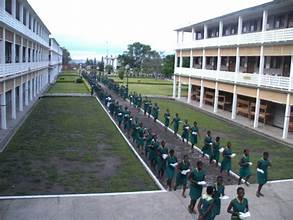
First, we have the state-owned and state-supported second cycle institutions. Wesley Girls Senior High School falls into this first category. It is state- owned and state funded, even though it is an admitted fact that it was founded by the Methodist Church of Ghana, and that the practices of the Methodist Church are predominant on the campus of that school.
In so far, however, that the school is state-owned and state-supported, I believe that Articles 21 and 17 should be enforced on the campus of that institution. We really cannot justify any attempt to say otherwise, that a school funded with state funds, can practice discrimination against a religious minority.
The concerns that are being raised, that such an allowance would disrupt academic and other practices on campus, are untenable. For instance, one finds it hard to understand why a Muslim Girl would not be allowed to wear the hijab, all instructions to do with other uniforms being complied with.
Secondly, one finds it hard to understand the insistence that adherence to a prayer schedule would disrupt academic work, when the people who would suffer, is the people who leave classes to pray. Let us allow.
Again, Ghana being a secular state, the insistence that one attends church on Sunday, Muslim or not, would be ridiculous. Then again, if a person wants to eat at dawn and fast for the rest of the day, it would be hard to rationalize why accommodation cannot be made for people with such special needs, with Mark 12;17 in reference. Give onto Ceaser….
The second category of schools, are the private second cycle institutions that are founded by interests, such as religious interests.
The question is whether religious rights as defined under the 1992 Constitution, should be enforced in those schools. To illustrate this matter, let us move away from religion a bit, and adopt a more ‘benign’ area of controversy; disability.
Ghana has adopted a policy where all public buildings are now required to be disability-friendly.
Now, if the question were to be posed as to whether private buildings should be asked to conform to such a building code, I am sure that the overwhelming answer would be a ‘yes’. And why not? At a certain point in all our lives, we would become ‘disabled’, confined to the wheelchair or the bed, and we would want to be able to be moved about when this happens, because this will happen to all of us.
Now, if the answer is a ‘yes’, why would we answer ‘no’ to religious rights being enforced?
I believe, that the insistence on so-called ‘Christian values’ and ‘expression’ is simply hypocritical. Just as hypocritical to insist on ‘Islamic values and expressions’ in schools founded by Islamic interests.
In so long as they operate in Ghana, and religious freedoms and rights are the law in Ghana, it should be insisted upon that all institutions live up to the dictates of the 1992 Constitution.
And Jesus answering said unto them, Render to Caesar the things that are Caesar’s, and to God the things that are God’s. And they marvelled at him.
Let us imbue our Constitution with life.
(Periscope Depth of 1st December, 2025)

