
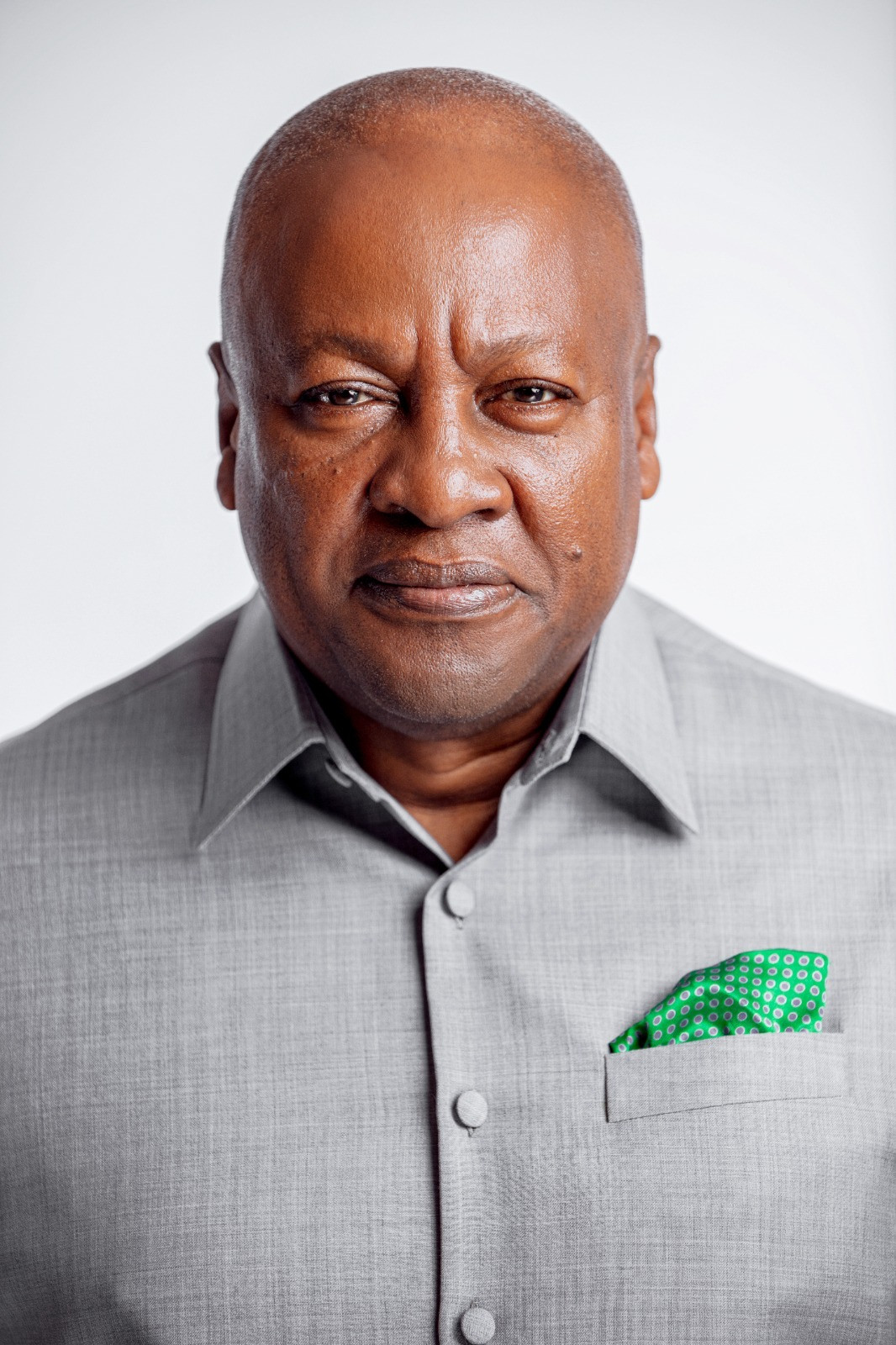

President John Dramani Mahama was sworn into office on January 7, 2025. Today’s date is March 24, 2025. That is about ten weeks into his administration as President. In a couple of weeks, his first tri-monthly would have come to pass. Sixteen days after that, he would have achieved his first hundred days in office.
Time is passing. And time is of the essence.

So far, however, we can comfortably state that Mr. Mahama has not been a noticeably different from his predecessors. His government is large. His expenditure patterns are large. And he has demonstrated the same vindictiveness towards his political opponents. This vindictiveness, would not lesson with the passage of time. In fact, if anything else, we can comfortably state that it would get worse.

As someone said sometime back, we have met the new boss, and he is the same as the old boss.

In spite of his sameness to those who have come before him, I do believe that if Mr. Mahama can do one or two simple things differently than his predecessors, Ghana would have some hope.
One area that he can make a noticeable difference, is agriculture. Another area is our consumption patterns as a country. Our agriculture, and our consumption patterns, seems to go hand in hand.

In 2024, it is estimated that Ghana spent about GHC39 billion cedis importing food. That breaks down to about GHC 150 million (one hundred and fifty million cedis) per district.
That is for 2024 alone. If we calculate how much we have pumped into foreign (other) economies in terms of the food we eat, it would run into the trillions of cedis.

This should give us some ‘think’. We have to look at the mathematics, the economic facts, and come to the simple realization that we ought to do something about this situation.

Essentially, what I am stating is that if we had concentrated our food import bill towards buying food from our districts, we would have pumped a whopping GHC150 million cedis into each district. Into jobs; into lives, into local economies.
Now, I may be wrong (and I would have no problems if I am proved wrong), but no single governmental sector is pushing that much money into each district in Ghana, year after year. We do not invest so much in roads, education or healthcare, year after year.
There are a number of principles we can formulate from the above scenario.
First, our need to eat is a constant. We will always eat, if we can afford it.
Second, while we eat, the people from whom we buy our food, make money.
Third, that money goes into other economic activities, such as profit, infrastructure, healthcare, education, travel, and many more.
Essentially, what this means, is that our necessity to eat, is an economic tool. It is an economic power. The problem is whether we realize this, and whether we would harness this tool and power for our own benefit, or for the benefit of others.
For now, if we are pumping close to GHC40 billion into other economies, then what we are doing, is pumping our power into other economies.
This has got to stop. This is something which Mr. Mahama can take advantage of, for his own legacy.
The fact is, it is suicidal, for a nation with huge unemployment, to keep on allowing tens of billions of cedis to filtrate out of Ghana to buy our food. This is especially tragic because we are a nation that lies on the tropics and enjoys year round sunshine and have water bodies that remain stocked, even during harmattans (which are gradually disappearing).
If I were advising Mr. Mahama, I would tell him that the way to leave behind a lasting legacy, is to tackle our agriculture, and our consumption patterns, particularly when it comes to what we eat.
It is the key to so many ills of our country. By ensuring that we grow what we eat, we ensure that the people eat fresher food.
We would ensure that they are healthier, which would reduce our health bill.
We would create jobs, and thence effectively combat unemployment.
We would be making our people richer, therefore more liable to be taxed, and therefore ensure that we have more money to spend on areas like roads, healthcare, education, health.
If I were advising Mahama, I would tell him to do the simple things, because, in a few weeks, the hundred days will pass. Then six months, one year, and half the term.
Then, we would begin to rue the lost opportunities.
Let us do the simple things.
(PERISCOPE DEPTH of 24th March, 2025. PERISCOPE DEPTH is published every Monday in the Daily Searchlight).

