
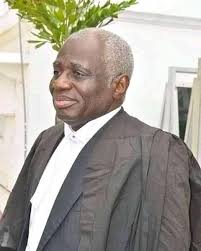

This statement by Mr. Tsatsu Tsikata captures a profound reality: the threat to democracy and
constitutional rule doesn’t solely stem from the traditional imagery of a military coup. In fact, it
underscores a modern, often insidious way by which democratic systems can be
compromised—through manipulation of the legal and judicial processes by those in positions of
authority who wear the very symbols of law and order: wigs and gowns. This observation offers
a critical lens through which we can assess governance, the rule of law, and the integrity of
democratic institutions. In this write-up, we will explore the implications of Mr. Tsikata's
assertion, examining how the judiciary and legal professionals might inadvertently or willfully
contribute to the undermining of democratic ideals and constitutional governance.
1. The Judiciary: Pillar of Democracy or Agent of Constitutional Subversion?
The judiciary stands as one of the key pillars of any democratic society, tasked with upholding
justice, safeguarding rights, and interpreting the constitution without fear or favor. When Mr.
Tsikata remarks on the role of "people in wigs and gowns" in potentially overthrowing the
constitution, he is pointing to a scenario where the judiciary itself can be an unwitting or
complicit partner in subverting constitutional principles. Through biased rulings, misuse of
discretionary powers, or allegiance to powerful political interests, the judiciary can erode public
trust, creating a democracy in form rather than substance. This is particularly relevant in
societies where judicial appointments or rulings may be influenced by partisan interests,
undermining the perception of independence.
2. Subtle Erosion of Rights: Judicial Manipulations and Constitutional Violations
A democracy can suffer subtle, almost invisible, erosion when court decisions are leveraged to
suppress dissent, manipulate electoral outcomes, or bend laws to suit the powerful. These
actions can be just as dangerous as a military coup, if not more so, because they may occur
under the guise of legality, making it harder for the public to recognize or resist them. For
instance, in cases where the judiciary endorses executive overreach or validates oppressive
policies, the balance of power is tilted, and constitutional safeguards are compromised. Mr.
Tsikata’s words suggest a cautionary reminder that those entrusted with interpreting the
constitution have a duty to the people and must resist becoming tools of oppression.
3. Legal Professionals and the Ethics of Constitutional Guardianship
The "people in wigs and gowns" are not limited to judges but include lawyers, prosecutors, and
other members of the legal profession who have an ethical obligation to uphold the law. When
legal professionals prioritize personal gain, political expediency, or allegiance over justice, they
betray the very foundations of constitutional democracy. This betrayal can manifest in various
forms, such as the deliberate delay of court cases, acceptance of bribes, or willingness to use
technicalities to shield corrupt officials. Mr. Tsikata’s observation challenges legal professionals
to reflect on their role not just as practitioners but as custodians of justice, whose actions or
inactions can either reinforce or undermine constitutional integrity.
4. Case Studies of Judicial Subversion in Modern History
History provides numerous examples where judicial systems have become complicit in
subverting democratic principles. In some instances, authoritarian regimes have co-opted courts
to rubber-stamp their actions, giving the appearance of legality to fundamentally unjust acts. For
example, in apartheid-era South Africa, the judiciary upheld racially discriminatory laws under
the pretense of legality, contributing to systemic oppression. Similarly, in several modern
democracies, court rulings have sometimes favored political elites, allowing them to evade
accountability. Such historical lessons serve as a warning that without vigilant oversight, the
judiciary can be manipulated, and constitutional principles eroded from within.
5. The Role of Civil Society and Media in Safeguarding Constitutional Democracy
Mr. Tsikata's warning highlights the need for active oversight from civil society and the media. In
a healthy democracy, these entities function as watchdogs, ensuring that legal and judicial
actions remain transparent and accountable. Civil society groups can advocate for judicial
independence, demand accountability, and expose abuses of power, while a free press brings
transparency to judicial proceedings. The power of these institutions in checking judicial
excesses cannot be overstated. However, when these safeguards are weakened, whether
through intimidation, legal restrictions, or co-optation, there is a higher risk of judicial complicity
in undermining the constitution.
6. Conclusion: A Call for Vigilance and Integrity in Constitutional Governance
Mr. Tsatsu Tsikata’s statement reminds us that democracy is fragile and requires constant
vigilance from all sectors of society, particularly those who wield significant influence over the
law. The symbolism of wigs and gowns traditionally represents justice, fairness, and impartiality;
yet, without ethical commitment, these symbols can be wielded as tools of subversion. Legal
professionals and the judiciary must, therefore, embrace their roles as true defenders of the
constitution.
This call to integrity and vigilance is essential to prevent constitutional overthrows not by brute
force, but by the silent erosion of democratic principles—a form of "legal coup" that can be as
devastating as any military takeover. For democracy to flourish, it is imperative that the judiciary
and legal professionals stand resolute in their commitment to justice, safeguarding the
constitution as a living document that serves the people, not the powerful. Mr. Tsikata's words
resonate as a powerful reminder: the preservation of democratic ideals lies as much in the
integrity of the judiciary as it does in the will of the people to hold them accountable.


