

PERISCOPE DEPTH
…With Our Publisher

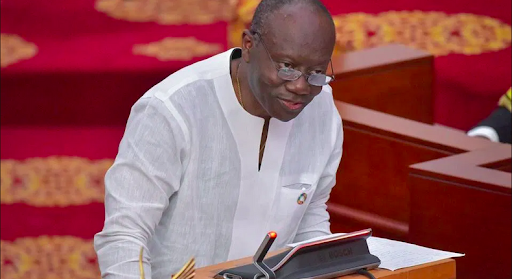
In the week just past, I was deeply refreshed by the statement that was read by the Minister of Finance on measures the government is pursuing or intends to pursue concerning the various problems facing the Ghanaian economy.

It has not been a common phenomenon, in our recent history, for a government to acknowledge, even by conduct, that it recognizes that some things are not going well and that there is a need for a change of direction.

When I read some of the actions that the government intends to pursue, my first reaction was excitement, and the second was the hope, wishful, as it turned out, that the opposition would recognize that these were positive steps and that what it should do, as a responsible opposition, is trying to hold the government to its intended policies. Or failing that, to look critically at the statement, find out where the weaknesses are, and offer solutions on how the position can be improved.
Rather, what I have heard so far, predictably, is the usual leechlike phenomenon that is exhibited by the two political parties whenever they are in opposition, to look for what they presume to be the weakest link in a government position and to seek to use that weak link to create disaffection for the ruling party of the day.

With Mr. Ken Ofori-Atta’s statement, the notable point of weakness that the leeches observed and have sought to take advantage of is the 15 percent per liter reduction in the price of fuel at the pump. The government is seeking to do this by reducing the BOST margin by 2 pesewas per liter, reducing the Unified Petroleum Pricing Fund (UPPF) margin by 9 pesewas per liter, reducing Fuel Marking Margin (FMM) by 1 pesewa per liter, and reducing the Primary Distribution Margin (PDM) by 3 pesewas per liter.
I have heard the noise from leading opposition members on this point, and my heart has bled for this country. Indeed, the ordinary man on the street would need to buy a gallon of fuel, before he would make the saving of GHc1.00. But for the government, the cumulative effect of this subsidy given to the user is ruinous. The reason is simple. Ghanaians use about 140 thousand metric tonnes of fuel every month (this is based on figures from October 2021), meaning that if this subsidy is maintained, the government would be giving up as much as GHC240 million Ghana cedis a year in revenue. If a CHPS compound costs us GHC1 million, it means that we are giving up a whopping 240 CHPS compounds a year, or like effect in actual physical development. And CHPS compounds cost less than GHc1 million.

We would be given away enough money to build the Accra to Kumasi road.

Remember, the reason why the government is said to be in a crisis is that we do not have enough revenue, to begin with. Predictably, of course, the NDC opposition, led by Mr. John Dramani Mahama, has offered absolutely no option as to how the revenue gap can be closed, beyond suggesting that they would put Ghana in thrall with international finance agencies.
I think the government should have allowed the pesewas to remain where they were, and in the alternative, sought to deploy the revenue that accrues to better use in the future.
As I said, however, some of the proposed measures are good. They are exciting, and I would name them all.
The government proposes, for instance, to cut discretionary spending by MDAs by an additional 10%. This is good.
Again, the government is proposing a 50% cut in fuel coupon allocations for all political appointees and Heads of government institutions, including SOEs, effective 1st April 2022;
Again, with immediate effect, the Government has imposed a complete moratorium on the purchase of imported vehicles for the rest of the year. This will affect all new orders, especially 4-wheel drives.
Again, with immediate effect Government says that it has imposed a moratorium on all foreign travels, except pre-approved critical/statutory travels;
The Government says that additionally, it will conclude ongoing measures to eliminate “ghost” workers from the Government payroll by the end of December 2022.
Again, the Government says that it will conclude the renegotiation of the Energy Sector IPPs capacity charges by end of Q3-2022 to further reduce excess capacity payments by 20% to generate a total savings of GHS1.5 billion. It says that it will also impose a moratorium on the establishment of new public sector institutions by the end of April 2022 and prioritize ongoing public projects over new projects.
Some of the additional measures will be to reduce expenditure on all meetings and conferences by 50%, effective immediately; Ministers and the Heads of SOEs to contribute 30 percent of their salaries from April to December 2022 to the Consolidated Fund; pursue a comprehensive re-profiling strategy to reduce the interest expense burden on the fiscal, and liaise with Organised Labour and Employers Association to implement with immediate effect, the measures captured in the Kwahu Declaration of the 2022 National Labour Conference, including reforms towards addressing salary inequities/inequalities (e.g. Article 71 Office Holders), the weak link between pay to productivity and the sustainability of the payroll.
So far, in my opinion, this is all good going. Indeed, in times past, the opposition called for exactly such measures to be put in place, and it is amazing, now that such measures have been put forward, the same opposition is insisting that they are irrelevant. Maybe, they are suffering from a case of continued exposure to darkness, at least in their minds. They must continually insist that everything is wrong, to justify why they deserve another chance at the helm of affairs in Ghana so that we can experience another round of thievery and ill-governance.
So, predictably, we have not heard anything useful from Ghana’s complaining opposition on what they would do differently, if they had the wheel.
So, if the opposition may not do what is expected of them as a patriotic organization, which is to do the thinking and bring forth the proposals that would help our country to develop, that does not mean that the rest of us should not take up the same challenge. We have to come up with solutions in addition to what the Finance Ministry put forth and come up with suggestions that would help the government to achieve the goal of a better economy and society for the people of Ghana.
In Mr. Ofori Atta’s statement, he also spoke on Financing and Currency Measures intended to help Ghana’s tottering cedi achieve stability.
Putting forth the measures intended to stem the fall of the Cedi, Mr. Ofori Atta stated that the government would conclude external financing arrangements of up to US$2 billion in the next 2-6 weeks in line with approved external financing for 2022 and liability management.
Again, he stated that the Ministry of Finance will work with the Central Bank to review the foreign exchange retention policy to ensure that multinational companies in the extractive sectors retain foreign exchange earnings, from the sale of ‘our resources’, in the country.
Additionally, the government intends to ‘wean-off’ public tertiary institutions from the government payroll and provide them with a fixed amount “block grant” instead.
Additionally, he said that the government would pursue reforms to address structural challenges in public financial management including procurement and commitment control, payroll management, and human resource management.
With the greatest respect to Mr. Ofori Atta, the measures proposed would not be enough to stem the rapid fall of Ghana’s currency, which phenomenon began at the inception of the Cedi during the days of Kwame Nkrumah. I mean that the Cedi started losing value since Independence, and no vapid measures would be enough to stem that fall.
I say this that Cedi would continue to slide, for several reasons.
First, the government has been laboring under a misconception, which many governments labor under, that it is in control of the currency, and the economy. I say that the government is not, and that is the bare, brutal fact. Now, the economy and the currency are two different concepts, albeit interrelated. I am hoping that at a later point, I may have an opportunity to discuss why the government is not in charge of the economy, but for now, I would concentrate my efforts on the currency.
As I stated just a paragraph before, neither the government nor even the Central Bank is in charge of the currency. What the government, and the Central Bank control, is the first stage of the money supply. They print the money and ensure that the money is released into the system. However, once the money leaves or frees itself from the control of the government and the Central Bank, it becomes a free agent, with the capacity to travel everywhere and anywhere in Ghana, in Africa, and the world. Its trajectory can never be controlled or predicted. It can leave the vault of the Bank of Ghana today, and be getting out of an airplane in Sidney, Australia, in 72 hours. It can be in Australia today and burning in a fire at Bunkpurugu a week later. It may leave the hand of the poorest of the poor and be landing in the bank account of a billionaire in the next hour. The money is and would forever be a free agent.
Secondly, as a free agent, the money is and would forever be free to assume/determine its value. Somebody can buy that currency, which is a product, at a higher value, or a lower value. Somebody can decide to give it away in wheelbarrows, yet the other person can choose to use just a note of it to buy a jet.
So thirdly, its value is not predicative on any factor beyond the fact that it carries a nominate weight by a number on its face. Its value can be anything at any time, determinable by an uncountable number of factors.
Money also grows and creates itself. The bankers and traders will tell you this is a fact. When you buy a product for fifty cedis and sell it at sixty, you have in effect ‘grown’ the fifty cedis to sixty cedis. That is the principal principle of banks. Banks lend money at interest. When they receive the interest, they have in effect ‘grown’ the money.
How can anyone institution, therefore, assume that it can control the collective value of such a product? Currency is a runaway horse. It is also an unruly, permanently unpredictable horse, permanently uncontrolled, and uncontrollable entity. To make an effort to control it, or an aspect of it, is a suicide mission; it is a mission that is bound to fail.
So, then, you might pose the question, what is the government to do, once the currency is in free fall, deciding its value?
What the government can do, is identify the controllable aspects of its operations, particularly where such operations affect the currency. In other words, the government can look at the broad spectrum of activities over which it has direct control, and seek to affect the currency with those actions it controls. The Bank of Ghana, for instance, has increased interest rates, which, in textbook economics, is intended to limit the money supply. If the Ghanaian economy was a textbook economy, that would have been an adequate step; but Ghana is not a textbook economy. The contribution of the banking system to the money supply is quite insignificant in monetary operations. The bulk of the currency is controlled and moved by systems that have little or nothing to do with our banks. An upward adjustment in interest rates would not lead to the expected reduction in loans, which businesses and manufacturing are not patronizing anyway.
So, I ask again, what can the government do?
First, the government should look at its procurements, and decide that all procurements would be sourced from Ghana through a process of indigenization and import substitution. Simply put, unless the product is produced in Ghana, by Ghanaians or Ghanaian companies, the government would simply not buy that product.
I would use two text cases to illustrate my point, which is free SHS-related expenses, and Covid-19 related expenses. I choose these two, for a reason. I have no doubt, at all, that these two expenses have had a ruinous effect on our Ghana Cedi.
Let us take the free SHS, for instance. I read somewhere that the Minister of Education had stated that the government has spent GHC7.62 billion cedis on the free SHS system since its rollout five years ago. This means that each year if the government had decided that every aspect of procurement of the Free SHS would be done in the districts of Ghana, each district would have received GHC6,684,210.00 indirect money going to those districts. In effect, we would have pumped GHC7.62 billion into the economy, money that would go directly into the pockets of Ghanaians. And, notably, money that would not turn round to put pressure on the same Cedi, because, you see, I will bet all the cocoa produced in Ghana that all, or a huge percentage of all procurements made by the above-stated money went into foreign produce like rice, books, materials, and others. That is, we changed the GHC7.62 billion into dollars and went shopping for rice with it. Imagine buying that amount of rice from local producers.
The next example, as I said, is Covid related expenses. I do not have ready figures at hand, but imagine that we had made the effort, to buy only locally produced anti-covid materials from Ghana, the amount of money that would have been retained in Ghana, and the effect of that on our currency.
I am saying that even today if the government were to decide to procure all the hundreds of thousands of things it procures every day from Ghanaian sources, the Cedi would still be saved, and that is why I say that in as far as the currency is concerned, Mr. Ken Ofori Atta may have missed the boat.
Ergo, the Cedi would continue to plummet for the foreseeable future. No amount of reserve dollars sent to rescue it would succeed.
(This article was first published in the column PERISCOPE DEPTH of the Daily Searchlight on 30/03/2022. The Daily Searchlight appears on the newsstands of Ghana every working day and is for sale online twenty-four hours a day all day throughout the world on www.ghananewsstand.com).

