
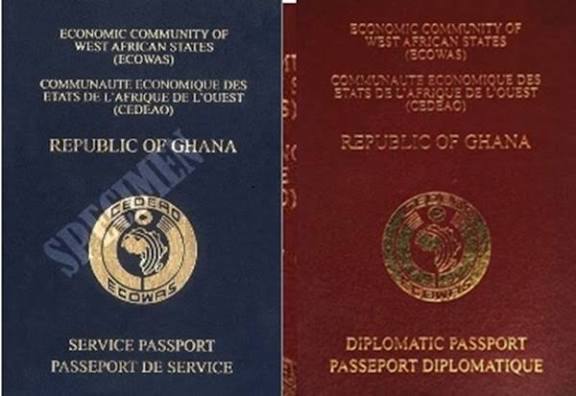

The controversy surrounding the alleged irregular issuance and sale of Ghanaian diplomatic and service passports has intensified, with representatives of the governing National Democratic Congress (NDC) and the opposition New Patriotic Party (NPP) exchanging accusations over when the suspected activities began and who should be held accountable.
The Vice Chairperson of Parliament’s Foreign Affairs and Regional Integration Committee, Cletus Seidu Dapalah, has accused the previous NPP administration of failing to tackle an alleged service passport racketeering operation which he claims dates back to 2023.

Mr Dapalah alleged that the scheme involved an intermediary identified as Alhassan Sumani, whom he described as an individual with connections within the Ministry of Foreign Affairs and the Passport Application Centre.

Speaking on Joy FM’s Top Story on Monday, November 9, he questioned the credibility of documents presented by the Minority as evidence of irregularities in the issuance of the special travel documents. The letters reportedly carried the signature of the Ministry’s Chief Director and purportedly authorised passport applications for individuals occupying public positions they allegedly did not hold.

However, the Ministry’s spokesperson, Fred Doho, has reportedly maintained that the signatures on the documents were forged and that the correspondence did not originate from the Ministry.
Mr Dapalah criticised the Minority for allegedly failing to authenticate the documents and thoroughly investigate the information before presenting it to the public.

He argued that parliamentary oversight responsibilities required lawmakers to scrutinise evidence, independently verify information and establish the accuracy of their findings before making public allegations.
According to him, the Minority had relied on information that had not been sufficiently examined, thereby creating what he described as a misleading impression about the circumstances surrounding the controversy.

The NDC legislator further insisted that the alleged passport racketeering did not originate under the current administration, maintaining that the activities could be traced to the period when the NPP was in government.

He specifically alleged that Mr Sumani had established connections within the Foreign Affairs Ministry and exploited those relationships to facilitate an organised visa and passport racketeering operation.
Mr Dapalah also claimed that the intermediary had collected money from a pastor and his wife in exchange for service passports but subsequently failed to provide all the promised documents, leaving the couple pursuing him for a refund.
The legislator additionally questioned the participation of former Deputy Minister of Foreign Affairs, Aprah Twum, at a Minority press conference addressing the controversy, arguing that the alleged activities had commenced during the period he was responsible for passport application matters.
He further alleged that Mr Sumani was recruited into the Ministry on November 29, 2024, shortly after the December 7 general election, when the outgoing NPP administration was preparing to relinquish power.
According to Mr Dapalah, the recruitment subsequently provided Mr Sumani with access to official ministerial stationery, which he allegedly exploited to reproduce the Chief Director’s signature on passport related correspondence without authorisation.
He maintained that the circumstances surrounding the alleged recruitment and subsequent use of official documents required closer scrutiny.
However, the NPP has strongly rejected attempts by the governing administration to characterise the controversy as a longstanding institutional weakness, insisting that individuals implicated in the suspected irregularities must be investigated and held personally accountable where wrongdoing is established.
The party’s National Communications Director, Dennis Miracles Aboagye, accused the government of attempting to minimise the seriousness of the allegations by describing the matter as a systemic problem.
Speaking on JoyNews’ The Pulse on Monday, November 9, Mr Aboagye argued that the government could not adopt a different standard of accountability when allegations of corruption emerged within its own administration.
He questioned why the authorities were pursuing individuals over other alleged corruption related offences while seemingly presenting the passport controversy as an institutional problem rather than focusing on the officials and intermediaries suspected of facilitating the transactions.
His remarks followed a disclosure by the Ministry of Foreign Affairs that preliminary investigations had identified 10 service passports allegedly issued irregularly to individuals who did not qualify for the documents, with the suspected activities reportedly dating back to 2023.
The Ministry indicated that the preliminary findings involved suspected unauthorised payments to an alleged syndicate operating around the passport issuance process.
As part of the administrative response, the Acting Director of Passports, Mahama Yahaya Amantana, and Alhassan Sumani were interdicted and referred to the Ghana Police Service for further investigations and possible prosecution.
Mr Aboagye questioned the government’s apparent reluctance to treat the matter with the same urgency it had demonstrated in other corruption investigations, arguing that describing the problem as systemic should not exempt individuals suspected of wrongdoing from accountability.
He also raised concerns about the potential security implications of the alleged irregular issuance of diplomatic and service passports, claiming that holders of the special travel documents could receive preferential treatment at international airports.
According to him, individuals who were not legally entitled to diplomatic or service passports could potentially exploit the privileges associated with the documents to avoid the ordinary scrutiny applicable to regular travellers.
He linked the alleged misuse of the passports to concerns about the interception of narcotics outside Ghana rather than at the country’s airports, although his remarks did not independently establish that the suspected passport holders had been involved in drug trafficking.
The NPP communications director also rejected comparisons between the current controversy and the activities of intermediaries popularly known as goro boys, who have historically operated around passport application centres.
He argued that although such intermediaries had been associated with collecting additional payments to assist applicants with processing and expediting ordinary passport applications, the present allegations involved something substantially different: the purported issuance of diplomatic and service passports to individuals who did not qualify for them.
Mr Aboagye maintained that the alleged conversion of informal assistance within the passport application process into the purported acquisition of privileged travel documents represented a different category of misconduct which required a distinct accountability response.
The competing accusations have consequently widened the political dimensions of the passport controversy, with the governing party’s representative pointing to alleged activities dating back to the NPP administration, while the opposition insists that the government must answer for suspected irregularities identified within the Ministry under its current leadership.
With two senior passport officials already interdicted and referred to the police, the unfolding investigations are expected to establish the circumstances surrounding the alleged transactions, determine the authenticity of the disputed correspondence, identify everyone involved and establish whether the suspected activities occurred under successive administrations.
The central question now extends beyond when the alleged racketeering began to whether the investigations will establish individual responsibility and expose any institutional weaknesses that may have enabled the suspected abuse of Ghana’s diplomatic and service passport issuance system.

