

I really wonder if our political party leaders bother to read the copious literature that is devoted to their actions, style
and how they manage the awesome trust reposed in them by Ghanaians.
I have no doubt at all, that if Ghana’s outgoing President Nana Addo Dankwa Akufo-Addo had read certain words
and pieces of advice sent his way eight years ago, the fortunes of his party in the weekend’s poll would have been
radically different.
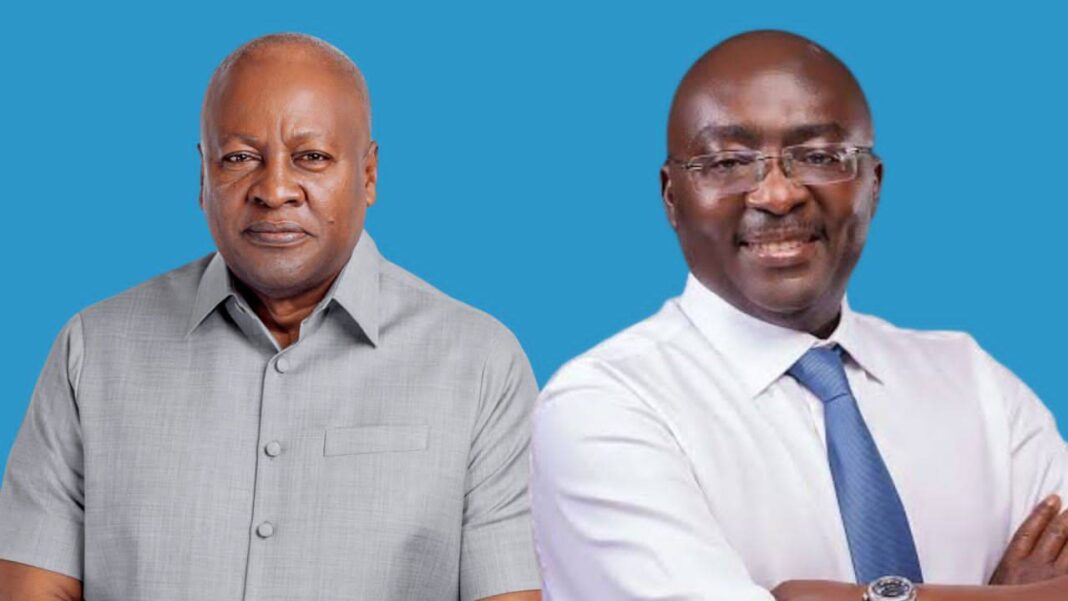
Eight years ago, Nana Addo Dankwa Akufo-Addo of the New Patriotic Party (NPP) handed Mr. John Mahama, who
has just been elected President, the most significant defeat at the polls ever recorded in Ghana’s history, until this
weekend.
It has been suggested that electoral difference between Nana Addo’s NPP and John Mahama’s NDC amounted to
nearly a million and a half votes.
Fast forward to 2024, John Mahama has given the NPP a similar defeat, if not worse. In 2016, the NPP managed to
win 169 parliamentary seats. At the last reckoning, it is suggested that the NDC has won over 185 parliamentary
seats. This gives John Mahama and the NDC an absolute majority in parliament. It even portends a danger, because
it gives the NDC powers to enact wide-ranging legislation, some of them with potential effect on our current
constitutional arrangements.
The question that the NPP and its leadership (and I guess John Mahama and the NDC leadership as well) should
pose to themselves, is the causative factors accounting for the enormous electoral loss experienced by the NPP this
past weekend. What led to the dramatic electoral loss?
The answers are many. On this page and at this time, it would be impossible to enumerate all of them. I am sure, that
in the fullness of time, the NPP itself would conduct an introspective study to establish why it lost the latest election
so dramatically. But while we are waiting, I can point them in one direction.
The first, most important and fundamental, in my opinion, is the relationship between political parties, and the
governments they birth. The fact of the matter, is that political parties (call them ‘mothers’) are permanent
arrangements or institutions. If Ghana’s democracy is to last a thousand years, I have no doubt at all that the NPP
would be around, a thousand years from now.
The governments that political parties give birth to (call them the ‘children’) are however, of very temporary
provenance. They last only four years (or eight years, if they are lucky to be re-elected) after which, by necessary
constitutional necessity, they would die out. In short, the governments formed by political parties, are temporary
arrangements.
By extension, political parties have permanent interests, the most primary of which interest, is to ensure that it wins
elections to form governments.
Governments, however, have interests beyond that of parties. Their interest, primarily, is to govern in a manner that
improves the lot and wellbeing of the populace. Or misgovern to make the lives of the people tenuous.
In effect, they will be times when the interests of governments and political parties align, and times when those
interests fail to align.
The fact is that political parties, with their permanent nature and permanent interests, should be in a position to
dictate to the governments they form, the nature of the governance that bets improves the electoral fortunes of the
parties. In Ghana, the reverse is the case, in that governments (and monetary interests) control political parties. What
this means, is that when parties work hard and expend all resources necessary to have governments elected, the
governments then turn round to deploy the governmental power and resources gained, to control political parties.
Where this control is adverse to the interests of the political parties, it is the parties that suffer the misfortune at the
polls.
This is what has happened to the NPP. It is the same thing that happened to the NDC in 2016. And that happened to
the NPP in 2008, and to the NDC before that in the year 2000. It is history repeating itself, with repetitious
monotony. And unless and until something radical happens, will keep on repeating itself.
The radical thing that can happen, is for political parties to exploit avenues to make themselves financially
independent, which will lead to independence in thought and agenda.
Without doubt, unless and until this happens, Ghanaians would keep on rejecting governments and political parties
with increasing vehemence.
Short of a coup d’etat, it is the only way by which they can demonstrate their angst about how these governments
treat them.
(Periscope Depth of 9 th December, 2024).


