
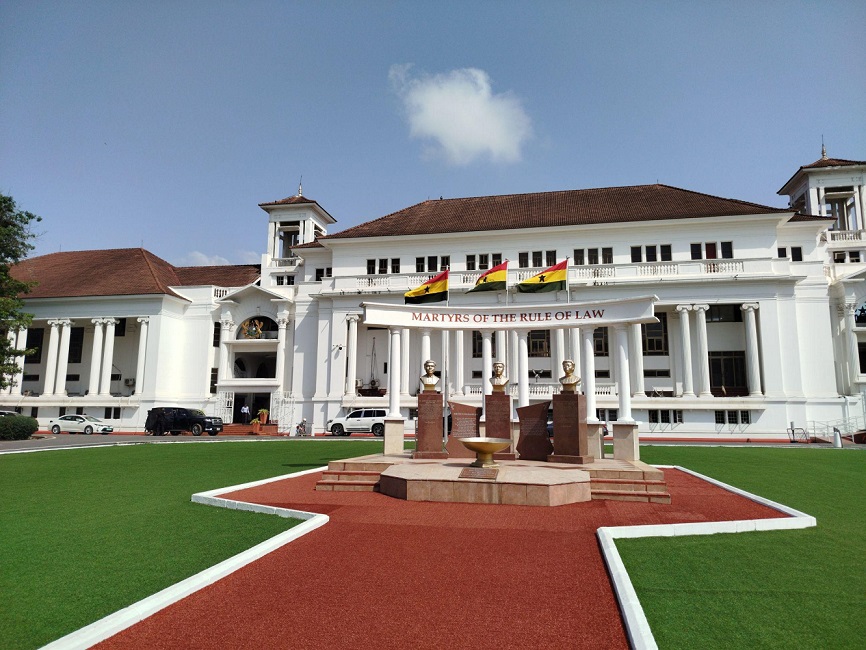

Two New Patriotic Party (NPP) Members of Parliament, broadcaster Paul Adom-Otchere and other prominent party figures have commenced legal proceedings at the Supreme Court to contest the constitutionality of the Tribunals Act, 2026 (Act 1181), arguing that several provisions of the legislation contravene the 1992 Constitution.
The plaintiffs are asking the apex court to invalidate specific sections of the Act, maintaining that they undermine constitutionally guaranteed principles governing judicial authority, the independence of the judiciary and the administrative responsibilities vested in the Chief Justice.

Among those spearheading the legal action are Asante Akim Central MP Kwame Anyimadu-Antwi and Deputy Minority Chief Whip Habib Iddrisu. Other individuals named in the suit include NPP Second Vice Chairman Henry Nana Boakye, broadcaster Paul Adom-Otchere, Manhyia South MP Nana Agyei Baffour Awuah, Bosome Freho MP Nana Asafo-Adjei Ayeh and Odotobri MP Anthony Mmieh.

The originating writ, dated August 27, 2026, names the Attorney General and Minister for Justice as the defendant. The applicants have invoked the Supreme Court’s exclusive original jurisdiction under Articles 2(1)(b) and 130(1)(a) of the 1992 Constitution.

At the centre of their argument is the contention that Parliament does not possess the constitutional mandate to institute the proposed tribunal structure, relying on Article 126(1) as the principal constitutional provision supporting their position.
They are consequently seeking declarations that Sections 2(1)(a) and 4(1) of the Tribunals Act are unconstitutional. Their objections also extend to Sections 27(1)(b), 27(3), 29 to 41 and 51, which they contend introduce procedural and administrative arrangements that improperly regulate the operation of the proposed tribunals.

The plaintiffs have additionally raised concerns about provisions assigning administrative responsibilities for the tribunal framework to the Judicial Council, acting in consultation with the Tribunal Oversight Committee.
They maintain that Sections 5 and 49(2) conflict with Articles 125(4) and 127 of the Constitution, while Sections 5 and 44 constitute an impermissible legislative intrusion into the exercise of judicial authority.

The legal proceedings further question Section 42, which establishes the Tribunal Oversight Committee as a subsidiary committee of the Judicial Council, as well as Section 50(2), which the applicants believe unlawfully curtails the administrative powers constitutionally assigned to the Chief Justice.

Under the court process outlined in the suit, the Attorney General is required to submit a statement of defence within 14 days of receiving the plaintiffs’ statement of case.
The constitutional challenge follows Parliament’s approval of the Public Tribunal Bill, 2026, in July, a legislative development that attracted resistance from the Trades Union Congress (TUC) and prompted the Minority Caucus to boycott the parliamentary proceedings.
President John Dramani Mahama subsequently granted presidential assent to the Tribunals Bill on August 26, 2026, making it one of 10 legislative instruments signed into law as part of a broader programme of reforms covering taxation, national security, the administration of justice and social policy.
The legislation was passed by Parliament on July 16, 2026, despite objections from the NPP, whose presidential flagbearer, Dr Mahamudu Bawumia, had publicly expressed opposition to the proposed reforms.
The Tribunals Act is intended to reorganise Ghana’s tribunal framework through the establishment of specialised adjudicatory bodies to determine particular categories of disputes, including commercial disagreements, human rights complaints and electoral petitions. The proposed restructuring is aimed at improving judicial efficiency, reducing delays and accelerating the resolution of cases within the country’s justice delivery system.
Nevertheless, the plaintiffs’ decision to invoke the Supreme Court’s constitutional jurisdiction means the legal validity of the contested provisions will now be subjected to judicial scrutiny. Their filing, however, does not constitute a judicial determination that the legislation is unconstitutional, as the final decision rests with the Supreme Court after hearing the parties.
Editorial accuracy note: The original report describes the applicants as six individuals, but the names listed amount to seven. The rewritten report reflects the seven names provided.

