
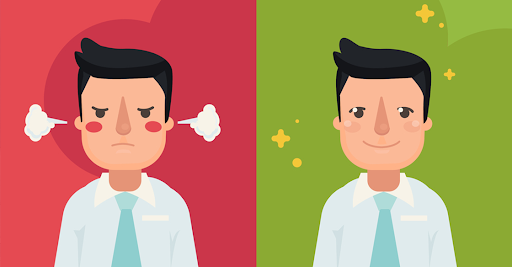

Anger is a normal, healthy emotion. However, it can be a problem if you find it difficult to keep it under control.
“You can control your anger, and you have a responsibility to do so,” says clinical psychologist Isabel Clarke, a specialist in anger management.

Recognise your anger signs

Your heart beats faster and you breathe more quickly, preparing you for action. You might also notice other signs, such as tension in your shoulders or clenching your fists. “If you notice these signs, get out of the situation if you’ve got a history of losing control,” says Isabel.

Count to 10
Counting to 10 gives you time to cool down, so you can think more clearly and overcome the impulse to lash out.

Breathe slowly
Breathe out for longer than you breathe in, and relax as you breathe out. “You automatically breathe in more than out when you’re feeling angry, and the trick is to breathe out more than in,” says Isabel. “This will calm you down effectively and help you think more clearly.”

Managing anger in the long term

Once you can recognise that you’re getting angry, and can calm yourself down, you can start looking at ways to control your anger more generally.
Exercise can help with anger
Bring down your general stress levels with exercise and relaxation. Running, walking, swimming, yoga and meditation are just a few activities that can reduce stress. “Exercise as part of your daily life is a good way to get rid of irritation and anger,” says Isabel.
Looking after yourself may keep you calm
Make time to relax regularly, and ensure that you get enough sleep. Drugs and alcohol can make anger problems worse. “They lower inhibitions and, actually, we need inhibitions to stop us acting unacceptably when we’re angry,” says Isabel.
Get creative
Writing, making music, dancing or painting can release tension and reduce feelings of anger.
Talk about how you feel
Discussing your feelings with a friend can be useful and can help you get a different perspective on the situation.
Let go of angry thoughts
“Try to let go of any unhelpful ways of thinking,” says Isabel. “Thoughts such as ‘It’s not fair,’ or ‘People like that shouldn’t be on the roads,’ can make anger worse.”
Thinking like this will keep you focused on whatever it is that’s making you angry. Let these thoughts go and it will be easier to calm down.
Try to avoid using phrases that include:
always (for example, “You always do that”)
never (“You never listen to me”)
should or shouldn’t (“You should do what I want,” or “You shouldn’t be on the roads”)
must or mustn’t (“I must be on time,” or “I mustn’t be late”)
ought or oughtn’t (“People ought to get out of my way”)
not fair
Anxiety, fear and anger
Sometimes when people talk about “anger” what they actually mean is aggression, says Dr James Woollard, a consultant child and adolescent psychiatrist. “Often when people experience or appear to show anger, it’s because they are also feeling fear or perceive a threat, and they are responding with a ‘fight’ response to this.”
“Asking yourself, ‘What might I be scared of?’ can give you a different set of choices about how to respond,” says Dr Woollard. “You might be angry that something has not gone your way. But you may also be scared that you might be blamed or hurt as result. Recognising this might allow you to think and act differently.”
Read more on how to manage your anxiety.
“Managing your anger is as much about managing your happiness and contentment as your anger,” adds Dr Woollard. “It should be a part of developing your emotional intelligence and resilience.”
Domestic violence and anger
If uncontrolled anger leads to domestic violence (violence or threatening behaviour within the home), there are places that offer help and support. You can talk to your GP or contact domestic violence organisations such as:
Getting help with anger
If you feel you need help dealing with your anger, see your GP. There might be local anger management courses or counselling that could help you.
There are private courses and therapists who can help with anger issues. Make sure any therapist you see is registered with a professional organisation, such as the British Association for Counselling & Psychotherapy.
Anger management programmes
A typical anger management programme may involve one-to-one counselling and working in a small group. The programmes can consist of a one-day or weekend course. In some cases, it may be over a couple of months.
The structure of the programmes can differ, depending on who is providing it, but most programmes include cognitive behavioural therapy (CBT) and counselling.
Anger management: 10 tips to tame your temper
Keeping your temper in check can be challenging. Use simple anger management tips — from taking a timeout to using “I” statements — to stay in control.
Do you fume when someone cuts you off in traffic? Does your blood pressure rocket when your child refuses to cooperate? Anger is a common and even healthy emotion. But it’s important to deal with it in a positive way. Uncontrolled anger can take a toll on both your health and your relationships.
Ready to get your anger under control? Start by considering these 10 anger management tips.
- Think before you speak
In the heat of the moment, it’s easy to say something you’ll later regret. Take a few moments to collect your thoughts before saying anything. Also allow others involved in the situation to do the same.
- Once you’re calm, express your concerns
As soon as you’re thinking clearly, express your frustration in an assertive but nonconfrontational way. State your concerns and needs clearly and directly, without hurting others or trying to control them.
- Get some exercise
Physical activity can help reduce stress that can cause you to become angry. If you feel your anger escalating, go for a brisk walk or run. Or spend some time doing other enjoyable physical activities.
- Take a timeout
Timeouts aren’t just for kids. Give yourself short breaks during times of the day that tend to be stressful. A few moments of quiet time might help you feel better prepared to handle what’s ahead without getting irritated or angry.
- Identify possible solutions
Instead of focusing on what made you mad, work on resolving the issue at hand. Does your child’s messy room make you upset? Close the door. Is your partner late for dinner every night? Schedule meals later in the evening. Or agree to eat on your own a few times a week. Also, understand that some things are simply out of your control. Try to be realistic about what you can and cannot change. Remind yourself that anger won’t fix anything and might only make it worse.
- Stick with ‘I’ statements
Criticizing or placing blame might only increase tension. Instead, use “I” statements to describe the problem. Be respectful and specific. For example, say, “I’m upset that you left the table without offering to help with the dishes” instead of “You never do any housework.”
- Don’t hold a grudge
Forgiveness is a powerful tool. If you allow anger and other negative feelings to crowd out positive feelings, you might find yourself swallowed up by your own bitterness or sense of injustice. Forgiving someone who angered you might help you both learn from the situation and strengthen your relationship.
- Use humor to release tension
Lightening up can help diffuse tension. Use humor to help you face what’s making you angry and, possibly, any unrealistic expectations you have for how things should go. Avoid sarcasm, though — it can hurt feelings and make things worse.
- Practice relaxation skills
When your temper flares, put relaxation skills to work. Practice deep-breathing exercises, imagine a relaxing scene, or repeat a calming word or phrase, such as “Take it easy.” You might also listen to music, write in a journal or do a few yoga poses — whatever it takes to encourage relaxation.
- Know when to seek help
Learning to control anger can be a challenge at times. Seek help for anger issues if your anger seems out of control, causes you to do things you regret or hurts those around you.
However, anger can become problematic if it leads to aggression, outbursts, or even physical altercations.
Anger control is important for helping you avoid saying or doing something you may regret. Before anger escalates, you can use specific strategies for controlling anger.
Here are 25 ways you can control your anger:
- Count down
Count down (or up) to 10. If you’re really mad, start at 100. In the time it takes you to count, your heart rate will slow, and your anger will likely subside.
- Take a breather
Your breathing becomes shallower and speeds up as you grow angry. Reverse that trend (and your anger) by taking slow, deep breaths from your nose and exhaling out of your mouth for several moments.
- Go walk around
ExerciseTrusted Source can help calm your nerves and reduce anger. Go for a walk, ride your bike, or hit a few golf balls. Anything that gets your limbs pumping is good for your mind and body.
- Relax your muscles
Progressive muscle relaxation calls on you to tense and slowly relax various muscle groups in your body, one at a time. As you tense and release, take slow, deliberate breaths.
- Repeat a mantra
Find a word or phrase that helps you calm down and refocus. Repeat that word again and again to yourself when you’re upset. “Relax,” “Take it easy, and “You’ll be OK” are all good examples.
- Stretch
Neck rolls and shoulder rolls are good examples of nonstrenuous yoga-like movements that can help you control your body and harness your emotions. No fancy equipment required.
- Mentally escape
Slip into a quiet room, close your eyes, and practice visualizing yourself in a relaxing scene. Focus on details in the imaginary scene: What color is the water? How tall are the mountains? What do the chirping birds sound like? This practice can help you find calm amidst anger.
- Play some tunes
Let music carry you away from your feelings. Put in earbuds or slip out to your car. Crank up your favorite music and hum, bop, or sashay your anger away.
- Stop talking
When you’re steamed, you may be tempted to let the angry words fly, but you’re more likely to do harm than good. Pretend your lips are glued shut, just like you did as a kid. This moment without speaking will give you time to collect your thoughts.
- Take a timeout
Give yourself a break. Sit away from others. In this quiet time, you can process events and return your emotions to neutral. You may even find this time away from others is so helpful you want to schedule it into your daily routine.
- Take action
Harness your angry energy. Sign a petition. Write a note to an official. Do something good for someone else. Pour your energy and emotions into something that’s healthy and productive.
- Write in your journal
What you can’t say, perhaps you can write. Jot down what you’re feeling and how you want to respond. Processing it through the written word can help you calm down and reassess the events leading up to your feelings.
- Find the most immediate solution
You might be angry that your child has once again left their room a mess before going to visit a friend. Shut the door. You can temporarily end your anger by putting it out of your view. Look for similar resolutions in any situations.
- Rehearse your response
Prevent an outburst by rehearsing what you’re going to say or how you’re going to approach the problem in the future. This rehearsal period gives you time to role-play several possible solutions, too.
- Picture a stop sign
The universal symbol to stop can help you calm down when you’re angry. It’s a quick way to help you visualize the need to halt yourself, your actions, and walk away from the moment.
- Change your routine
If your slow commute to work makes you angry before you’ve even had coffee, find a new route. Consider options that may take longer but leave you less upset in the end.
- Talk to a friend
Don’t stew in the events that made you angry. Help yourself process what happened by talking with a trusted, supportive friend who can possibly provide a new perspective.
- Laugh
Nothing upends a bad mood like a good one. Diffuse your anger by looking for ways to laugh, whether that’s playing with your kids, watching stand-up, or scrolling memes.
- Practice gratitude
Take a moment to focus on what’s right when everything feels wrong. Realizing how many good things you have in your life can help you neutralize anger and turn around the situation.
- Set a timer
The first thing that comes to mind when you’re angry likely isn’t the thing you should say. Give yourself a set time before you respond. This time will help you be calmer and more concise.
- Write a letter
Write a letter or email to the person that made you angry. Then, delete it. Often, expressing your emotions in some form is all you want, even if it’s in something that will never be seen.
- Imagine forgiving them
Finding the courage to forgive someone who has wronged you takes a lot of emotional skill. If you can’t go that far, you can at least pretend that you’re forgiving them, and you’ll feel your anger slip away.
- Practice empathy
Try to walk in the other person’s shoes and see the situation from their perspective. When you tell the story or relive the events as they saw it, you may gain a new understanding and become less angry.
- Express your anger
It’s OK to say how you feel, as long as you handle it in the right way. Ask a trusted friend to help you be accountable to a calm response. Outbursts solve no problems, but mature dialogue can help reduce your stress and ease your anger. It may also prevent future problems.
- Find a creative channel
Turn your anger into a tangible production. Consider painting, gardening, or writing poetry when you’re upset. Emotions are powerful muses for creative individuals. Use yours to reduce anger.
The bottom line
Anger is a normal emotion that everyone experiences from time to time. However, if you find your anger turns to aggression or outbursts, you need to find healthy ways to deal with anger.
If these tips don’t help, consider talking with your doctor. A mental health specialist or therapist can help you work through underlying factors that may contribute to anger and other emotional issues.

