
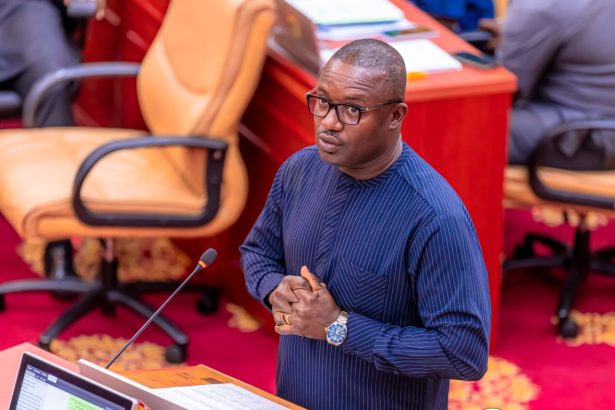

Ghana’s persistent electricity meter shortage is gradually being resolved, with new supplies expected to reach households and businesses in the coming weeks, according to the Minister for Energy and Green Transition, John Abdulai Jinapor.
Addressing Parliament on Monday, March 16, the Minister explained that the scarcity of meters resulted from a complex combination of contractual overcommitment and severe funding limitations within the power distribution system.

Providing a detailed account to legislators, Mr Jinapor revealed that when the current administration assumed office, the financial commitments undertaken by the Electricity Company of Ghana significantly exceeded the amount formally approved by its governing board.

He told the House that although the ECG board had sanctioned contracts valued at approximately three billion Ghana cedis, procurement agreements worth more than nine billion Ghana cedis had already been awarded, including several large contracts for the supply of electricity meters. According to him, this imbalance created a serious logistical and financial bottleneck that slowed the production and delivery of the devices to consumers across the country.

The Minister further explained that the situation was compounded by structural constraints within Ghana’s energy sector financing system, particularly the cash waterfall mechanism which determines how revenue generated by ECG is distributed among the various participants in the power sector.
Under this mechanism, ECG receives only a portion of the revenue it collects before other financial obligations within the energy value chain are settled. Mr Jinapor indicated that the portion allocated to the company proved insufficient to sustain the extensive contractual obligations previously entered into with meter manufacturing firms.

As a result, several suppliers that had secured major procurement contracts found themselves unable to meet the delivery targets expected of them due to delays in payments and funding shortfalls.
In response to the mounting challenge, the Ministry has implemented financial adjustments designed to strengthen ECG’s operational capacity. The Minister disclosed that the government has increased the utility company’s monthly revenue allocation from three hundred million Ghana cedis to three hundred and sixty million Ghana cedis.

In addition to the increase, the allocation has now been linked to a performance based formula tied directly to the company’s revenue collection levels. Mr Jinapor explained that the new arrangement is intended to incentivise improved efficiency within ECG’s operations.

According to him, the policy means that if the company increases its revenue collection beyond the baseline threshold, it will benefit from a larger financial allocation, thereby enabling it to fulfil more of its procurement obligations.
The Minister assured Parliament and the wider public that the policy changes are already yielding results, with new electricity meters now entering the distribution network. He emphasised that government intends to ensure that the rollout is carefully managed in order to prevent unnecessary waste or misallocation of the devices.
“We are on course, and the meters will be made available,” he stated, adding that the distribution process will accelerate in the coming weeks as additional supplies arrive.
Meanwhile, Mr Jinapor also used his appearance before Parliament to provide an update on the status of the Liquefied Petroleum Gas bottling facility being developed at Axim in the Western Region. The project, located within the Ellembelle, Ajumuro and Gwira enclave, forms part of the government’s broader efforts to modernise the country’s domestic gas distribution infrastructure.
The facility is being implemented under the National Cylinder Recirculation Model programme as an engineering, procurement and construction project with an estimated value of approximately twenty four point seven million United States dollars.
According to the Minister, the contract for the development of the plant was awarded on October 19, 2021, while physical construction activities commenced on July 13, 2022 with an initial completion target scheduled for July 2024.
However, Mr Jinapor revealed that upon assuming office, government discovered that the project had progressed far less than expected despite substantial financial expenditure. He disclosed that about eight million dollars had already been spent, yet only about twenty percent of the procurement processes and on site construction works had been completed.
Concerned by the slow progress, the Minister said he invited the board responsible for the project to provide explanations regarding the delays affecting the development of the facility.
During those engagements, it emerged that although the board had undertaken the front end engineering design for the project, critical market assessments and feasibility studies regarding the sources of Liquefied Petroleum Gas to supply the facility had not been conducted prior to the award of the contract.
These studies are considered essential for determining the long term viability of the plant and ensuring that adequate supply chains exist to support its operations once completed.
As a result of these findings, the relevant authorities have initiated a comprehensive review and audit of the entire project. Independent market and feasibility studies have also been commissioned to assess the commercial sustainability and technical feasibility of the facility.
Mr Jinapor informed Parliament that the independent assessments are expected to be finalised by the end of the second quarter of the year. Once completed, the findings will be submitted to the Ministry to guide the next course of action regarding the future of the project.
“Upon receipt of this report, we will be fully informed and from that informed position we will determine the appropriate decision on how to proceed with the project,” the Minister explained.
The review process is expected to determine whether the project should continue under its current structure, be modified to address the identified deficiencies or be reconsidered entirely within the broader framework of Ghana’s energy transition strategy.

