
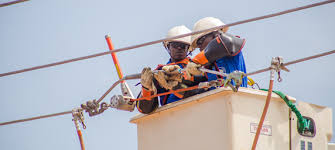

The Electricity Company of Ghana has notified the public that the intermittent power failures currently affecting multiple communities within the Greater Accra Region are primarily the result of technical faults triggered by a recent intense rainstorm.
In an official communique released on Sunday, March twenty ninth, two thousand and twenty six, the company explained that the severe meteorological disturbances disrupted electricity transmission across several districts, compelling an immediate response from its engineering contingents.

The utility reassured customers that specialized crews were actively engaged in restoring supply as expeditiously as possible. “The Electricity Company of Ghana wishes to apprise our valued customers and the general public that the outages currently being experienced across segments of the Greater Accra Region are due to faults arising from the recent heavy rainfall,” the statement read. “We assure all affected stakeholders that our engineers are working relentlessly to reinstate stable power.”

To facilitate timely support, ECG has provided multiple channels for affected residents and businesses to report disruptions. Customers are encouraged to contact the ECG Call Center on 0302611611, visit the nearest regional office, or engage via the company’s official social media accounts, including @ECGghOfficial, for real-time updates and assistance.

The company expressed regret for the inconvenience, highlighting that tens of thousands of households and critical industrial hubs in both the Greater Accra and Tema Region will experience scheduled power interruptions on Sunday, 29th March, as part of essential infrastructure enhancement operations. These maintenance exercises coincide with ongoing recovery efforts in the Ashanti West Region, where a major equipment failure on Friday had already affected numerous communities.
In Tema Region, technicians are slated to commence a seven-hour maintenance schedule at 9:00 a.m., expected to conclude by 4:00 p.m. The blackout will encompass a wide corridor, including Suncity, Manya Jopanya, Shai Hills, and Wildlife, along with surrounding residential neighbourhoods. ECG emphasised that the works are crucial for long-term service reliability, particularly in zones experiencing rapid urban expansion.

Within the Accra East Region, a separate five-hour upgrade window has been designated from 10:00 a.m. to 3:00 p.m., impacting some of the city’s most commercially active areas. Key affected localities include Spintex Road, which hosts several large-scale industries and warehouses; Teshie and Nungua, encompassing the Teshie Township, Agblezaa, and GREDA Estate; and Manet and Baatsona, characterised by high-density gated communities and retail centres. According to ECG advisories, these interventions aim to strengthen grid stability and enhance overall service reliability.
Meanwhile, in the Ashanti West Region, emergency operations remain underway following an unplanned outage on Friday, 27th March. A fallen conductor at Ahiakaso resulted in total power loss across towns including Kodie, Ahenkro, Denase, Akom, Apagya, Aduman, Aduamoah, and Nkwantakese. While definitive restoration times remain pending, ECG confirmed immediate deployment of engineering teams to resolve the fault and reestablish supply.

The power utility has issued a public appeal for patience, acknowledging the cumulative frustration generated by simultaneous scheduled maintenance and unplanned interruptions. The company emphasised that such temporary inconveniences are essential investments toward a more resilient and reliable electricity network. In all public advisories, ECG urged residents to treat all electrical infrastructure as live during the maintenance periods, warning that power may return ahead of projected schedules.

By balancing urgent repairs with strategic grid upgrades, the Electricity Company of Ghana continues to demonstrate its commitment to safeguarding national power infrastructure while prioritising the long-term reliability and stability of electricity supply for both residential and industrial stakeholders.

