
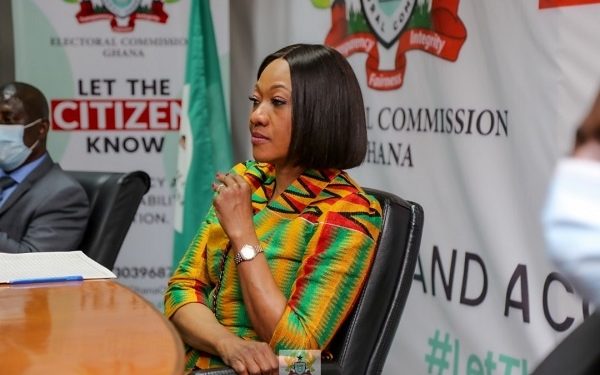

The Electoral Commission today convened a closed door meeting of the Inter Party Advisory Committee with representatives of various political parties as part of preparations toward the Ayawaso East by election slated for March 3. The engagement took place at the Commission’s headquarters and is expected to define the roadmap guiding activities leading to the polls.
Sources indicate that deliberations were focused primarily on logistical arrangements, administrative readiness, and compliance procedures necessary to ensure a smooth electoral process. The meeting also coincided with the final day for filing nominations for aspirants intending to contest the vacant parliamentary seat.

Addressing journalists at the venue, the General Secretary of the Ghana Consolidated Popular Party, Ato Dadzie, confirmed that the Ayawaso East by election was the sole item on the agenda. He expressed confidence that the Commission would use the platform to clarify the modalities governing the exercise and outline the operational framework for political actors.

He observed that with nominations closing today, it remained uncertain whether there would be any consideration for an extension or adjustment of timelines, although he emphasized that the central focus of discussions remained firmly on the upcoming contest.

Mr Dadzie disclosed that his party has resolved not to present a candidate for the by election. He explained that after assessing the political landscape and evaluating the party’s prospects within the constituency, the leadership concluded that participating at this stage would not be a prudent use of limited financial and organisational resources.
He further encouraged other opposition parties to reflect carefully before entering the race, arguing that by elections are imposing an increasingly heavy financial burden on the country. He alluded to previous contests, including the Akwatia by election, as illustrations of the substantial expenditure involved, though he did not elaborate on specific figures.

When questioned whether his remarks implied that only the National Democratic Congress should contest the seat, Mr Dadzie responded by pointing to what he described as the prevailing political dynamics in Ayawaso East. In his view, barring the emergence of an independent candidate capable of significantly altering voter alignments, the current configuration of forces suggests limited unpredictability. Nonetheless, he clarified that his comments were merely advisory and that each political party retains the autonomy to determine its own course of action.
He rejected suggestions that his party’s decision was influenced by allegations of vote buying said to have characterised the recent NDC primaries. On the contrary, he argued that the controversy may energise voters and heighten interest in the contest.

Mr Dadzie also referenced the renewed prominence of Baba Jamal’s name within political discussions, noting that the heightened public attention surrounding him has elevated his profile ahead of the election. According to him, the resurgence of interest has strengthened perceptions of Mr Jamal as a formidable contender, potentially reshaping the competitive environment of the race. He maintained, however, that his appeal to other parties was grounded in financial considerations rather than partisan calculations.

Expanding on his argument, Mr Dadzie suggested that Ghana must reassess its broader approach to conducting by elections. He recalled instances such as the Tamale Central by election, where minimal contestation reportedly reduced public expenditure, and he proposed that alternative frameworks could be explored to ease the fiscal pressure associated with frequent electoral exercises.
As the March 3 poll approaches, attention now turns to the Electoral Commission’s final guidelines and the decisions of political parties on whether to enter the contest, setting the stage for what could become a closely watched electoral exercise within the capital.

