
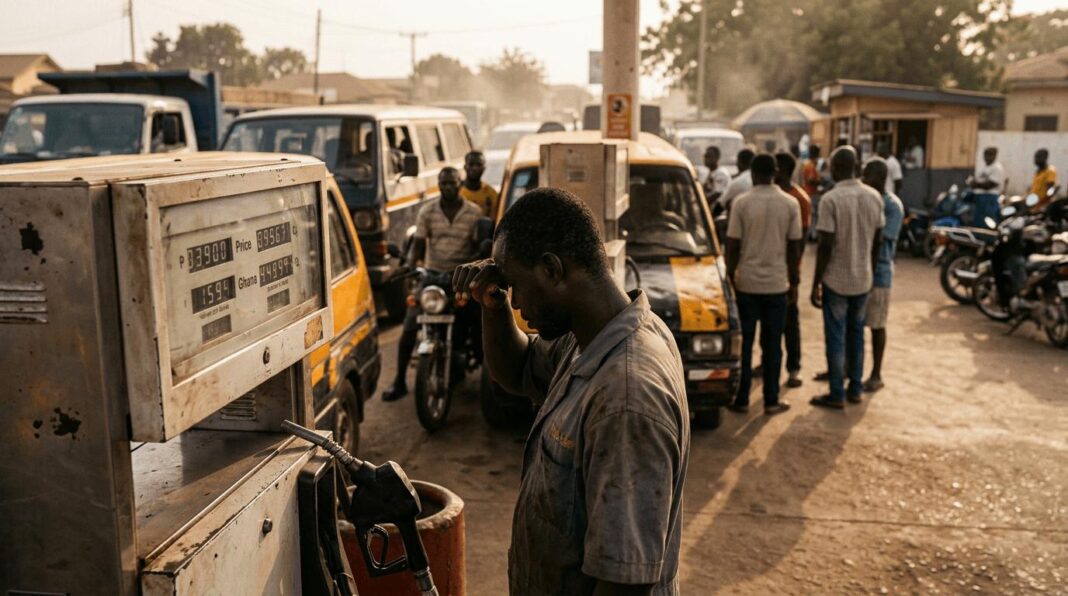

The Executive Director of the Chamber of Petroleum Consumers, COPEC, Duncan Amoah, has cautioned that fuel prices in Ghana could continue to climb as international demand and rising importation expenses exert additional pressure on the domestic petroleum market.
Mr Amoah said the country had not yet overcome the current fuel price challenges, despite measures introduced to cushion consumers against the impact of escalating diesel costs.

Speaking on JoyNews’ The Pulse on Wednesday, September 16, he explained that the combination of sustained global demand, elevated insurance premiums and expensive logistics could prolong the pressure on fuel prices, even if prevailing geopolitical tensions begin to subside.

“Prices will continue to go up,” Mr Amoah warned, adding that petroleum consumers would also have to contend with higher premiums and transportation costs associated with the movement of fuel.

He noted that although geopolitical developments had contributed to recent fluctuations in international petroleum prices, other underlying factors could continue to influence the cost of refined products. In particular, he pointed to seasonal changes in demand, including the anticipated increase in diesel consumption during the winter period, as a potential source of further upward pressure.
The COPEC executive director therefore cautioned that an easing of geopolitical tensions alone might not immediately translate into lower prices at Ghanaian fuel stations, since international supply arrangements, insurance charges and transportation expenses would continue to affect the final cost of imported petroleum products.

His comments come amid renewed increases in Ghana’s fuel price benchmarks. The National Petroleum Authority raised the minimum price for petrol to GH¢16 per litre and diesel to GH¢16.77 per litre for the second pricing window of September, which commenced on Wednesday, September 16. The minimum price for liquefied petroleum gas also increased marginally to GH¢10.97 per kilogramme. Actual pump prices may vary among oil marketing companies because of differences in operating costs and commercial margins.
Mr Amoah further advocated greater investment in domestic petroleum refining as part of efforts to reduce the country’s exposure to international importation costs. He maintained that strengthening local refining capacity could help minimise some of the additional expenses incurred when Ghana imports finished petroleum products at elevated premiums.

According to him, a more robust domestic refining industry could reduce the financial burden associated with importing refined fuel and provide greater protection for consumers against external market disruptions.

The call for increased local refining comes as Ghana continues to confront the challenges associated with international petroleum prices, shipping costs and supply uncertainties. However, the extent to which domestic refining can reduce pump prices will depend on the availability of crude oil, refinery capacity, operational efficiency and the overall cost of producing petroleum products locally.

