
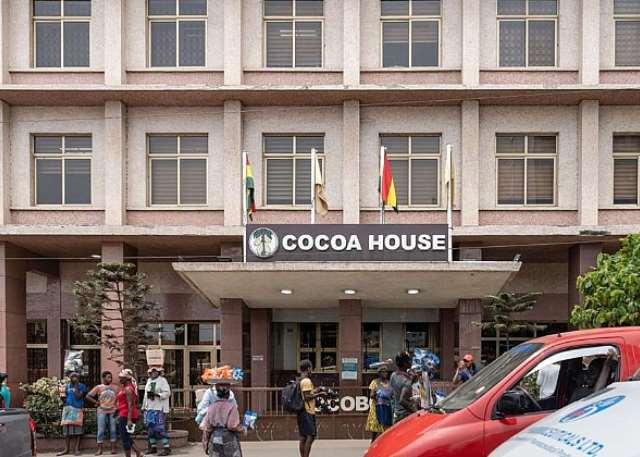

The Ghana Cocoa Board has failed to honour its publicly declared commitment to substantially eliminate outstanding cocoa payment arrears by the close of June, leaving approximately GH¢3.4 billion still unpaid to cocoa farmers and Licensed Buying Companies despite a categorical assurance that the debt would be reduced to a negligible balance before the deadline.
The development represents another significant challenge for Ghana’s cocoa sector, which remains one of the country’s most strategically important economic pillars and its largest agricultural export industry. The inability of the Board to fulfil its own publicly announced repayment timetable has renewed concerns about liquidity within the cocoa value chain, the financial stability of Licensed Buying Companies, and the welfare of hundreds of thousands of cocoa producing households whose livelihoods depend on prompt payments for beans delivered during the crop season.

On June 15, during an appearance on JoyNews PM Express, the Head of Public Affairs at the Ghana Cocoa Board, Jerome Sam, offered what appeared to be an unequivocal assurance regarding the settlement of the outstanding obligations. He stated that before the conclusion of June virtually every cocoa farmer and every Licensed Buying Company awaiting payment would receive what was due, adding that any remaining balance would be insignificant. When specifically asked whether the debt would be cleared by the end of the month, he unequivocally affirmed that this was indeed the expectation.

However, official figures subsequently released by the Board after the expiration of the self imposed deadline reveal that the institution did not achieve the target it confidently communicated to the public.

In a statement announcing fresh financing arrangements to support cocoa purchasing activities, the Ghana Cocoa Board disclosed that it had released GH¢2.6 billion to Licensed Buying Companies. According to the Board, GH¢1.4 billion of the amount has been allocated to compensate cocoa farmers who supplied cocoa on credit during previous crop seasons and had remained unpaid. The remaining GH¢1.2 billion has been designated to reimburse Licensed Buying Companies that advanced their own resources to purchase cocoa from farmers while awaiting reimbursement from the Board.
Although the latest disbursement represents a substantial financial commitment, it falls considerably short of eliminating the acknowledged debt burden.

Before announcing the latest payment, the Ghana Cocoa Board had admitted that its outstanding liabilities to cocoa farmers and Licensed Buying Companies exceeded GH¢6 billion. Consequently, the release of GH¢2.6 billion accounts for only about forty three percent of the admitted obligations. This leaves an estimated GH¢3.4 billion, representing approximately fifty seven percent of the outstanding debt, yet to be settled.
The figures demonstrate a significant disparity between the Board’s public commitment and the eventual outcome. Rather than reducing the unpaid balance to an insignificant level as promised, well over half of the acknowledged obligations remain outstanding after the expiration of the deadline.

The consequences extend beyond a missed administrative target. Licensed Buying Companies constitute an indispensable component of Ghana’s cocoa marketing architecture. These companies procure cocoa directly from farmers across producing communities before delivering the beans to the Ghana Cocoa Board for export and international marketing. To sustain these purchasing operations, many Licensed Buying Companies rely on commercial borrowing and other forms of financing while anticipating reimbursement from the Board. Extended payment delays therefore increase borrowing costs, weaken cash flow, diminish purchasing capacity, and could ultimately reduce competition within the cocoa buying system if financial pressures intensify.

For cocoa farmers, delayed payments have equally profound implications. Cocoa cultivation is highly capital intensive, requiring continuous investment in fertilisers, pesticides, pruning, disease control, labour, and farm rehabilitation. Deferred income restricts farmers’ ability to prepare adequately for the next production cycle and can adversely affect productivity, household welfare, children’s education, healthcare expenditure, and food security in cocoa growing communities. The timing of payments is particularly critical because farm maintenance activities often coincide with preparations for subsequent harvests.
The latest development also raises broader questions about confidence in public sector commitments. Financial markets, agricultural stakeholders, development partners, and rural communities closely monitor assurances issued by state institutions. When publicly declared timelines are not achieved, institutional credibility can be affected, particularly where the commitments concern obligations that directly influence livelihoods and commercial activity.
Historically, Ghana’s cocoa industry has served as the backbone of the national economy for decades, generating billions of dollars in export earnings, supporting foreign exchange reserves, financing national development, and sustaining more than eight hundred thousand farming households. The sector has long been regarded as a cornerstone of economic stability and rural prosperity. Consequently, payment delays within the industry resonate far beyond cocoa producing communities because they influence domestic economic activity, banking sector exposure, export performance, and investor confidence in one of Ghana’s most important state managed commodity institutions.
The repayment challenges confronting the Ghana Cocoa Board have emerged against the backdrop of broader financial pressures facing the institution in recent years. Reduced cocoa production resulting from illegal mining activities, climate variability, swollen shoot disease, widespread smuggling of cocoa beans across neighbouring borders, elevated financing costs, and constraints within international syndicated loan markets have collectively strained the Board’s financial position. These structural pressures have complicated efforts to maintain timely payments while preserving operational liquidity.
Despite these challenges, the latest release of funds demonstrates that the Board has made measurable progress in reducing its liabilities. Nevertheless, the official figures unmistakably confirm that the institution did not fulfil the timeline it publicly established. While thousands of farmers and several Licensed Buying Companies have now received payments, approximately GH¢3.4 billion remains outstanding, leaving many beneficiaries still awaiting funds that were expected to have been settled before the end of June.
The episode serves as a reminder that transparency, financial discipline, and realistic public communication remain essential to preserving confidence in Ghana’s cocoa sector. As preparations continue for future crop seasons, stakeholders will be looking beyond assurances and focusing instead on the timely execution of payment commitments that underpin one of the country’s most historically significant and economically indispensable industries.
SOURCE: Myjoyonline

