
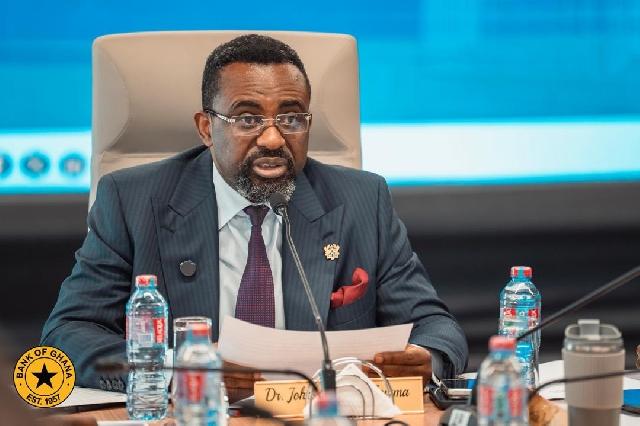

The Governor of the Bank of Ghana, Dr Johnson Asiama, has robustly justified the Monetary Policy Committee’s decision to maintain the central bank’s benchmark policy rate at 14 per cent from May to September 2026, arguing that the measure was necessary to safeguard macroeconomic stability amid mounting international uncertainties and emerging domestic inflationary pressures.
Dr Asiama explained that the decision reflected the Committee’s determination to protect the economy against potential external shocks, particularly escalating international crude oil prices and underlying domestic price pressures, despite improvements in several key economic indicators.

He made these remarks when he appeared before Parliament’s Committee on Economy and Development to brief lawmakers on monetary policy decisions and broader macroeconomic developments during the first six months of 2026.

The Governor’s explanation comes against the backdrop of calls from some financial market analysts for a reduction in the policy rate, following the sustained decline in inflation and improvements in other important macroeconomic fundamentals. Those advocating a rate cut had argued that the prevailing economic conditions provided sufficient justification for a further easing of monetary policy.

Nevertheless, at its September 2026 meeting, the majority of Monetary Policy Committee members maintained the existing rate, citing heightened external economic vulnerabilities and the possibility of renewed inflationary pressures as significant considerations underpinning their decision.
Fiscal Performance and Macroeconomic Developments
During his engagement with the parliamentary committee, Dr Asiama also outlined the operations and responsibilities of the Bank of Ghana, while examining the contribution of fiscal policy and broader economic management to the country’s recent growth performance.

He attributed part of the economy’s encouraging performance to fiscal authorities’ contribution to macroeconomic management, noting that Ghana’s Gross Domestic Product expanded by 6.4 per cent in the first quarter of 2026.
He further disclosed that inflation had declined to 3.2 per cent in March 2026, remaining below the central bank’s medium term target band of 6 to 10 per cent.

Turning to developments in the external sector, the Governor described the country’s performance as favourable, highlighting substantial improvements in Ghana’s international trade and balance of payments position.

According to him, Ghana recorded a trade surplus of US$8.81 billion alongside a current account surplus of US$5.1 billion, developments that underscored the strengthening of the country’s external economic position.
He further revealed that international reserves had increased to US$12.94 billion, providing sufficient resources to finance approximately five months of imports.
Banking Sector Records Stronger Performance
Providing an overview of developments within the banking industry, Dr Asiama reported that lending conditions had improved considerably, with the average lending rate falling from 27 per cent to 15.6 per cent.
He also disclosed that credit extended to the private sector had expanded by 41.2 per cent, reflecting improved access to financing for businesses and other economic operators.
The Governor further indicated that aggregate assets held by banks had increased by 30.7 per cent to GH¢502.4 billion, highlighting the expansion of the financial services industry.
He added that the sector’s Capital Adequacy Ratio stood at 20.4 per cent, while the proportion of Non Performing Loans had dropped from 23.1 per cent to 16.1 per cent, suggesting an improvement in the quality of banks’ loan portfolios.
BoG Outlines Reforms and Reserve Accumulation Targets
Beyond the reported economic improvements, Dr Asiama highlighted several regulatory and institutional interventions introduced by the central bank to strengthen financial sector management and reinforce macroeconomic resilience.
Among the measures he identified were the introduction of a uniform Cash Reserve Ratio of 20 per cent, the establishment of a more transparent and rules based framework for foreign exchange interventions and the implementation of the Ghana Accelerated National Reserve Accumulation Programme, popularly known as GANRAP.
The reserve accumulation initiative is designed to substantially strengthen Ghana’s external buffers, with an ambitious objective of increasing international reserves to cover 15 months of imports by 2028.
Dr Asiama concluded by reaffirming the Bank of Ghana’s determination to maintain price stability, strengthen institutional transparency and uphold accountability in the management of monetary policy.
He also emphasised the central bank’s responsibility to remain answerable to Parliament and the Ghanaian public while pursuing policies that protect economic stability and support sustainable national development.

