
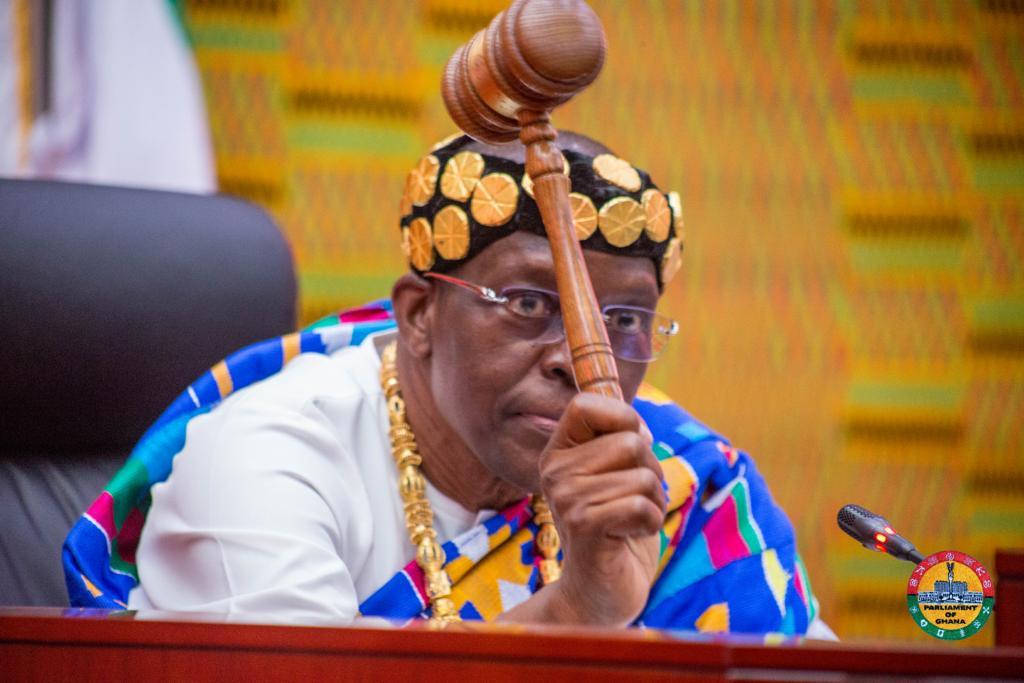

Speaker of Parliament Alban Bagbin has cleared the way for a parliamentary examination of the reported US$1.7 billion loss, equivalent to approximately GH¢22 billion, associated with the Domestic Gold Purchase Programme, saying the House must establish whether the controversial figure represents a genuine financial loss or a policy cost incurred in pursuit of Ghana’s economic objectives.
Mr Bagbin’s position follows a motion submitted by the Minority Caucus requesting a formal parliamentary inquiry into the reported losses and seeking the appearance of Ghana Gold Board Chief Executive Officer Sammy Gyamfi before the House to provide explanations concerning the transactions underpinning the programme.

The Speaker disclosed that the motion reached his office on August 21, 2026 and said he had personally reviewed its contents. He indicated that he would admit the motion for consideration, opening the door for Parliament to subject the disputed transactions to detailed scrutiny.

Mr Bagbin said the parliamentary process was necessary because the controversy had increasingly centred on a fundamental disagreement over how the reported US$1.7 billion should be characterised.

At the heart of the dispute is whether the amount should properly be regarded as a financial loss or understood as a cost associated with implementing the Domestic Gold Purchase Programme, an initiative designed to support Ghana’s foreign exchange reserves and broader economic stabilisation efforts.
The Speaker said Parliament’s involvement would provide an institutional platform through which lawmakers could examine the relevant transactions, assess the arguments advanced by the various parties and ultimately help establish a clearer account of what happened.

He stressed that the issue should not remain trapped in a prolonged exchange of competing claims without a definitive examination of the underlying financial records and transactions.
The controversy intensified after the International Monetary Fund reported that the Bank of Ghana’s Domestic Gold Purchase Programme generated losses of about GH¢22 billion, equivalent to US$1.7 billion, during 2025. The figure has since become the centre of a political and institutional dispute over responsibility for the financial outcome.

The Minority Caucus has subsequently demanded accountability and has sought parliamentary intervention, while GoldBod Chief Executive Officer Sammy Gyamfi has rejected claims that the reported loss should be attributed to GoldBod.

Mr Gyamfi has argued that GoldBod operated as a buying agent for the Bank of Ghana during the period in question and did not determine the eventual selling prices of the gold, negotiate the relevant offtake arrangements or assume the trading risks that generated the reported loss.
GoldBod has further maintained that its own audited financial statements for 2025 recorded an overall surplus rather than the reported GH¢22 billion loss, while its operational surplus was approximately GH¢907 million.
The distinction between GoldBod’s own financial position and the losses reported under the Bank of Ghana’s programme has consequently become a central component of the disagreement between the government and the parliamentary Minority.
Independent reporting on the matter has also established that the GH¢22 billion figure cited by the Minority is contained in the IMF’s assessment, but that the IMF attributed the loss to the Bank of Ghana’s operations under the Domestic Gold Purchase Programme rather than describing it as a loss on GoldBod’s own books.
Mr Bagbin’s decision to admit the Minority’s motion therefore sets the stage for Parliament to move the dispute from political exchanges into a formal legislative examination.
The Speaker indicated that the process should ultimately help resolve the disagreement over the nature of the reported financial figure and establish whether the amount represents an actual loss requiring accountability or an expenditure and policy cost associated with the implementation of a broader economic intervention.
He said the parliamentary proceedings would give lawmakers the opportunity to examine the matter in detail and provide the Ghanaian public with a clearer understanding of the transactions.
Mr Bagbin also placed responsibility on the public to pay attention to the evidence and arguments that emerge from the parliamentary process rather than relying solely on competing political narratives.
He expressed confidence that Ghanaians would be capable of assessing the information presented before the House and drawing their own conclusions once the relevant facts had been properly examined.
The impending parliamentary inquiry comes at a time when the controversy surrounding the Domestic Gold Purchase Programme has expanded beyond the question of the reported GH¢22 billion figure to include broader questions about the respective responsibilities of the Bank of Ghana, GoldBod and other institutions involved in the programme.
GoldBod has meanwhile indicated that an independent audit is being undertaken to examine the programme from its inception in 2021, with the exercise expected to provide further clarity on its financial performance and institutional management.
Parliament’s intervention could therefore become an important stage in determining how the reported losses should ultimately be understood and attributed, while providing an opportunity for the institutions involved to present documentary evidence concerning the programme’s financing, gold purchases, pricing arrangements, foreign exchange implications and subsequent transactions.
For now, Speaker Bagbin’s decision has effectively moved the GH¢22 billion controversy towards formal parliamentary scrutiny, where lawmakers will be expected to examine the competing claims and determine what the reported figure represents.
The outcome could have significant implications for public understanding of the Domestic Gold Purchase Programme, particularly the distinction between a financial loss incurred by the central bank and a policy cost associated with an intervention undertaken to strengthen Ghana’s reserves and support economic stability.

