

The General Transport, Petroleum and Chemical Workers’ Union (GTPCWU) of the Trades Union Congress (TUC), Ghana, has threatened a nationwide strike by petroleum workers if Parliament passes the National Petroleum Authority (NPA) Bill, 2026, in its current form.
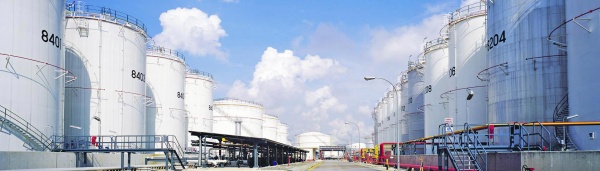
The Union is particularly opposed to Clause 103 of the Bill, which seeks to remove BOSTenergies’ exclusive mandate to develop, operate and maintain inland petroleum depots, opening the sector to private operators.

In a press release issued in Accra on Monday, November 23, the Union warned that the proposed amendment could undermine Ghana’s energy security, weaken the State-owned BOSTenergies and jeopardise hundreds of jobs.

It said BOSTenergies had increased its permanent workforce from 440 in 2024 to 743 by November 2025, creating 303 permanent, unionised jobs in support of the Government’s 24-Hour Economy programme. However, it cautioned that diverting petroleum volumes to privately operated depots could force the company to cut its workforce by almost half.

The Union also warned that billions of cedis in public investment and sovereign-backed borrowing had gone into developing the country’s inland depots, pipelines and terminals, and that allowing competing private networks could leave these national assets under-utilised while increasing the financial burden on Government.
It further argued that the proposed changes could increase fuel distribution costs and threaten reliable petroleum supplies to northern Ghana, where private operators might be less inclined to serve less profitable routes.

On the financial implications, the Union claimed that fully funding the National Strategic Fuel Reserve without the existing zonalisation arrangement could push the BOST margin from 12 pesewas to approximately 56 pesewas per litre, representing an increase of more than 360 per cent.
GTPCWU insisted that it was not opposed to private-sector participation in the downstream petroleum industry but wanted such participation in inland depots to be undertaken through partnerships with BOSTenergies under the Public-Private Partnership Act, 2020 (Act 1039). It maintained that coastal depots could remain open to licensed private operators.

The Union also accused the proposed legislation of failing to provide a level playing field for BOSTenergies, arguing that while private operators would be allowed to compete in the inland depot business, the State-owned company would remain restricted to selling its products through Bulk Import, Distribution and Export Companies (BIDECs), rather than directly to Oil Marketing Companies.

It further questioned the restriction limiting BOSTenergies to two import cargo windows, or laycans, per month.
The Union disclosed that it had petitioned President John Dramani Mahama, submitted memoranda to Parliament and engaged the Energy and Green Transition Minister, culminating in the submission of specific drafting proposals on August 31, 2026. However, it complained that the Bill had returned to Parliament without the changes it had proposed and that the final report of stakeholder consultations had not been made available.
Among its demands are the revision of Clause 103 to preserve BOSTenergies’ exclusive inland depot mandate, publication of the stakeholder engagement report, removal of restrictions on BOSTenergies’ direct sales to Oil Marketing Companies, and the submission of the Ministry’s impact assessment to Parliament.
It has also called for approval of private inland depot projects, including a proposed 130,000-tonne Kumasi Oil Facility at New Koforidua near Ejisu, to be withheld until its concerns are resolved.
GTPCWU warned that if Parliament proceeds with the Bill without addressing the concerns, it will mobilise workers at BOSTenergies and across the downstream petroleum sector for a nationwide strike, with further industrial action also possible.
The Union’s National Chairman, Bernard Owusu, and Deputy General Secretary, Francis Sallah, said responsibility for any disruption resulting from the industrial action would rest with those who proceed with the legislation without resolving the workers’ concerns.

