
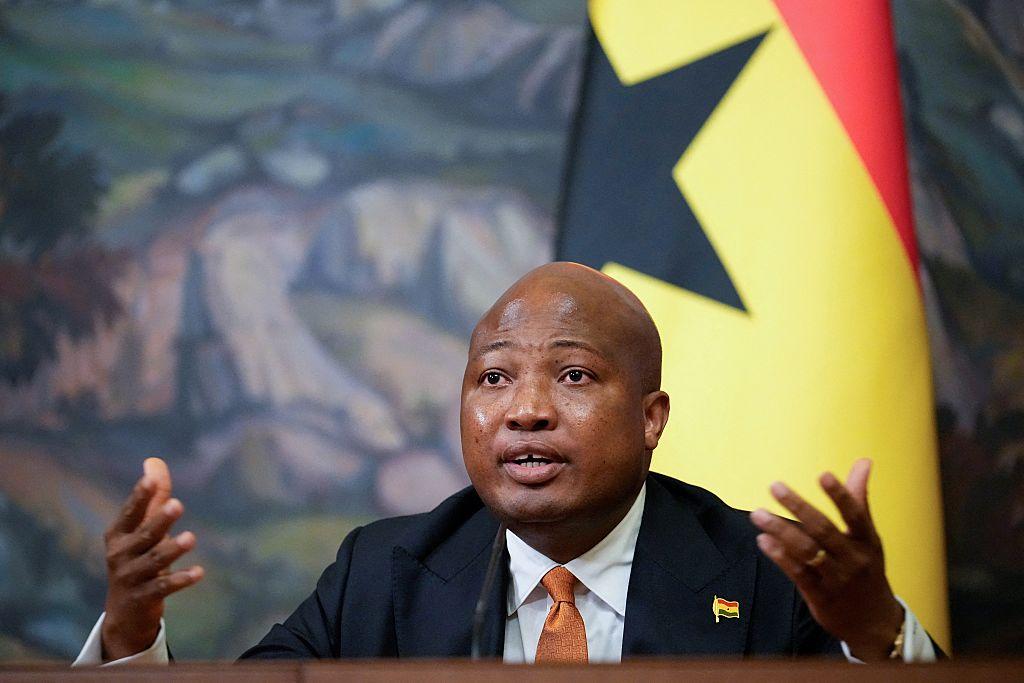

Foreign Affairs Minister Samuel Okudzeto Ablakwa has clarified that Africa’s pursuit of reparatory justice for the transatlantic trafficking and enslavement of Africans is not principally an appeal for direct financial payments from Western governments.
According to the Minister, the continent’s objective is to secure substantive and enduring support for policies, programmes and development interventions capable of confronting the persistent consequences of slavery and the inequalities created through centuries of exploitation. He maintained that particular emphasis should be placed on empowering Africa’s youthful population through investments that expand economic opportunities, entrepreneurship and sustainable development.

Mr Ablakwa made the remarks while answering questions from international journalists in Moscow concerning the kind of global order Ghana and its partners seek to establish following the adoption of a historic United Nations resolution that recognised the trafficking of enslaved Africans and racialised chattel enslavement as the gravest crime against humanity.

His comments were released on Sunday, August 23, 2026, as the international community observed the International Day for the Remembrance of the Slave Trade and its Abolition, an annual United Nations observance dedicated to remembering the victims and examining the historical causes and continuing consequences of the transatlantic slave trade.

Mr Ablakwa stressed that the reparatory justice agenda must not be narrowly interpreted as a demand for Western governments to transfer money directly to African states. Rather, he explained that African countries were seeking meaningful partnerships capable of correcting longstanding structural disparities, strengthening institutions, expanding opportunities for young people and creating the conditions for sustained economic transformation.
“Reparatory justice goes beyond financial compensation,” he said, emphasising that Africa was not seeking the personal wealth of Western leaders or governments but meaningful assistance for initiatives that could produce lasting benefits.

He pointed to a commitment by the Archbishop of Canterbury involving £100 million to support causes involving young Africans and entrepreneurs as an illustration of the type of intervention Ghana would like to see expanded.
Mr Ablakwa argued that such initiatives could provide young Africans with resources and opportunities to establish enterprises, generate employment and contribute more substantially to the economic advancement of their countries.

Ghana’s Leadership at the United Nations

Ghana has emerged as a leading voice in the international campaign for reparatory justice for Africans and people of African descent, with President John Dramani Mahama championing the agenda in his capacity as the African Union Champion for Advancing the Cause of Justice and the Payment of Reparations.
On March 25, 2026, the United Nations General Assembly adopted Resolution A/RES/80/250, which addressed the historical consequences of the trafficking of enslaved Africans and racialised chattel enslavement. The Ghanaian Government has subsequently described the resolution as a major international milestone in the campaign for reparatory justice.
The resolution was supported by 123 member states, while 52 countries abstained and three countries, identified in contemporary reporting as the United States, Israel and Argentina, voted against it.
The initiative further called for inclusive and good faith international dialogue on reparatory justice, while also highlighting the need for the restitution of cultural properties and artefacts removed from communities affected by slavery and colonial exploitation.
For Ghana, the United Nations decision represented not an endpoint but the beginning of a broader diplomatic and institutional process aimed at translating recognition into concrete measures.
Accra Conference Sets Out Next Steps
Ghana subsequently hosted the High Level Consultative Conference on the Next Steps to the Landmark United Nations Resolution in Accra from June 17 to 19, 2026.
The gathering assembled political leaders, diplomats, legal specialists, academics, civil society representatives, international organisations and members of the African diaspora to consider practical mechanisms for implementing the objectives contained in the United Nations resolution.
The conference culminated in the adoption of the Accra Next Steps Commitments on Reparatory Justice, which established a broad framework addressing cultural restitution, education, economic transformation, reforms in global governance, debt relief, climate justice, access to technology and stronger relationships between Africa and its diaspora.
The meeting also considered institutional mechanisms intended to provide sustained intellectual, legal and policy direction for the international reparations movement. Among the proposed structures were a Global Advisory Panel for Reparatory Justice, an Expert Panel on the Restitution of Cultural Artefacts and a Legal Panel for Reparatory Justice.
The outcome of the Accra gathering reinforced Ghana’s determination to transform the reparatory justice campaign from an international declaration into a continuing programme of diplomacy, policy development and practical action.
Mr Ablakwa’s latest remarks in Moscow therefore place economic empowerment and development cooperation at the centre of Ghana’s interpretation of reparatory justice. His position suggests that meaningful redress should not be confined to monetary compensation but should encompass investments capable of addressing the social, economic, cultural and institutional disadvantages that have endured across generations.
The Foreign Affairs Minister’s argument also reflects Ghana’s broader diplomatic position that Africa should engage Western partners on the basis of responsibility, equity and constructive cooperation rather than simply seek financial transfers.
For Ghana, the reparatory justice campaign is consequently being presented as a long term effort to establish a more balanced international relationship, restore cultural and historical assets, expand opportunities for younger generations and address inequalities whose origins can be traced to the transatlantic slave trade and subsequent systems of exploitation.

