

Finance Minister Dr Cassiel Ato Forson says Ghana has substantially reduced the proportion of government revenue allocated to debt repayment, with the country now committing less than 20 percent of its earnings to servicing its obligations compared with approximately 50 percent during the height of its debt crisis.
According to the Finance Minister, the previous debt servicing burden placed severe pressure on the national budget and significantly restricted the government’s ability to channel public resources towards essential sectors such as education, healthcare, transportation infrastructure and other development priorities.

Dr Forson said the exceptionally high share of revenue previously devoted to debt servicing had left the country with limited fiscal capacity and created difficult choices for policymakers seeking to finance essential public programmes.

He explained that when nearly half of government revenue was being absorbed by debt related payments, fewer financial resources remained available for investments capable of improving living conditions and supporting economic development.

The Finance Minister said the situation had been fiscally unsustainable and required decisive intervention to restore stability to the country’s public finances.
He indicated that the substantial decline in debt servicing costs represented an important improvement in Ghana’s fiscal position, arguing that the government could now redirect a greater portion of its resources towards productive investments and social interventions that directly benefit citizens.

Dr Forson further stated that the government’s efforts were not limited to reducing the immediate pressure associated with debt repayment but also included measures intended to prevent the country from returning to a cycle of excessive borrowing and mounting fiscal obligations.
He said the government was therefore working to ensure that newly established fiscal rules would receive legal protection, thereby creating a framework capable of imposing greater discipline on future administrations.

According to him, embedding the fiscal requirements in legislation would help ensure that successive governments respect established financial limits irrespective of which political administration is in power.

The Finance Minister maintained that such institutional safeguards were necessary to protect the gains achieved through the ongoing fiscal consolidation process and to strengthen the long term sustainability of Ghana’s public finances.
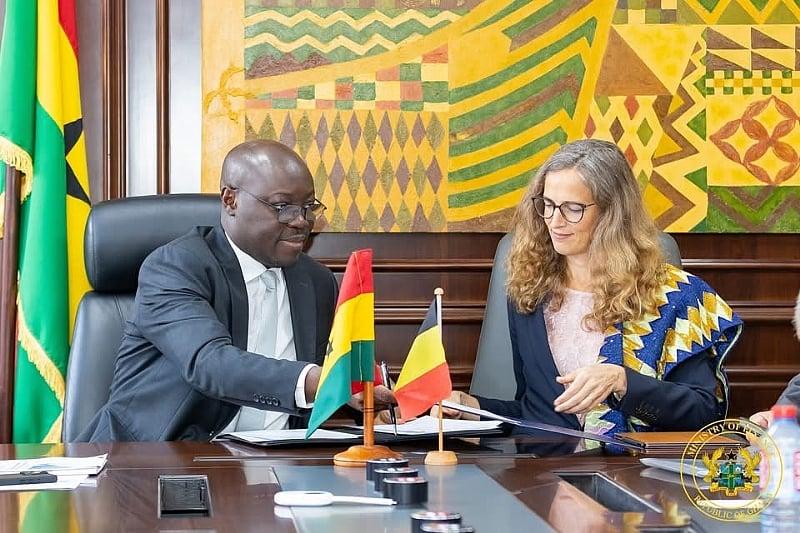
Dr Forson made the remarks during the signing of an agreement between the governments of Ghana and Belgium concerning the restructuring of debt owed by Ghana to Belgium’s export credit agency.
The agreement forms part of Ghana’s wider efforts to restructure its external obligations and ease pressure on the country’s public finances as government continues to pursue measures aimed at restoring debt sustainability.
The Finance Minister’s comments also underscore the government’s broader objective of creating additional fiscal room for investment while maintaining greater control over public expenditure and borrowing.
A reduction in the share of revenue required for debt servicing can provide government with greater flexibility to finance infrastructure, social protection, education, healthcare and other national priorities, although the sustainability of such gains will ultimately depend on continued fiscal discipline, effective revenue mobilisation and prudent debt management.
Dr Forson said the government remained committed to ensuring that Ghana did not return to the financial conditions that previously constrained public spending and weakened the country’s ability to pursue critical development programmes.
He stressed that establishing legally enforceable fiscal rules would help institutionalise responsible economic management and provide a stronger safeguard against excessive borrowing in the future.
The Finance Minister’s position reflects the government’s broader effort to consolidate Ghana’s public finances following years of elevated debt accumulation and rising debt service costs.
With debt restructuring agreements forming part of the recovery strategy, the government is seeking to create sufficient fiscal space to support economic growth while ensuring that public debt remains within sustainable limits.
The reduction in debt servicing from about half of government revenue to below one fifth therefore represents a significant shift in the allocation of public resources, according to Dr Forson, and provides the government with greater capacity to pursue investments intended to improve infrastructure and social services across the country.
He maintained that protecting these gains through legislation and stronger fiscal governance would be essential if Ghana is to sustain its economic recovery and avoid another period of severe debt distress.

