
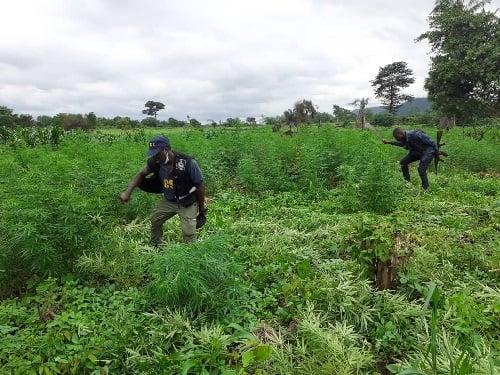

The Eastern Regional Police Command has dismantled an alleged criminal operation involving individuals accused of impersonating National Security personnel and exploiting cannabis farmers through extortion in the Yilo Krobo Municipality. The arrest of eleven suspects has exposed growing concerns over criminal groups using the identity of state security institutions to intimidate residents, collect illegal payments and undermine public confidence in legitimate security agencies.
According to information from police sources, the suspects allegedly disguised themselves as National Security operatives by wearing security style uniforms and moving through farming communities where cannabis cultivation is reported to take place. The group is accused of demanding money from farmers in exchange for protection from police raids and law enforcement operations targeting illegal narcotics activities.

The operation reportedly centred around Aboa, a farming community within the Yilo Krobo Municipality, with investigations indicating that the suspects also extended their activities to neighbouring areas including Osoya, Osuboi Number One, Opesika and other surrounding communities.

Authorities say the alleged impersonators operated using motorcycles to travel between communities, creating the impression that they were conducting official security activities. Police investigations suggest that the group presented themselves as individuals capable of shielding cannabis farmers from arrest and preventing law enforcement agencies from carrying out operations against illegal cultivation.

The suspects had reportedly been under surveillance by the Eastern Regional Police Command’s Operations Unit for several months following intelligence gathered about their activities. Their eventual arrest followed information that the group had returned to the area and resumed allegedly collecting money from farmers.
Police personnel from the Regional Operations Unit reportedly conducted a carefully coordinated early morning operation after receiving a tip off. During the operation at Aboa, the suspects were allegedly apprehended shortly after collecting GH¢3,000 from farmers.

The arrest represents another significant enforcement action against individuals accused of exploiting communities by falsely claiming affiliation with government security institutions. Authorities have repeatedly warned members of the public about criminals who impersonate police officers, military personnel and national security officials in order to commit fraud, extortion and other offences.
During the operation, police reportedly confiscated a silver coloured Toyota Voxy with registration number GE 8755 26, together with a pump action firearm and a pistol believed to have been used by the suspects. The seizure of these items has formed part of the ongoing investigation as authorities work to establish the full extent of the group’s activities and determine whether additional individuals were involved.

Following their arrest, the suspects were transported to the Eastern Regional Police Command headquarters in Koforidua, where they were taken into custody for interrogation and further investigation. Police officials are expected to continue gathering evidence, identifying possible accomplices and determining whether other communities may have been affected by the alleged activities.

The development highlights the broader challenges faced by security agencies in combating organised criminal networks that exploit vulnerable communities, particularly in areas where illegal economic activities exist. The impersonation of security officials remains a serious offence because it damages public trust, interferes with legitimate law enforcement operations and allows criminals to manipulate residents through fear and misinformation.
The case also draws attention to the continuing fight against illegal cannabis cultivation and the complex security challenges associated with narcotics control in rural communities. While law enforcement agencies have intensified operations against unlawful cultivation, authorities have also emphasised the need for intelligence led policing and cooperation from residents to identify individuals who engage in criminal activities or misuse the names of state institutions.
The arrest of the eleven suspects is therefore not only a major breakthrough for the Eastern Regional Police Command but also a reminder of the importance of verifying the identity of individuals claiming to represent government security bodies. As investigations continue, police authorities are expected to pursue the case thoroughly to ensure that anyone found responsible faces the appropriate legal consequences.

