

SOURCE: Citinewsroom
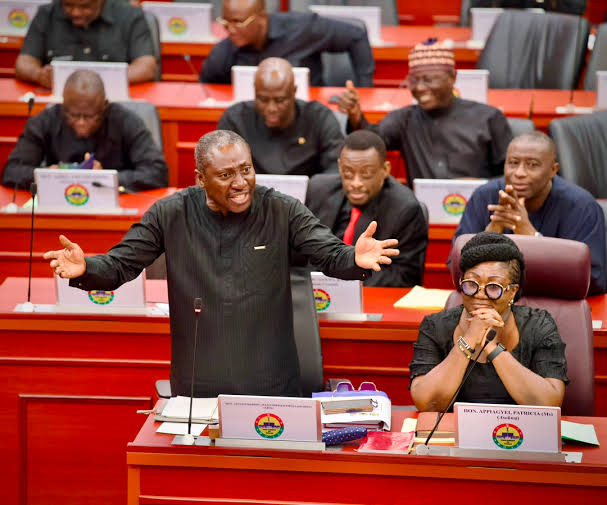
The political tensions surrounding Ghana’s justice system intensified in Parliament after Minority Leader Alexander Afenyo Markin called on the government to release individuals he described as “political prisoners,” accusing the John Dramani Mahama administration of using state institutions to intimidate opposition figures and silence critics. His comments have reignited a national debate over the relationship between politics, criminal prosecution, democratic accountability and the independence of state institutions.

Speaking during parliamentary debate on the 2026 Mid Year Fiscal Policy Review presented by Finance Minister Dr Cassiel Ato Forson on Thursday, July 23, the Effutu Member of Parliament argued that recent legal actions involving opposition figures and government critics represent what he characterised as a troubling pattern of political persecution.

Afenyo Markin claimed that some members of the opposition and individuals who have publicly criticised government policies are being subjected to prosecution as part of an attempt to weaken dissent and restrict democratic opposition. He maintained that Ghana’s constitutional democracy depends on protecting freedom of expression, political participation and the ability of citizens and elected representatives to challenge government decisions without fear of retaliation.

The Minority Leader specifically referred to the case of Camilla Alhassan, describing her as a young mother of three who had become a victim of political persecution following her conviction and sentencing. He argued that her situation reflects what he believes is an emerging environment where critics of the government are facing disproportionate legal consequences because of their perceived political positions.
He also highlighted the conviction of New Patriotic Party Ashanti Regional Chairman Bernard Antwi Boasiako, popularly known as Chairman Wontumi, who was sentenced to twenty years imprisonment in a case connected to illegal mining activities, commonly referred to as galamsey. Afenyo Markin argued that the handling of such cases raises concerns about fairness and political neutrality, insisting that justice must be administered without political influence or selective application of the law.

The Minority Leader contended that the prosecution of opposition figures risks creating a political atmosphere where only voices aligned with the government are allowed to thrive. He warned that suppressing criticism through legal mechanisms could weaken democratic accountability and damage public confidence in national institutions responsible for protecting justice and equality before the law.
Addressing Finance Minister Dr Cassiel Ato Forson directly during the parliamentary debate, Afenyo Markin urged the government to reconsider what he described as politically motivated prosecutions and called for the release of individuals he considers political prisoners. He insisted that opposition lawmakers would continue carrying out their constitutional responsibility of scrutinising government actions regardless of perceived intimidation.

He further stated that even if the government were to prosecute or imprison opposition legislators, such actions would not prevent the opposition from demanding transparency, challenging public policies and holding government officials accountable for the management of national resources.

The Minority Leader also delivered a broader warning about the temporary nature of political authority, reminding government officials that power changes hands through democratic elections. He argued that actions taken against political opponents while in office can establish precedents that may later affect future administrations.
According to Afenyo Markin, the New Patriotic Party would continue monitoring government decisions, questioning public expenditure and demanding accountability for every cedi spent by the state. He maintained that parliamentary oversight remains essential in ensuring responsible governance and preventing abuses of executive authority.
The controversy surrounding these remarks reflects a wider debate in Ghana about the balance between accountability and political freedom. Supporters of government prosecutions argue that individuals accused of wrongdoing must face legal consequences regardless of political affiliation, maintaining that investigations and court proceedings are based on evidence rather than partisan considerations. Government officials have consistently rejected accusations of political persecution and insist that the rule of law requires all persons to be treated equally before the courts.
On the other hand, opposition leaders argue that democratic institutions must be protected from political interference and that prosecutorial powers should never become instruments for targeting political opponents. They maintain that the credibility of Ghana’s democracy depends on ensuring that justice is applied fairly, transparently and independently.
Ghana’s history as one of Africa’s most stable constitutional democracies has often been shaped by peaceful transfers of political power and strong public engagement in governance. As a result, allegations of political persecution carry significant national importance because they touch on fundamental democratic principles including freedom of speech, judicial independence, parliamentary oversight and the protection of minority voices.
The parliamentary confrontation over alleged political imprisonment therefore represents a deeper national discussion about the future of Ghana’s democratic institutions and the responsibilities of governments in exercising political power. As the country moves closer to another electoral cycle, debates surrounding justice, accountability and political tolerance are expected to remain central issues in public discourse.
Afenyo Markin concluded his remarks by insisting that the opposition would not be silenced and would continue challenging government decisions while demanding accountability. His comments added another layer of political intensity to the ongoing parliamentary debate over the Mid Year Budget Review, highlighting the growing divide between the governing National Democratic Congress and the opposition New Patriotic Party over governance, justice and democratic freedoms.

