

The Minority Caucus in Ghana’s Parliament has launched a major political and constitutional challenge against Attorney General and Minister for Justice Dr Dominic Ayine, demanding his immediate removal from office over allegations surrounding the controversial release of GH¢350 million meant to support victims of devastating floods across the country.
The opposition caucus claims the disbursement of the emergency funds may have violated Ghana’s constitutional requirements on public expenditure and breached existing court restrictions placed on the Contingency Fund, raising fundamental questions about financial accountability, parliamentary oversight, and the legal obligations of government officials responsible for managing public resources.

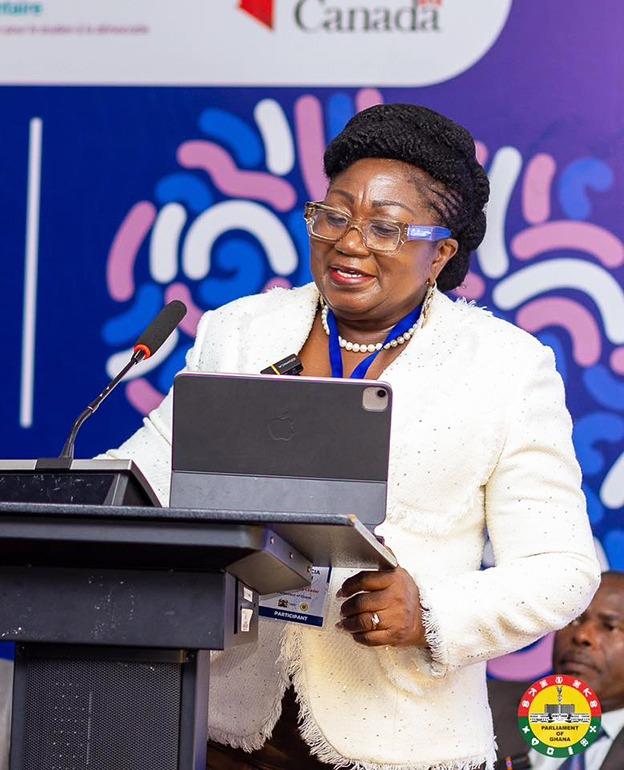
Addressing journalists at Parliament, Deputy Minority Leader Patricia Appiagyei argued that the circumstances surrounding the release of the money expose serious inconsistencies that require urgent investigation. She maintained that Parliament authorised the withdrawal of GH¢350 million specifically from the Contingency Fund to finance flood relief and mitigation measures, but the fund was allegedly under legal attachment at the time because of ongoing garnishee proceedings.

The Minority insists that the central issue is not whether flood victims required urgent assistance, but rather whether the government followed the constitutional and statutory procedures required before accessing public funds.

According to the caucus, if the Contingency Fund was legally unavailable because of the court order, then only two possibilities exist. Either the Bank of Ghana processed a withdrawal despite the attachment order, or government officials sourced the money from another public account without returning to Parliament for fresh approval.
“The unavoidable question therefore is how did the money move?” Ms Appiagyei questioned, arguing that the government’s explanation has created more uncertainty rather than providing clarity on the source and legality of the funds.

The Minority contends that the Ministry of Finance’s announcement that GH¢350 million had been released from the Contingency Fund is inconsistent with the legal circumstances surrounding the fund at the time. The caucus argues that if the original source approved by Parliament became inaccessible due to the attachment order, government was constitutionally required to seek approval for any alternative funding arrangement.
Ms Appiagyei explained that Parliament’s approval was tied specifically to a withdrawal from the Contingency Fund and not to any unidentified public account. She warned that if another account was used without legislative authorisation, then the withdrawal carried out was fundamentally different from the one approved by Parliament.

“If the GH¢350 million was drawn from any account other than the Contingency Fund, then the approval Parliament granted was never executed. The withdrawal that was executed was never approved,” she stated.

The Minority argues that such an action, if established, would amount to a breach of Ghana’s constitutional framework and the Public Financial Management Act, 2016, Act 921, which regulates government expenditure and prohibits unauthorised withdrawals from public funds.
The controversy has now placed Dr Dominic Ayine at the centre of a growing constitutional dispute, with the Minority accusing him of failing in his responsibilities as Ghana’s principal legal adviser and the official charged with managing civil legal matters involving the state.
The caucus relied heavily on Article 88 of the 1992 Constitution, which defines the Attorney General’s role as the chief legal adviser to government and the officer responsible for conducting civil proceedings on behalf of the Republic.
According to Ms Appiagyei, Dr Ayine failed to protect the state’s legal position after the Contingency Fund became subject to court proceedings. She argued that there was no evidence that the Attorney General challenged the attachment order or took legal steps to secure the release of the fund before the emergency disbursement was made.
“As the officer responsible for civil proceedings against the state, he presided over litigation in which a constitutional fund of the republic was attached, and there is no indication that the attachment was resisted or that any application was made to discharge it,” she said.
The Minority further accused the Attorney General of failing to provide proper legal guidance to government at a critical stage when questions surrounding the legality of accessing the Contingency Fund had emerged.
The opposition caucus has therefore formally demanded that Dr Ayine resign immediately, insisting that his continued stay in office undermines confidence in Ghana’s constitutional governance and financial accountability systems.
Ms Appiagyei said that should the Attorney General refuse to step down voluntarily, President John Dramani Mahama must exercise his constitutional authority to remove him from office.
“We call on the President, who swore an oath to preserve, protect and defend this Constitution, to relieve him of office without delay,” she stated.
Beyond the call for resignation or dismissal, the Minority has outlined a series of accountability measures it wants government to undertake. The caucus is demanding that both the Attorney General and the Minister for Finance appear before Parliament to explain the circumstances surrounding the disbursement and provide all relevant documentation.
The documents requested include the garnishee order that affected the Contingency Fund, the complete records of the legal proceedings that produced the judgment, the Attorney General’s letter dated July 1, 2026, and all correspondence exchanged between the Attorney General’s Office, the Ministry of Finance, the Controller and Accountant General’s Department, and the Bank of Ghana.
The Minority is also demanding a public explanation from the Governor of the Bank of Ghana on whether the central bank rejected or complied with directives relating to the release of the funds. The caucus wants clarification on the exact account from which the GH¢350 million was withdrawn and the authority under which the transaction was executed.
In addition, the opposition has called for the Auditor General to conduct a special audit into the entire flood relief financial process, tracing the movement of funds from their original source through to the final beneficiaries.
The demand for an audit reflects broader concerns about transparency in emergency spending, especially where public funds are released under urgent circumstances. Ghana’s fiscal governance framework requires that even emergency expenditure must remain subject to legal oversight, parliamentary scrutiny, and established accountability mechanisms.
The controversy surrounding the GH¢350 million flood relief allocation therefore carries implications beyond the immediate political dispute between the government and opposition. At stake is the interpretation of constitutional controls over public money, the authority of Parliament in approving expenditure, and the responsibility of state institutions to respect judicial decisions.
The development also adds to ongoing national debates about the relationship between executive authority, parliamentary approval, and judicial independence in Ghana’s democratic system. Any determination on whether the funds were lawfully accessed could establish an important precedent on how governments respond when emergency financial needs collide with court imposed restrictions.
For now, the Minority has warned that it will pursue every parliamentary and legal avenue available if government fails to provide what it describes as full disclosure and satisfactory answers.
The controversy is expected to deepen as Parliament considers whether further investigations, hearings, or institutional reviews will be required to establish the legality of the GH¢350 million flood relief disbursement and determine whether any public officials breached Ghana’s financial governance laws.

