
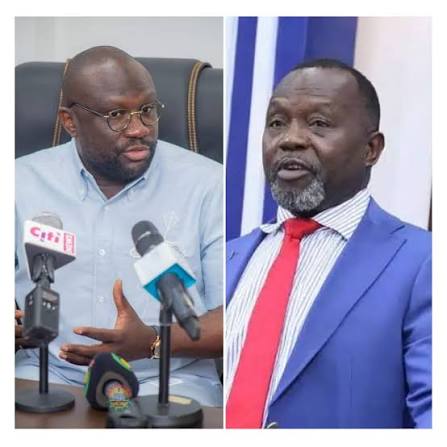

The legal battle surrounding former National Food Buffer Stock Company Chief Executive Officer Hanan Abdul Wahab Aludiba has entered a far more consequential phase after the Attorney General accused him of allegedly attempting to gain access to bank accounts that remain under court ordered restrictions by presenting a judicial ruling that applied only to his landed properties. The latest allegations have significantly intensified a criminal prosecution that is already centred on accusations involving more than GH¢70 million in alleged financial loss to the state and have now raised fresh questions about compliance with judicial directives, the preservation of evidence, and the enforcement of asset recovery laws in Ghana.
According to court processes filed before the Accra High Court, Attorney General Dominic Ayine maintains that shortly after securing judicial permission to travel outside Ghana for medical treatment, former National Food Buffer Stock Company Chief Executive Officer Hanan Abdul-Wahab Aludiba allegedly sought to withdraw money held in bank accounts that investigators insist remain frozen under valid court orders issued during ongoing criminal investigations. The allegations are contained in a sworn affidavit deposed by Economic and Organised Crime Office Assistant Staff Officer Radiatu Abdulai in support of an application asking the High Court to cancel the travel permission previously granted to the accused.

The Attorney General argues that two separate freezing directives issued on July 14 and July 28, 2025 continue to prohibit any movement of funds held in bank accounts belonging to Mr Abdul Wahab and persons identified by investigators as alleged associates. Prosecutors therefore contend that every financial institution in possession of those accounts remains legally obligated to prevent withdrawals until the courts determine otherwise.

According to the affidavit, prosecutors believe Mr Abdul Wahab presented a judicial ruling that removed restrictions from a separate category of assets consisting exclusively of landed properties while allegedly creating the impression that the same decision also restored unrestricted access to his frozen bank accounts. The Attorney General insists that a detailed examination of the ruling demonstrates that it never extended to financial accounts and instead dealt solely with immovable property. The State therefore argues that any reliance upon that decision in relation to frozen bank accounts amounted to a serious misrepresentation of the legal position.

Court documents further indicate that officials at the financial institution reportedly questioned the transaction after identifying inconsistencies between the court ruling presented and the existing freezing directives governing the accounts. Their concerns allegedly prompted an immediate report to the Office of the Attorney General together with investigators from the Economic and Organised Crime Office, setting in motion another layer of investigation that now forms part of the State’s application to revoke the accused person’s travel approval.
For prosecutors, the latest allegations carry implications extending well beyond a disputed banking transaction. The Attorney General argues that the circumstances establish reasonable grounds to suspect either an attempted breach or an actual breach of an existing court order protecting assets that may ultimately become subject to confiscation should the criminal prosecution succeed. The State further contends that the alleged conduct increases concerns that the accused may fail to return to Ghana to continue standing trial, thereby justifying the cancellation of his overseas travel permission before his scheduled departure.

The dispute unfolds against the backdrop of one of Ghana’s closely watched financial crime prosecutions. Mr Abdul Wahab is currently facing criminal proceedings over allegations of stealing together with causing financial loss to the state exceeding GH¢70 million. Prosecutors maintain that substantial public resources intended for strategic food procurement and national buffer stock operations were improperly diverted, allegations that the accused has consistently denied before the court. The substantive criminal trial remains separate from the present application concerning his right to travel.
The matter has also evolved into a broader constitutional contest between the prosecution and the defence. Lawyers representing Mr Abdul Wahab, led by Godfred Yeboah Dame, have vigorously rejected earlier allegations that their client improperly attempted to access frozen funds. The defence has argued that previous freezing orders ceased to have legal effect following the withdrawal of earlier charges and has accused state authorities of disregarding lawful court directives by arresting their client after permission had already been granted for overseas medical travel. Prosecutors firmly reject those arguments and insist that the relevant freezing orders remain fully enforceable. The competing legal positions are expected to be tested before the High Court.

The significance of this latest courtroom confrontation extends beyond the fate of one accused public official. Ghana has spent more than a decade strengthening its financial crime architecture through enhanced investigative powers, expanded asset tracing mechanisms, and more aggressive recovery of suspected proceeds of crime. Asset freezing orders have increasingly become central instruments allowing investigators to preserve property while criminal proceedings continue, thereby preventing assets from disappearing before courts reach final judgments. The outcome of this dispute could therefore influence how future courts interpret the scope of freezing orders, the responsibilities imposed upon financial institutions, and the evidentiary standards required whenever prosecutors seek to prevent accused persons from travelling while awaiting trial.

The proceedings are also expected to clarify the balance between the constitutional presumption of innocence and the State’s responsibility to protect assets believed to be connected with alleged economic crime. While every accused person remains innocent until proven guilty, prosecutors are equally empowered under Ghanaian law to seek interim measures designed to preserve evidence, safeguard public resources, and ensure that criminal trials proceed without obstruction. The High Court’s determination may therefore establish an important judicial reference point for future prosecutions involving allegations of corruption, economic crime, and public sector accountability.
The Accra High Court is scheduled to hear the Attorney General’s application seeking the revocation of Mr Abdul Wahab’s travel permission on Thursday, July 16, 2026. The decision is expected to shape not only the immediate direction of this high profile prosecution but also the evolving legal framework governing asset preservation, judicial compliance, and financial crime enforcement in Ghana.

