
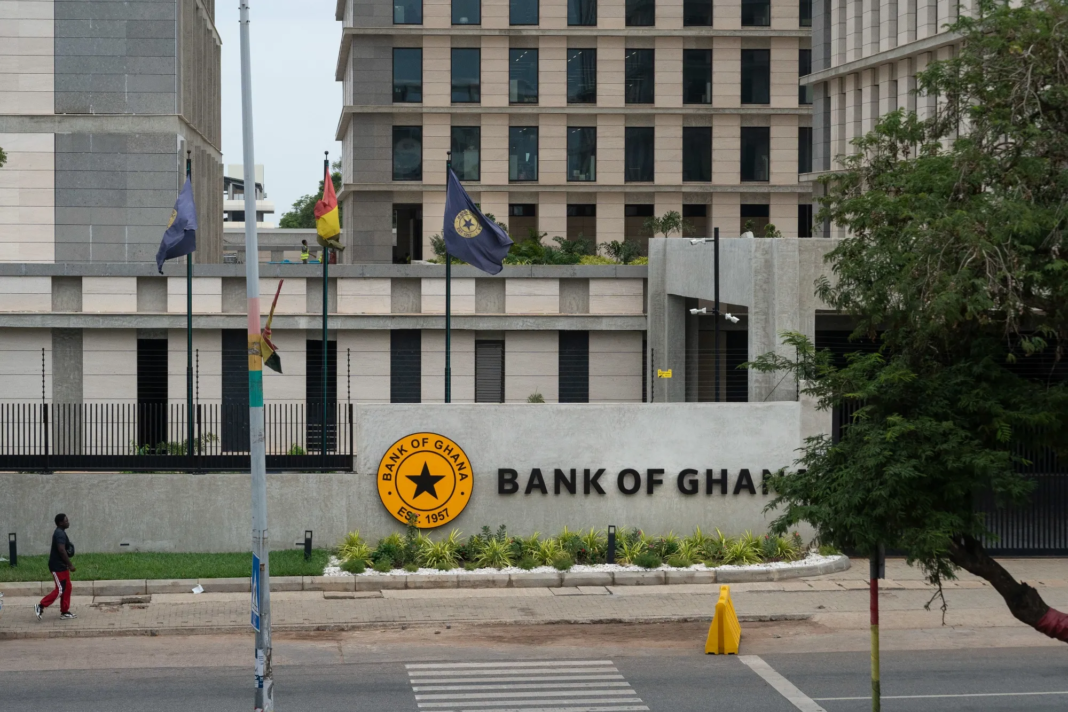

In a decisive policy intervention aimed at fortifying Ghana’s financial architecture and cultivating a culture of responsible borrowing and lending, the Bank of Ghana has unveiled an extensive enlargement of the nation’s Credit Reporting System, a move designed to integrate a significantly broader spectrum of institutions into the country’s credit information ecosystem.
The regulatory instruction, formally communicated through Notice No. BG GOV SEC 2026 06 and endorsed by Acting Secretary Aimee Vyda Quashie, introduces a sweeping requirement compelling multiple additional categories of organisations to become active participants in the national credit data framework. The initiative represents one of the most comprehensive attempts in recent years to deepen financial transparency while reinforcing prudent lending standards throughout Ghana’s rapidly evolving financial services sector.

Under the new directive, participation in the Credit Reporting System will no longer be limited primarily to conventional banking and lending institutions. Instead, the regulatory net now extends across a diverse array of service providers and commercial entities whose operational activities generate valuable credit related information capable of enriching the national data pool.

Among the organisations newly expected to participate are telecommunication service providers, electricity and water utility corporations, retail merchants that extend payment arrangements to consumers, mobile money service operators, emerging financial technology enterprises, and public sector institutions that administer credit programmes targeted at Micro Small and Medium Enterprises. The directive also encompasses identification service providers alongside businesses that supply goods and services under deferred payment arrangements or structured instalment plans.

Additionally, student financing programmes and other entities that maintain credible records relating to individuals’ borrowing behaviour have been encouraged to integrate their data streams into the national system. By drawing information from these varied sectors of the economy, policymakers anticipate the creation of a richer and more comprehensive credit information landscape capable of supporting more informed financial decision making.
Ghana’s Credit Reporting System was originally established through the enactment of the Credit Reporting Act 2007, a legislative framework that institutionalised the systematic exchange of credit information among lenders and other credit providers. The law laid the foundation for an organised infrastructure through which participating institutions could securely share data concerning borrowers’ financial obligations and repayment patterns.

Within this framework, financial institutions and other authorised participants are able to examine a prospective borrower’s historical credit conduct prior to extending loans, credit facilities or other financial accommodations. The availability of such information reduces uncertainty in lending decisions and helps financial institutions evaluate the likelihood that a borrower will honour repayment commitments.
Officials at the central bank emphasise that the system is not designed solely to protect lenders. Borrowers themselves stand to gain significantly from the arrangement, since individuals and businesses that demonstrate consistent and responsible repayment behaviour can gradually build credible credit profiles. These verified financial histories may ultimately enhance their ability to secure financing for business expansion, home ownership, education and other economic pursuits.

According to the Bank of Ghana, institutions that integrate into the expanded framework will obtain the capacity to review clients’ credit histories and repayment patterns prior to initiating credit relationships. This access to reliable financial intelligence allows lenders and service providers to minimise default risks while structuring more appropriate lending conditions.

Simultaneously, the information that participating institutions submit to the system will contribute to strengthening the integrity and reliability of the country’s credit information infrastructure. As the database grows in breadth and depth, it is expected to nurture a more disciplined lending culture while encouraging borrowers to maintain sound financial behaviour in order to preserve favourable credit profiles.
The central bank has therefore called upon all organisations falling within the newly identified categories, together with any other entities engaged in credit related transactions, to initiate formal engagement with the nation’s licensed credit bureaus. These institutions function as the operational backbone of Ghana’s credit information system, managing the collection, verification and dissemination of financial data used by lenders across the economy.
The three licensed credit bureaux currently operating within the jurisdiction are XDS Data Ghana Limited, Dun and Bradstreet Credit Bureau Limited, and My Credit Score Limited. Through collaboration with these organisations, participating institutions will be able to contribute data to the national credit repository while simultaneously accessing valuable information that supports more disciplined credit evaluation.
Financial sector observers view the reform as an important milestone in Ghana’s ongoing efforts to modernise its financial infrastructure and strengthen the transparency of lending practices. By widening the range of entities that contribute to and benefit from the Credit Reporting System, authorities hope to cultivate a more comprehensive and reliable credit information environment capable of supporting sustainable economic growth.
As Ghana’s financial services landscape continues to evolve through the expansion of digital payments, financial technology innovation and alternative lending platforms, the broadened credit reporting framework is expected to serve as a critical mechanism for maintaining trust, accountability and stability within the nation’s financial system.

